
A ground-dwelling tarantula associated with terrestrial retreats in seasonally dry parts of western Mexico. Shelter and substrate are central to how the animal uses its space.
Species profile · Sabrina
Brachypelma hamorii
Meet Sabrina
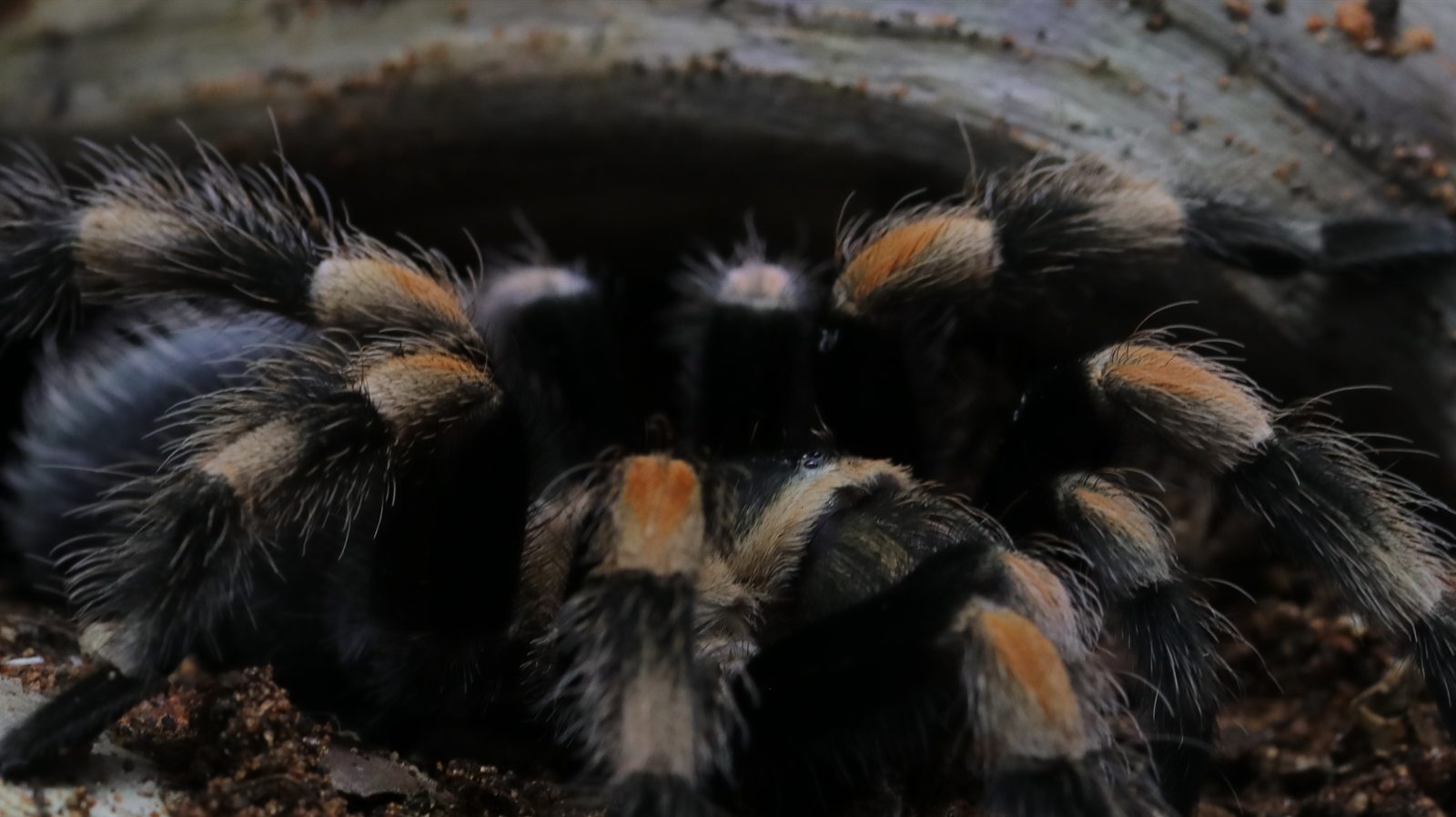
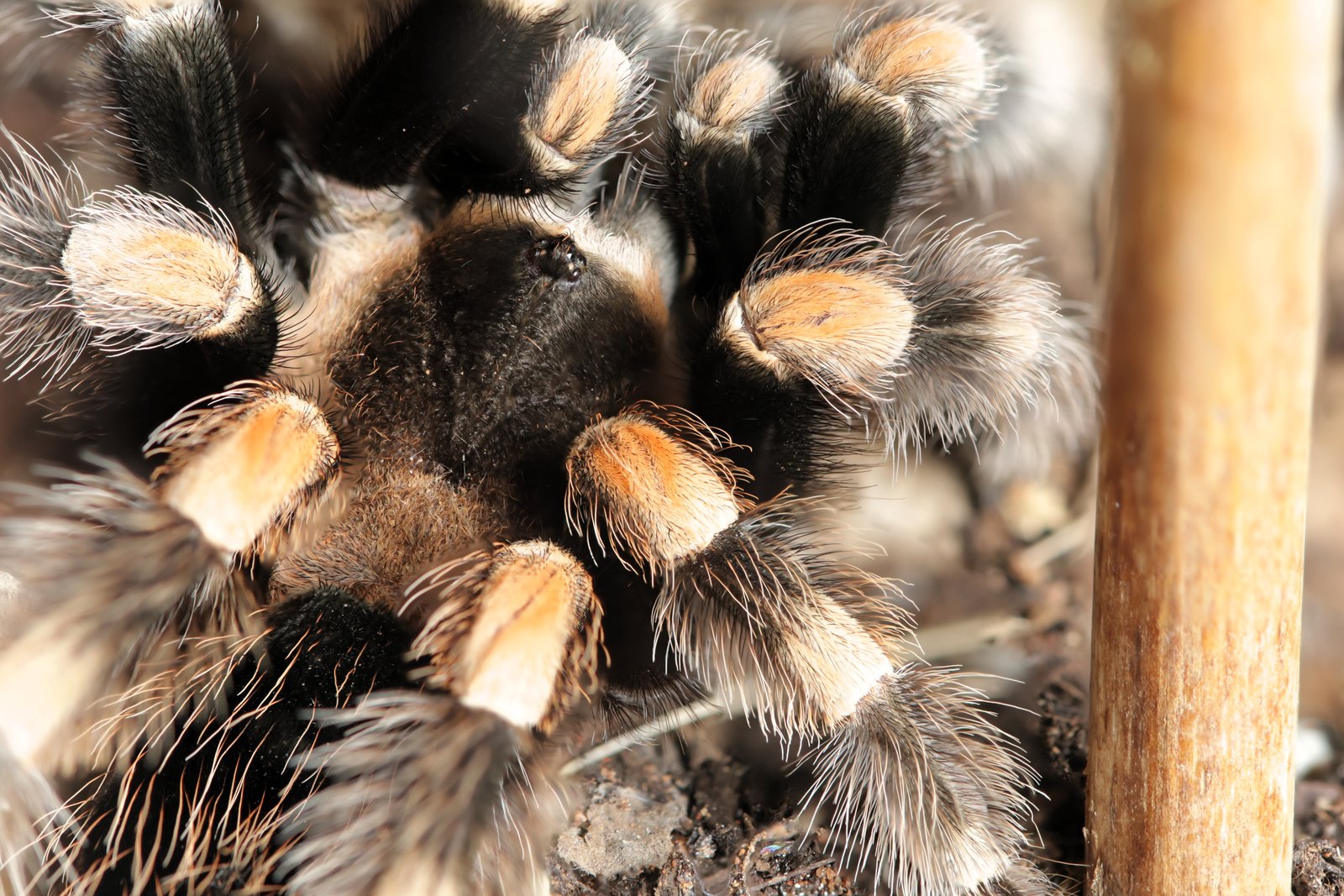
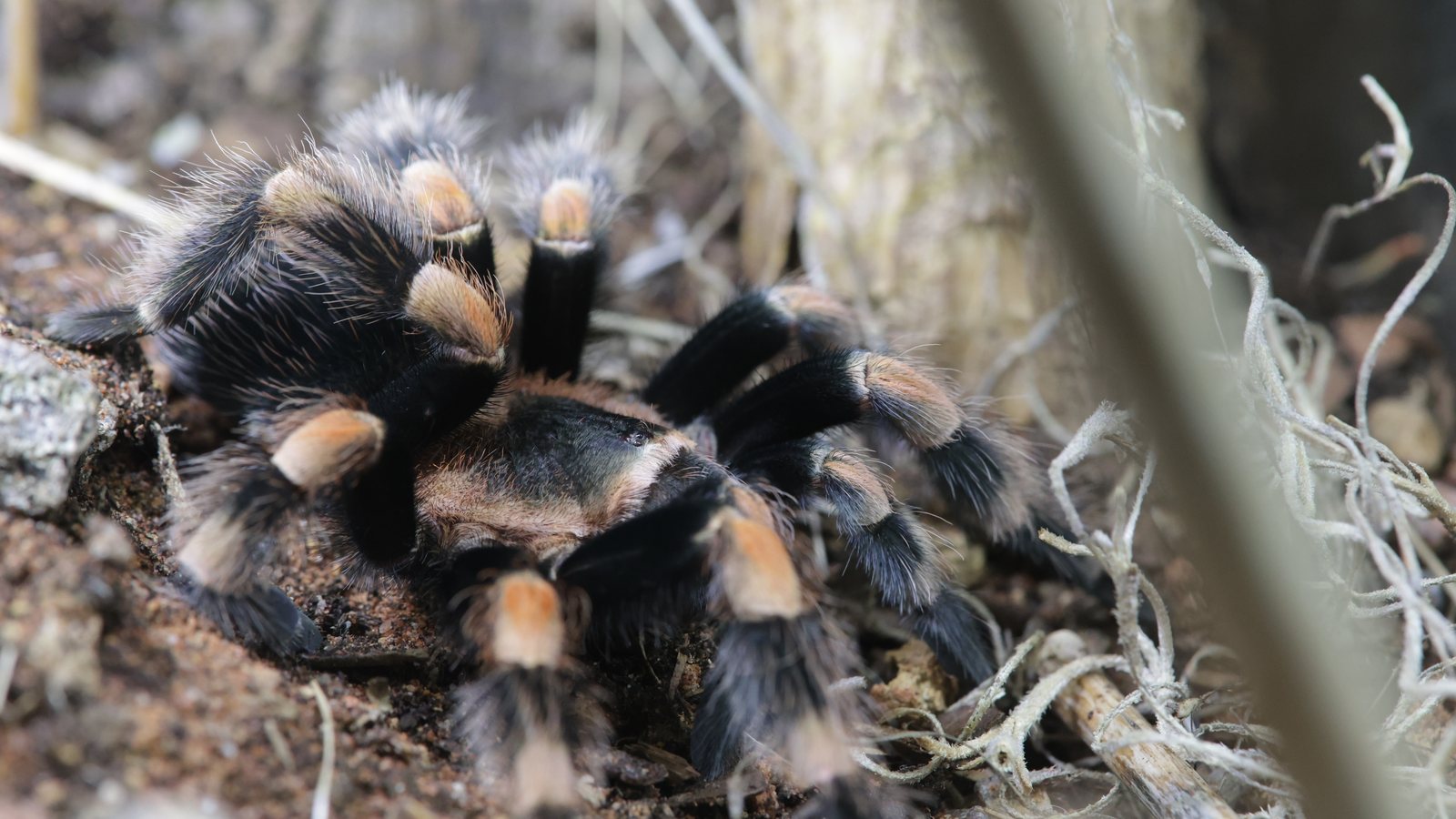
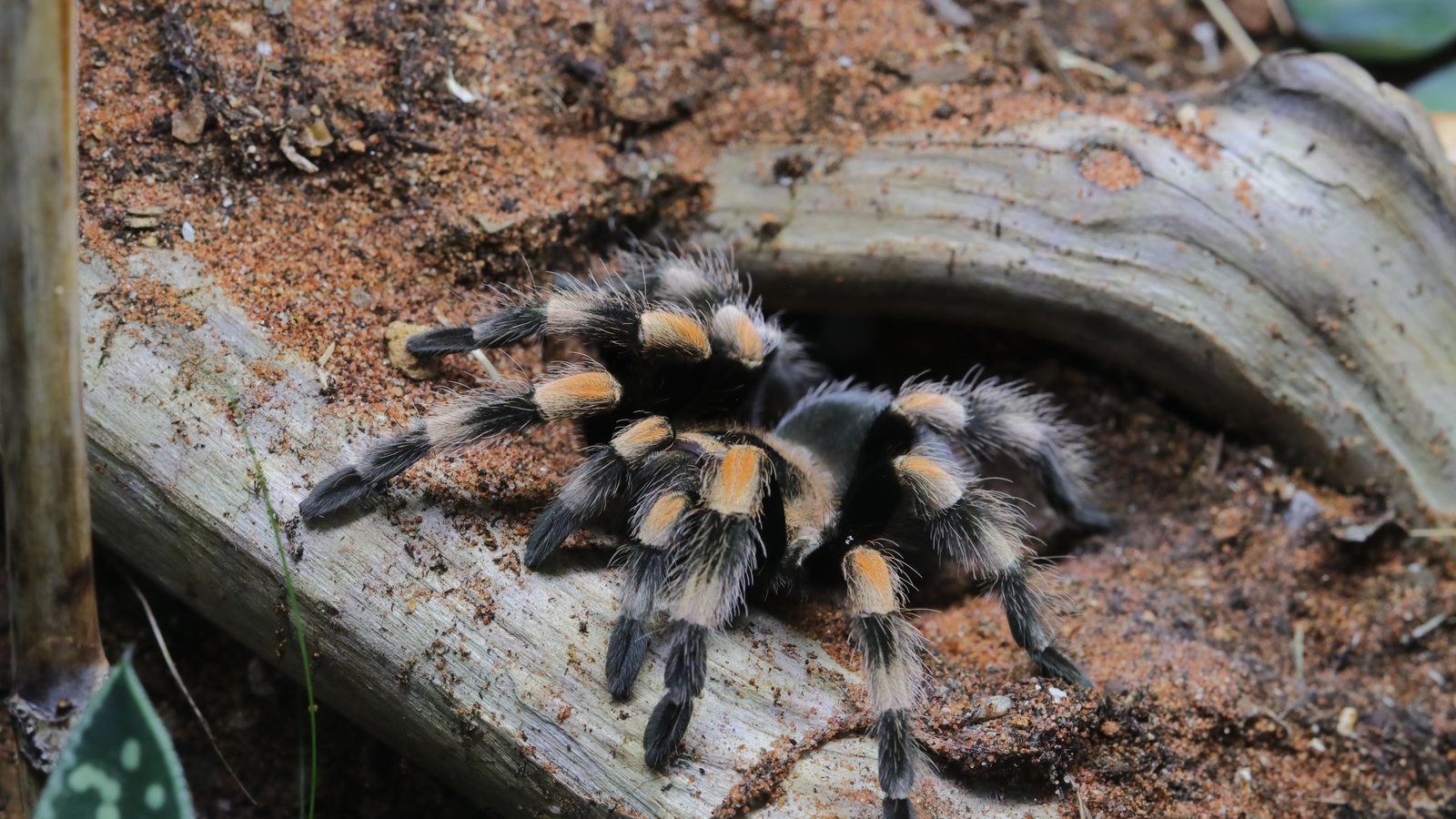
Sabrina is the Brachypelma hamorii currently in my care. Her collection portrait is built around the vivid orange knee markings that make her immediately recognisable.
Scientific nameBrachypelma hamorii
FamilyTheraphosidae
Native rangeMexico
TaxonomyAccepted species
SexConfirmed female
In the wild
Natural history.
The orange bands across the leg joints are the most immediate visual cue. The abdomen also carries defensive urticating hairs, so observation is safer than handling.
Sabrina is given deep substrate, a secure retreat, and a dry surface with access to water. Her own feeding and molt records appear separately below.
Taxonomy and range
The World Spider Catalog treats Brachypelma hamorii as an accepted Mexican species in the family Theraphosidae. Its taxonomic history matters because animals now identified as B. hamorii were frequently presented under the name B. smithi in older literature and in the hobby.
Burrows, shelter, and activity
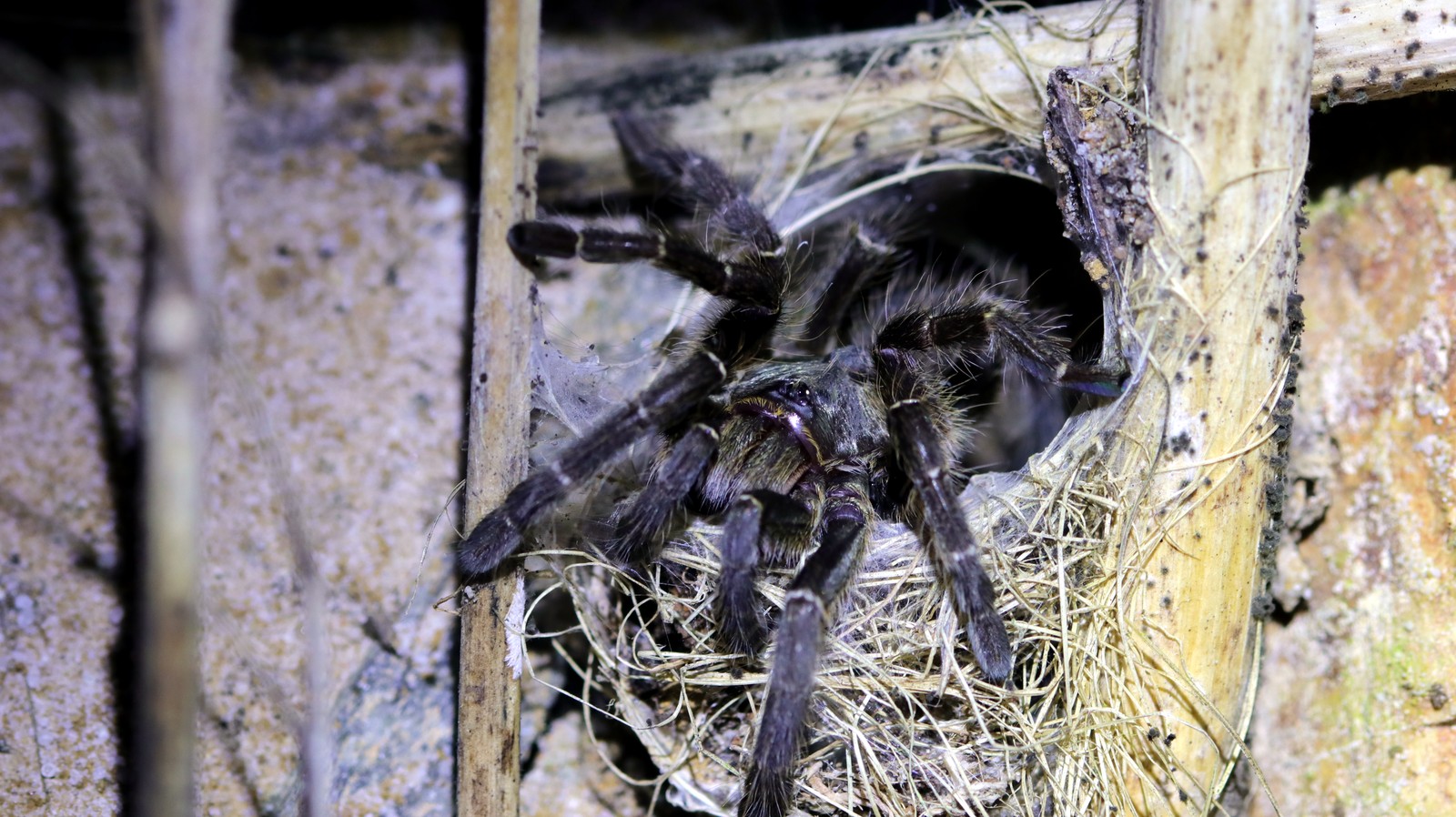
Mexican red-knee field records describe terrestrial spiders using deep, silk-lined burrows and natural cavities in seasonally dry country. The retreat buffers heat and moisture and gives the spider a secure daytime refuge; activity is concentrated around the entrance and during lower-light periods. Older ecological accounts do not always separate B. hamorii cleanly from B. smithi, so that limitation should travel with the claim.
Feeding ecology
This is primarily a sit-and-wait predator. Vibrations and close-range sensory cues bring the spider out to seize passing arthropods, which are subdued with the chelicerae and venom before external digestion. Sabrina's feeding records show one animal in captivity and are kept separate from statements about the wild diet.
Defence, senses, and movement
The first response is often stillness or retreat, but the abdomen also carries urticating hairs that can be brushed into the air. Those hairs can irritate skin and eyes; the calm appearance associated with the species is not a reason to handle it.
Conservation context
Status, trade & uncertainty.
IUCN evaluates extinction risk; CITES regulates international trade. They answer different questions, and missing data should remain visible.
Vulnerable · 2018
The Commission for Environmental Cooperation’s 2019 identification guide reports that IUCN assessed Brachypelma hamorii as Vulnerable in 2018. The assessment year remains part of the claim; check the live Red List for updates.
CITES Appendix II
The listing applies to the genus Brachypelma. International trade is controlled, and the exact scientific name and lawful origin matter.
What the evidence supports
Published conservation profiles describe a restricted western Mexican range with pressure from habitat change, fragmentation, and collection.
Make provenance visible
Retain breeder or seller details, receipts, the name used at acquisition, and any permit history. Older B. smithi labels deserve particular scrutiny.
Reviewed 14 September 2026 against IUCN Red List version 2026-1 and the live CITES Checklist. “Not Evaluated” is not a low-risk category. National and local rules may be stricter.
Life in the collection
Meet Sabrina.
Sabrina is the individual behind this profile. Her orange knee bands make her easy to recognise across the collection, while her own feeding and molt history remains distinct from published species-level information.
From Instagram
Posts & reels.
From the channel
Related viewing.
Introvertebrates on YouTube
Meet Sabrina: My Mexican red-knee tarantula
A short introduction to Sabrina and the markings that make Brachypelma hamorii so recognisable.
Personal observations
From the Codex.
Introvertebrates Codex
Sabrina · care history
Time in care, feeding records, moults and measurements. These are observations from the Introvertebrates collection, not species-wide averages.
Collection records are not available here yet.
Private notes and identifying details are kept off the website.
Continue exploring
Related profiles.
Read further
Sources.
- World Spider Catalog — Brachypelma hamoriiView the source.
- Biodiversity Data Journal — conservation profile, habitat, and ecologyView the source.