Spiders sense forces we barely notice, engineer several materials inside one body, and solve mechanical problems in ways that continue to inspire research. Here are nine facts with evidence attached.
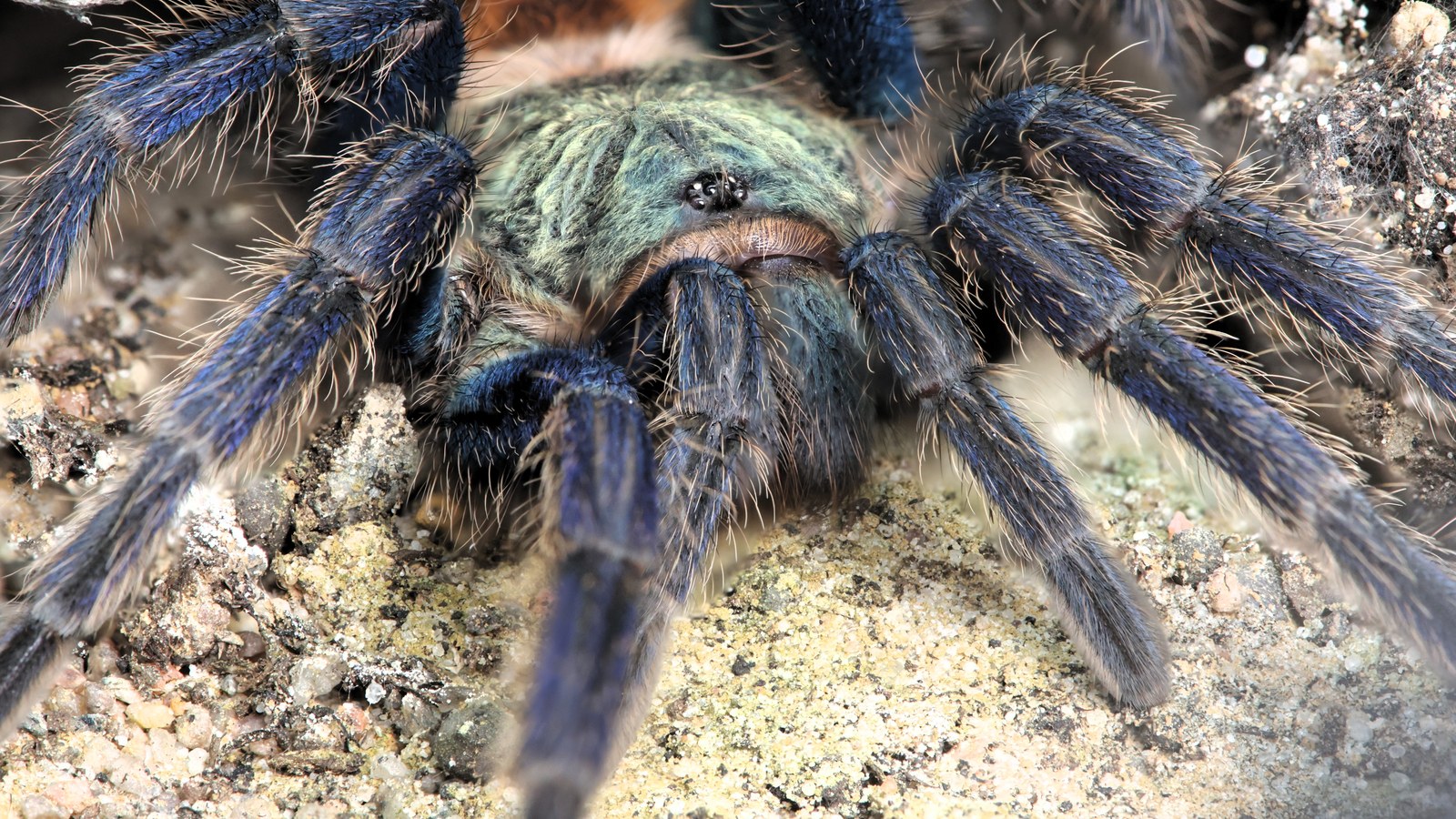
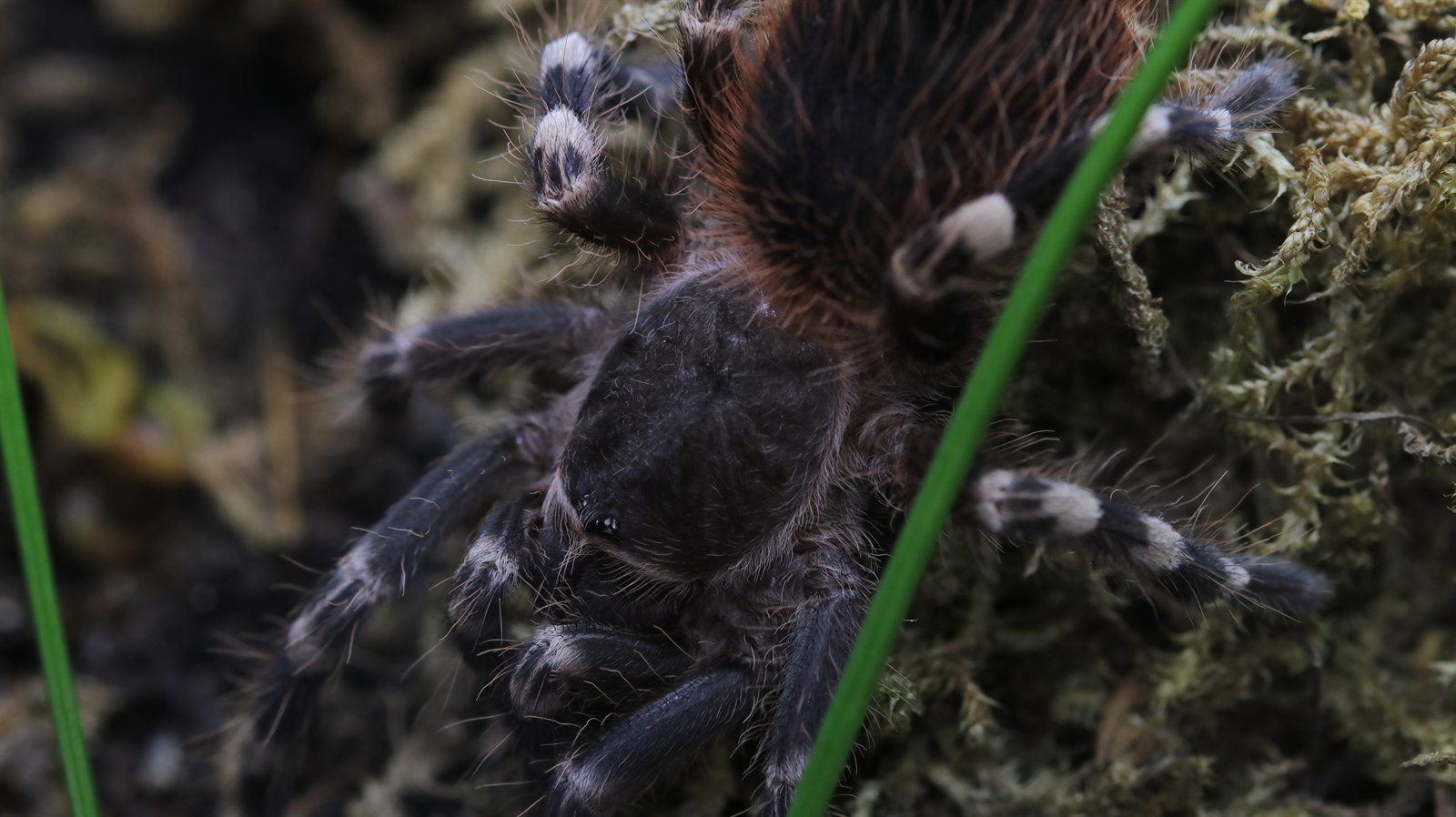
Ruby Chromatopelma cyaneopubescensColour made by structure, not simply pigment
Nine closer looks
What the evidence shows.
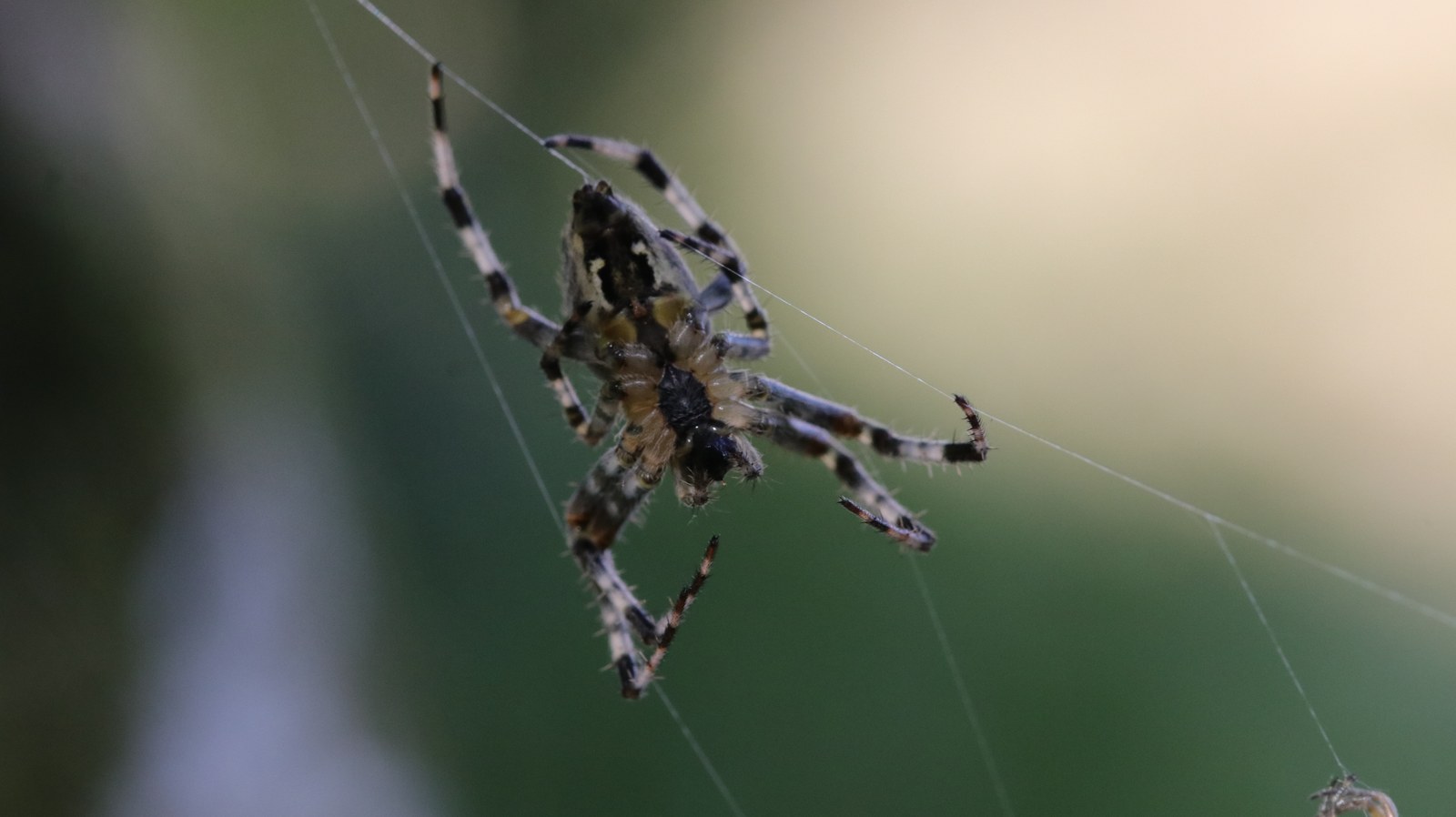
01 · FlightAn orb-weaver suspended on its web.
Electric fields can help trigger ballooning.
Experiments found that atmospheric-strength electric fields can elicit ballooning behaviour in spiders. Fine sensory hairs respond to these fields, adding another cue to the better-known role of air movement.
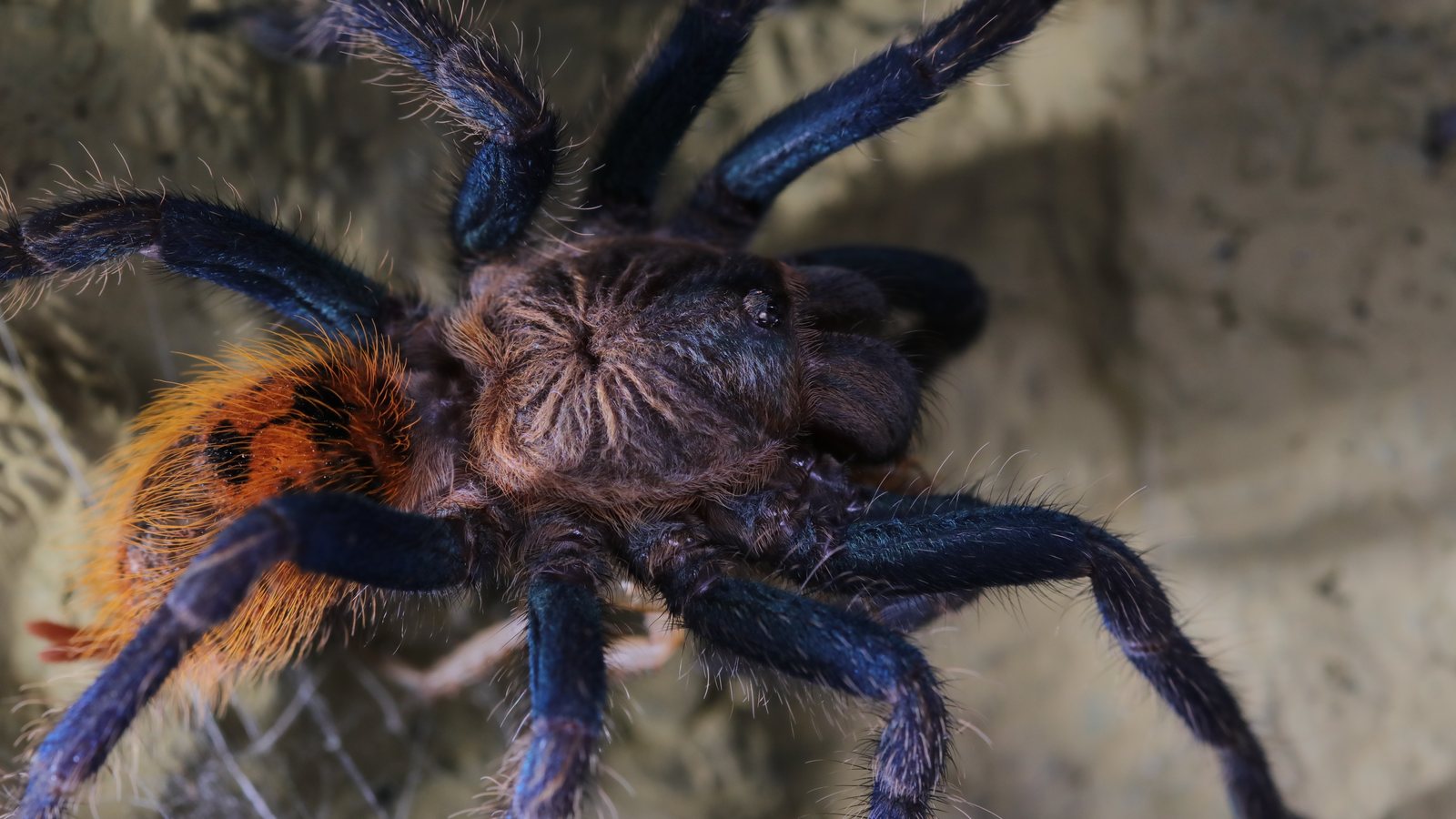
Across tarantulas, vivid blue has evolved independently multiple times. Different microscopic structures can produce a strikingly similar blue—an example of repeated evolution arriving at a conserved visual result.
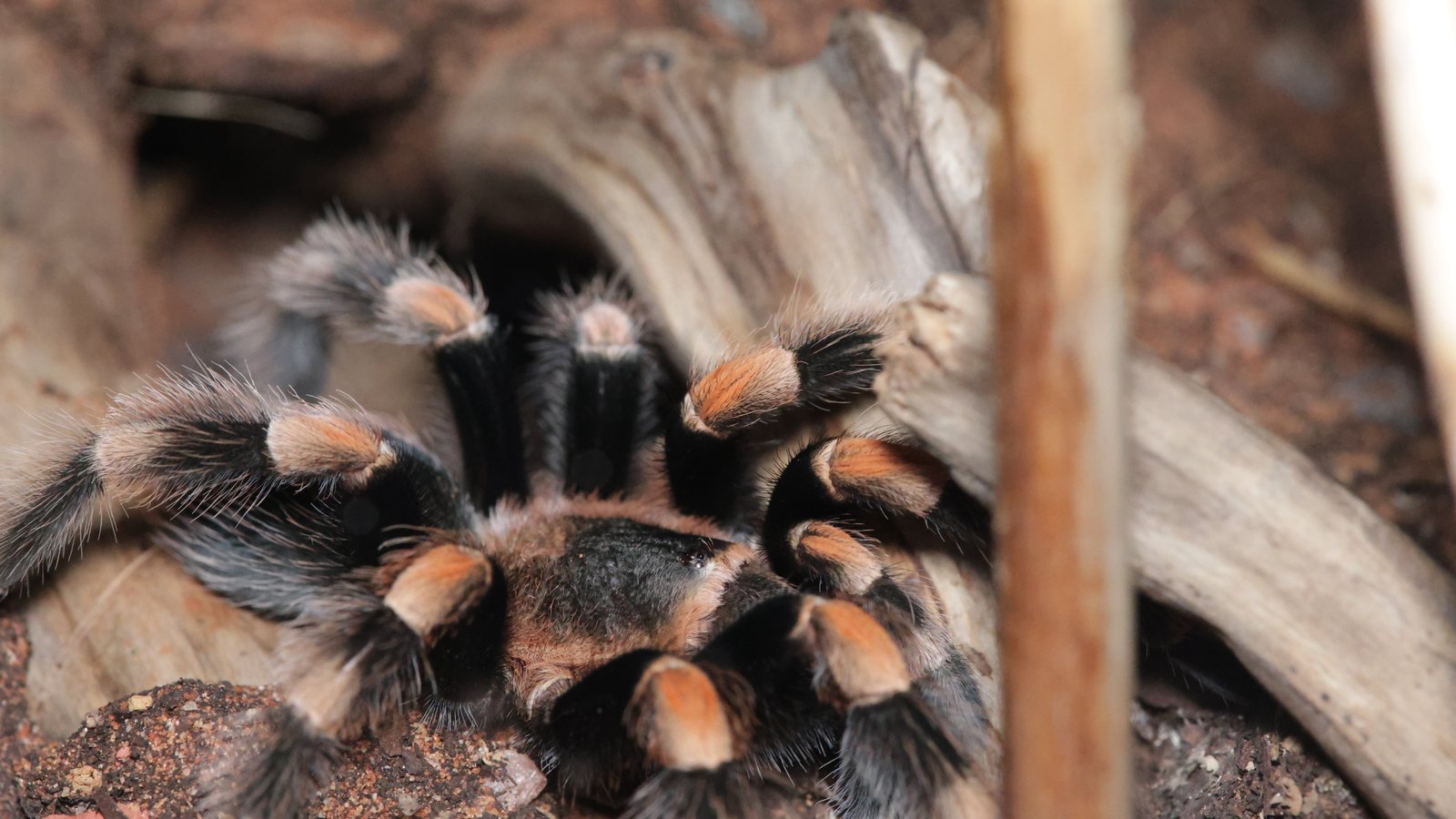
Muscles flex the joints, while haemolymph pressure helps extend joints that lack extensor muscles. In large spiders, movement is not “hydraulics only”—muscle, pressure, elasticity, and momentum all contribute.
Jumping spiders respond to low-frequency airborne sound even though they have no eardrums. The evidence points to extremely sensitive hairs that move with the air and convert that movement into sensory information.
Juvenile tarantulas can adapt their gait soon after losing a limb, then regain a functional replacement through later molts. Regeneration depends on continued growth and is not a reason to treat limb loss lightly.
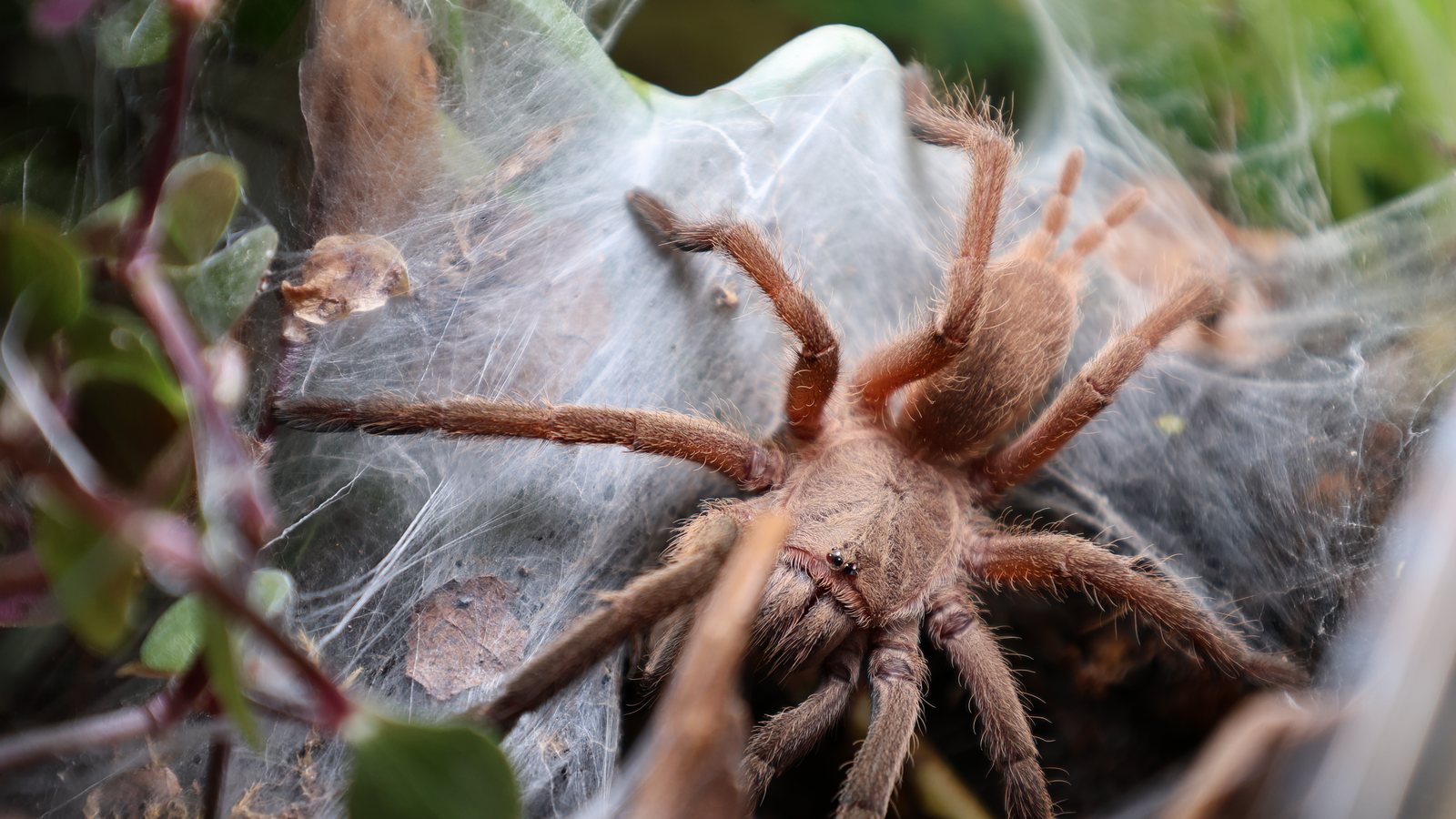
Silk carries vibrations whose transmission changes with the material’s tension and structure. For many spiders, the web is not only architecture or a trap; it extends the animal’s sensory world.
These examples come from species beyond the collection.
07 · Parenthood
A jumping spider feeds its young “milk”.
Female Toxeus magnus produce nutritious droplets that their spiderlings drink. Experiments showed that this secretion is essential early in life and continues to supplement food after the young begin foraging. This is a documented behaviour in this species, not a trait of all spiders.
A spider’s diving bell can draw oxygen from water.
Argyroneta aquatica holds air in a silk bell underwater. Measurements showed that dissolved oxygen can diffuse into the bell, allowing it to work as a physical gill. The spider still breathes air inside the bell.
Researchers observed periodic retinal movements, leg curling and twitches in resting Evarcha arcuata. The pattern resembles aspects of REM sleep. It raises fascinating questions about spider sleep, but does not establish that spiders dream.
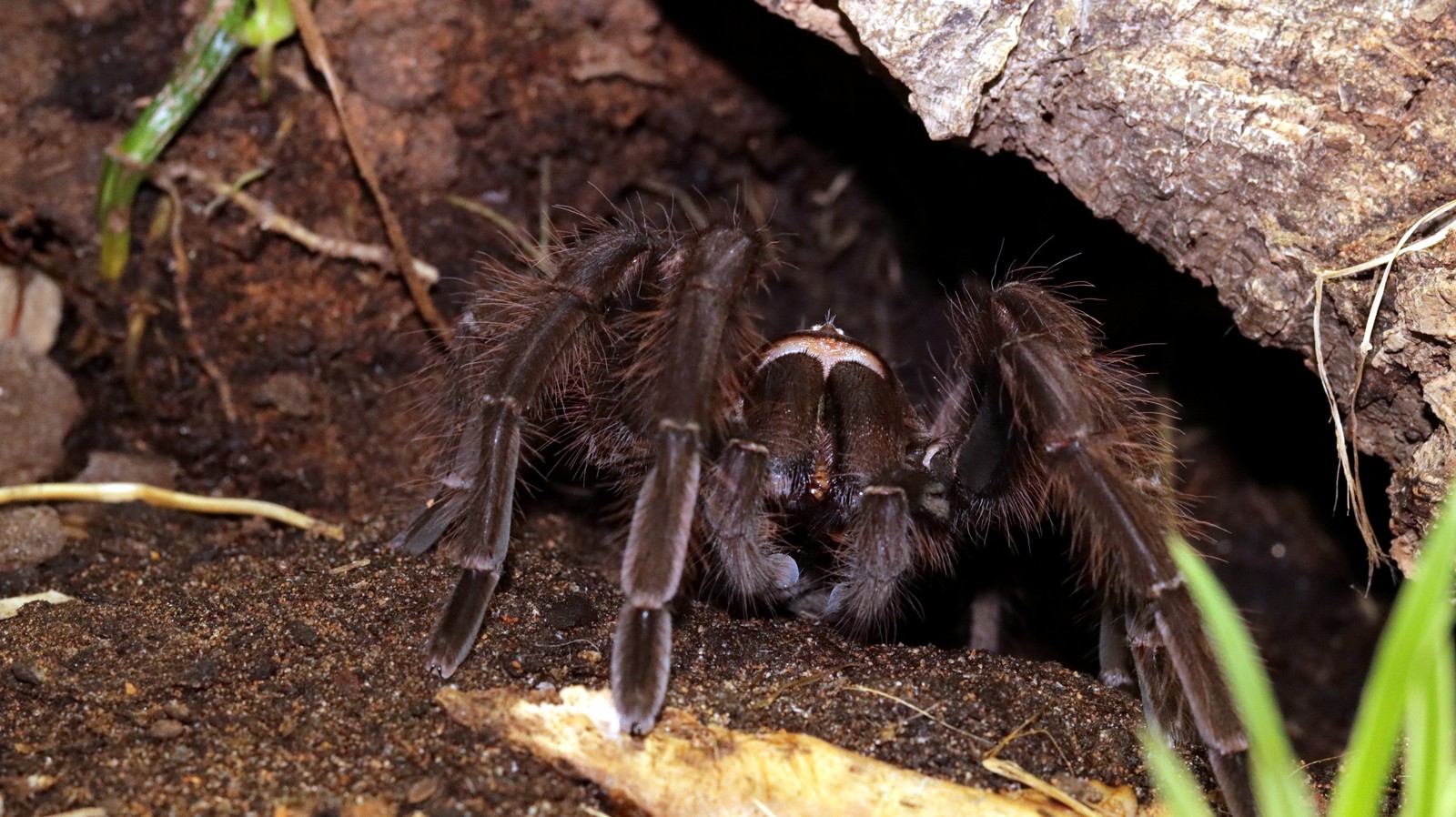
Silk as structure and signal Chilobrachys sp. “Kaeng Krachan”
Keep exploring
Facts become richer in context.
Anatomy explains the structures behind these abilities. The research journal follows new discoveries as they are published, while the collection profiles connect broader biology to individual animals in care.