
A terrestrial Venezuelan tarantula notable for laying extensive silk across the surface around its shelter. The species comes from a comparatively dry, exposed landscape.
Species profile · Ruby
Chromatopelma cyaneopubescens
Meet Ruby
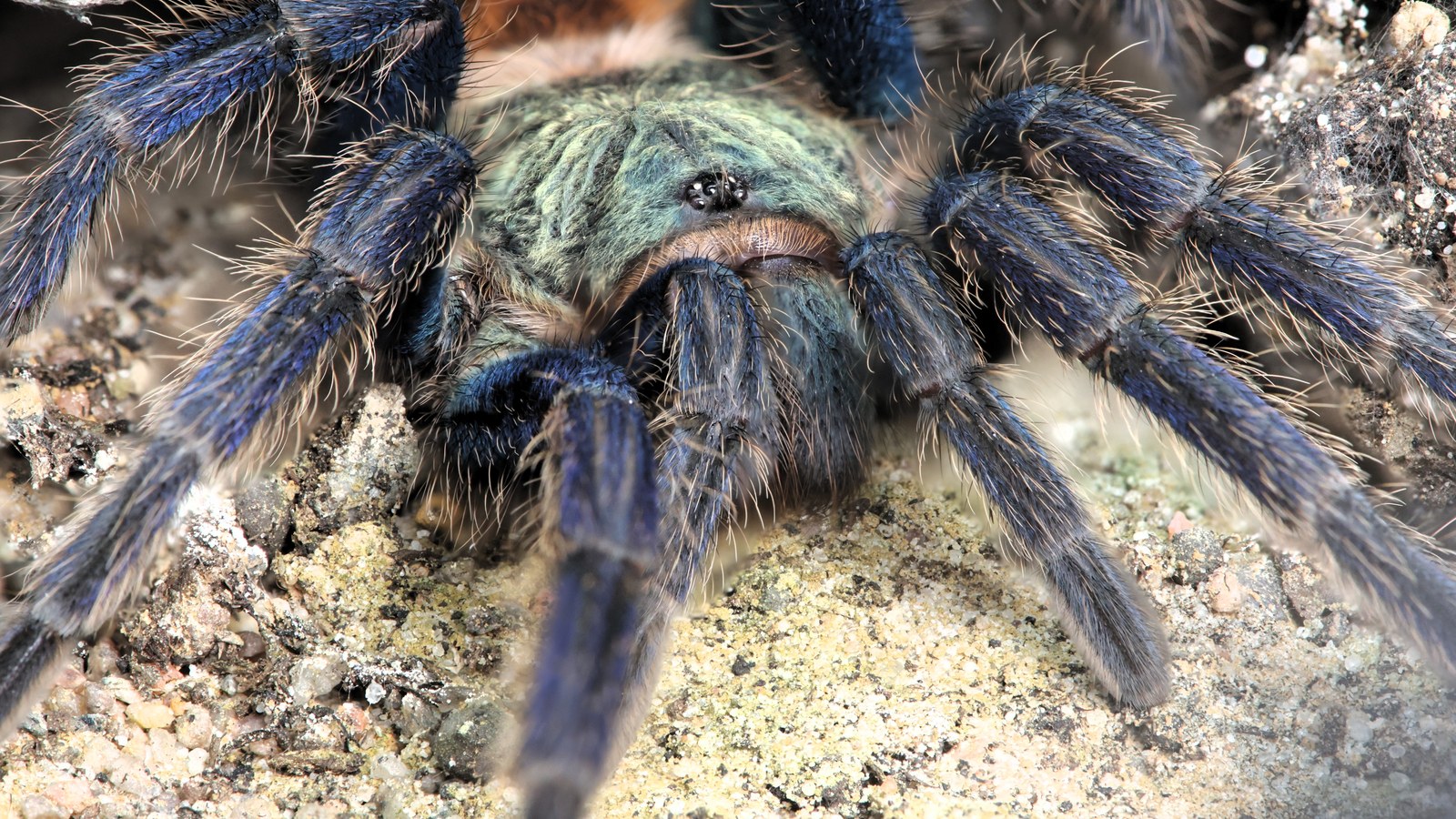
Ruby is the Chromatopelma cyaneopubescens currently in my care. Her frontal portrait brings together the species’ blue-green legs, warm carapace, and dense surface detail.
Scientific nameChromatopelma cyaneopubescens
FamilyTheraphosidae
Native rangeVenezuela
TaxonomyAccepted species
SexConfirmed female
In the wild
Natural history.
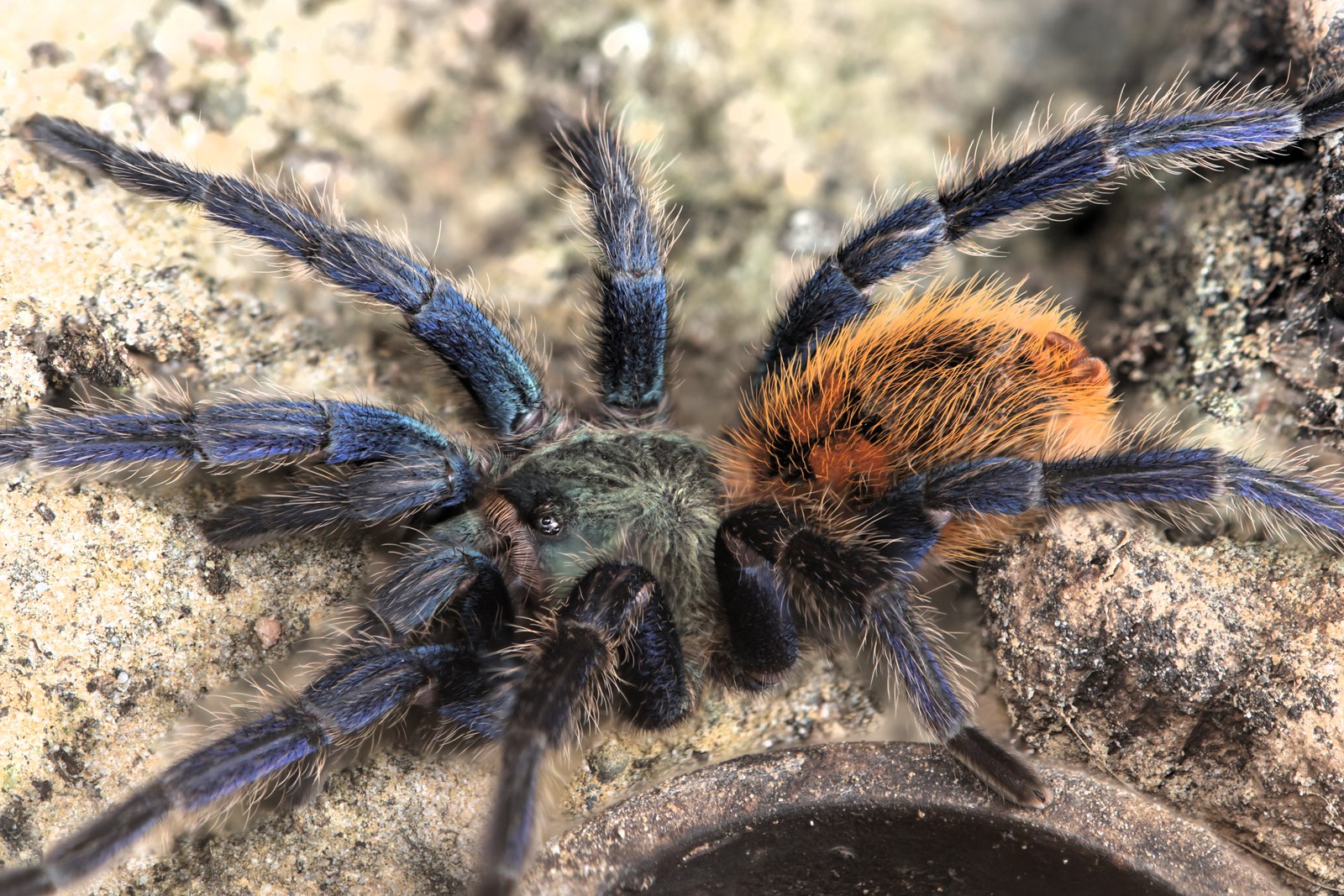
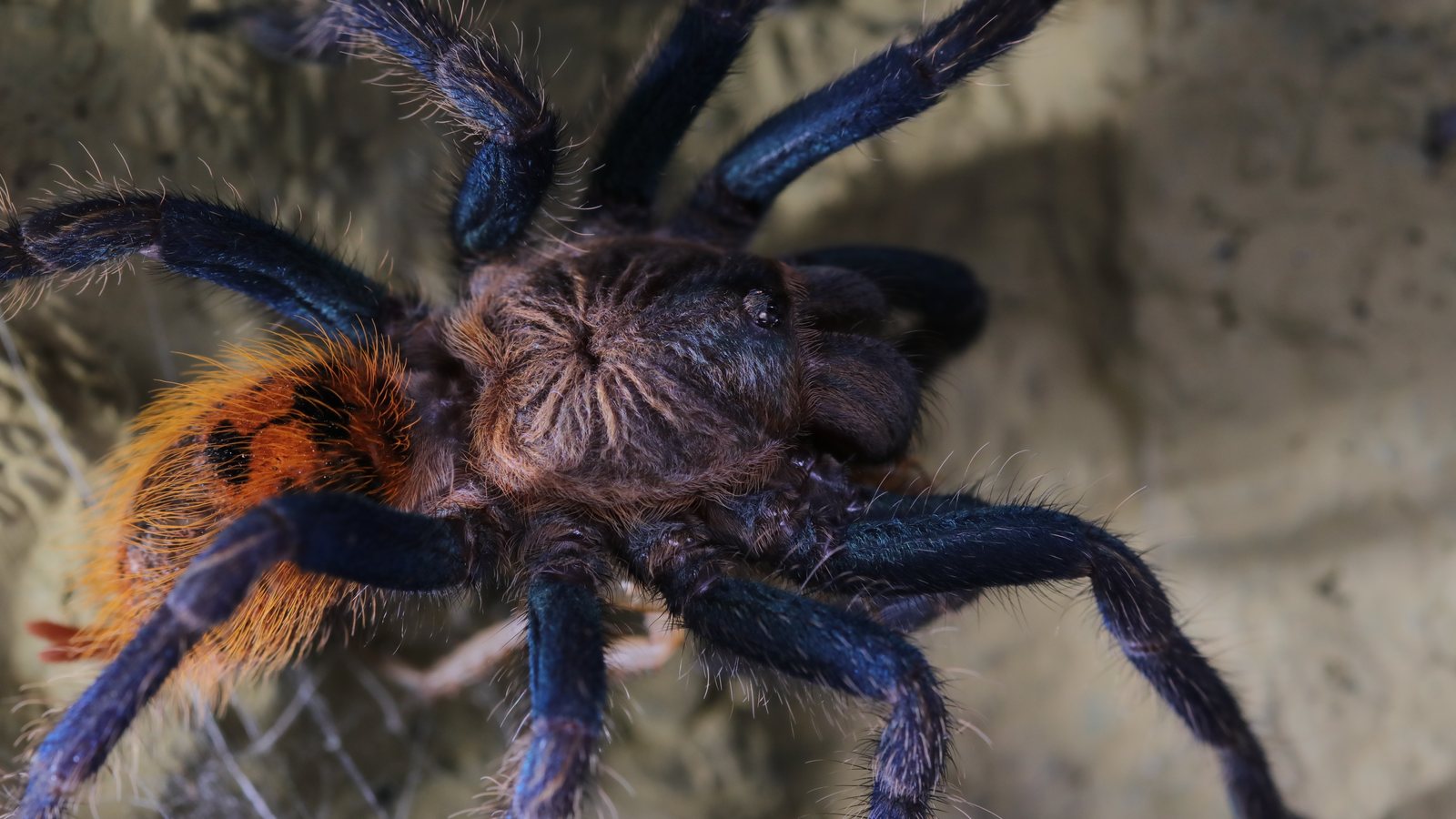
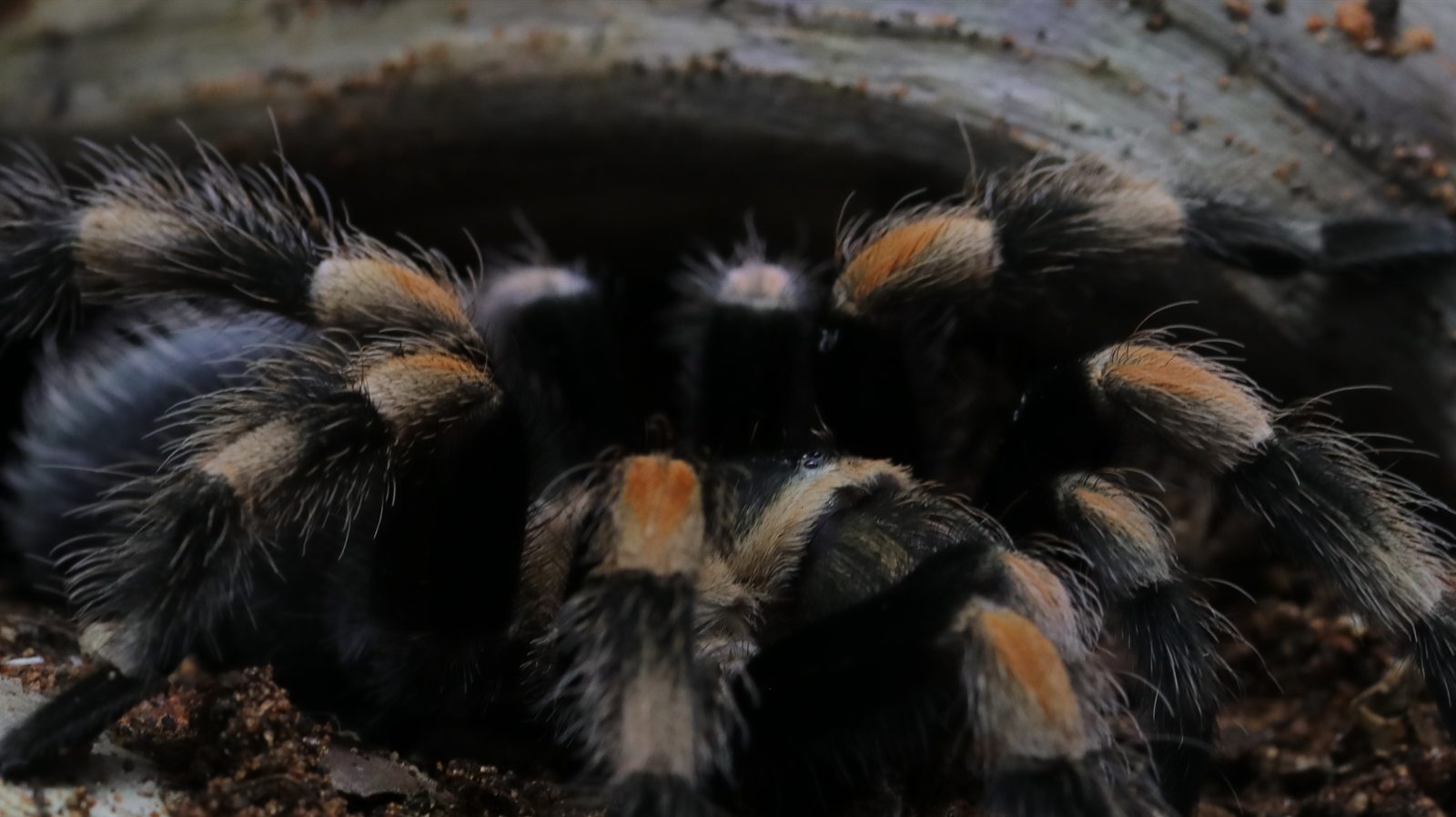
Blue-green legs, a warm carapace, and an orange abdomen create one of the collection's strongest colour combinations. Ruby's photographs also make the surface webbing easy to see.
Ruby's enclosure prioritises ventilation, a dry upper layer, a retreat, and water. Feeding responses shown in video are Ruby's own behaviour, not a promise about every individual.
Taxonomy and range
Chromatopelma cyaneopubescens is a Venezuelan endemic and the only accepted species in its genus. Recent work using verified observations has expanded the known distribution beyond the best-known Paraguaná records while emphasizing how much of the published biology still comes from captivity.
Burrows, shelter, and activity
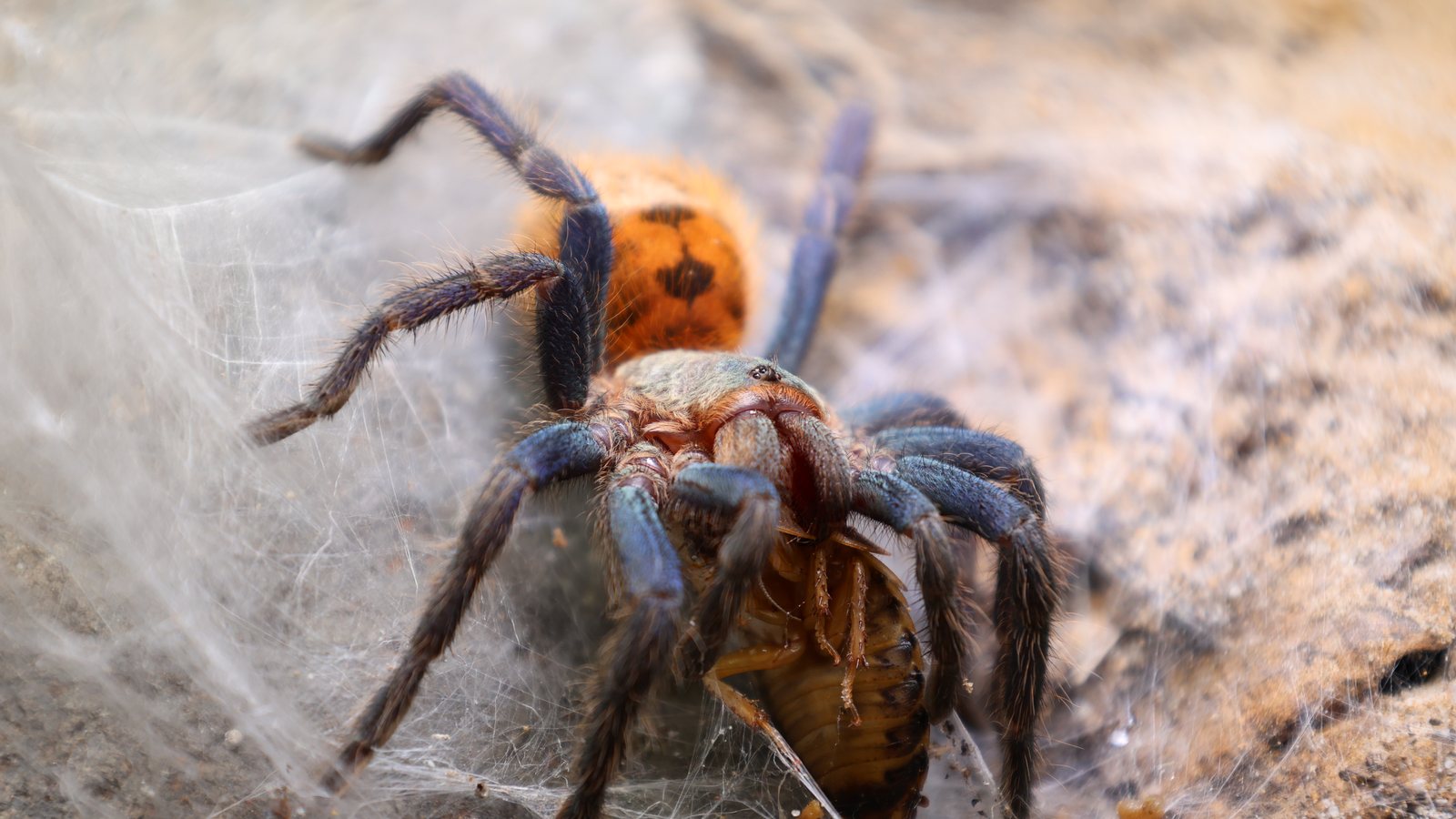
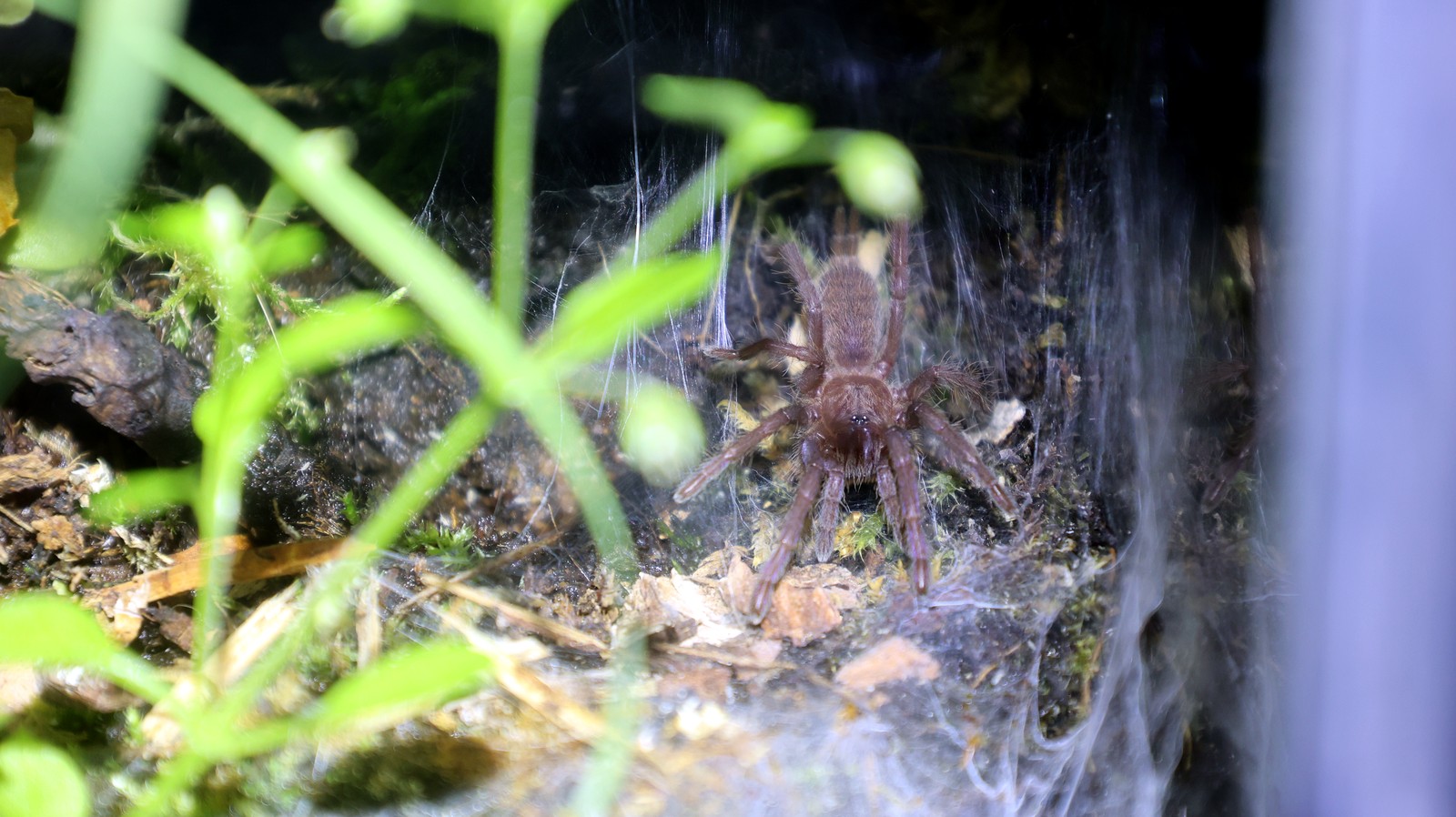
Wild observations associate the species with dry, open scrub and silk shelters at the bases of vegetation, rocks, or shallow cavities. It spreads silk far beyond a single hole, producing a connected surface that combines cover, pathways, and vibration sensing.
Feeding ecology
Ruby hunts from that silk-rich working area. Passing arthropods can be detected before contact, followed by a rapid strike and retreat with the prey. Her feeding videos document a particularly bold individual response; they are not a species-wide feeding schedule.
Defence, senses, and movement
Bright blue-green legs and the warm orange abdomen are visual signals to us, not evidence that the spider is inviting contact. The animal can retreat rapidly and carries urticating abdominal hairs, so enclosure access should keep hands and faces away from both spider and loose substrate.
Conservation context
Status, trade & uncertainty.
IUCN evaluates extinction risk; CITES regulates international trade. They answer different questions, and missing data should remain visible.
Endangered · Venezuela, 2015
Venezuela’s 2015 Red Book assessed Chromatopelma cyaneopubescens as Endangered nationally. This is a Venezuelan assessment, not a global IUCN category, and its date should remain visible.
Not CITES-listed
The species was not found in the CITES Appendices checked in September 2026. A missing CITES listing is not a population assessment.
What the evidence supports
This Venezuelan endemic is associated with dry scrub habitat. Recent occurrence work improves the known range, but population trend and collection pressure remain insufficiently quantified.
Make provenance visible
Choose documented captive-bred animals and preserve provenance. Do not present popularity in captivity as evidence of security in the wild.
Reviewed 14 September 2026 against IUCN Red List version 2026-1 and the live CITES Checklist. “Not Evaluated” is not a low-risk category. National and local rules may be stricter.
Life in the collection
Meet Ruby.
Ruby is one of the most visually distinctive residents in the collection. Her feeding-response video and Codex history give the profile an individual story alongside the accepted taxonomy and range of Chromatopelma cyaneopubescens.
From Instagram
Posts & reels.
From the channel
Related viewing.
Introvertebrates on YouTube
Ruby’s best strikes since day one
A fast collection of Ruby’s feeding responses, presented as an Introvertebrates Short.
Personal observations
From the Codex.
Introvertebrates Codex
Ruby · care history
Time in care, feeding records, moults and measurements. These are observations from the Introvertebrates collection, not species-wide averages.
Collection records are not available here yet.
Private notes and identifying details are kept off the website.
Continue exploring
Related profiles.
Read further
Sources.
- World Spider Catalog — Chromatopelma cyaneopubescensView the source.
- Anartia — distribution and habitat associations of Chromatopelma cyaneopubescensView the source.