
A large terrestrial tarantula from Brazil. Females and juveniles use ground-level shelter and tubular retreats beneath natural cover, with much activity taking place after dark.
Species profile · Current resident
Acanthoscurria geniculata
Brazilian white-knee tarantula
A large, ground-dwelling Brazilian tarantula with bold pale knee bands. This profile brings published natural history together with photographs and firsthand observations of Alma, the individual who represents the species in the collection.
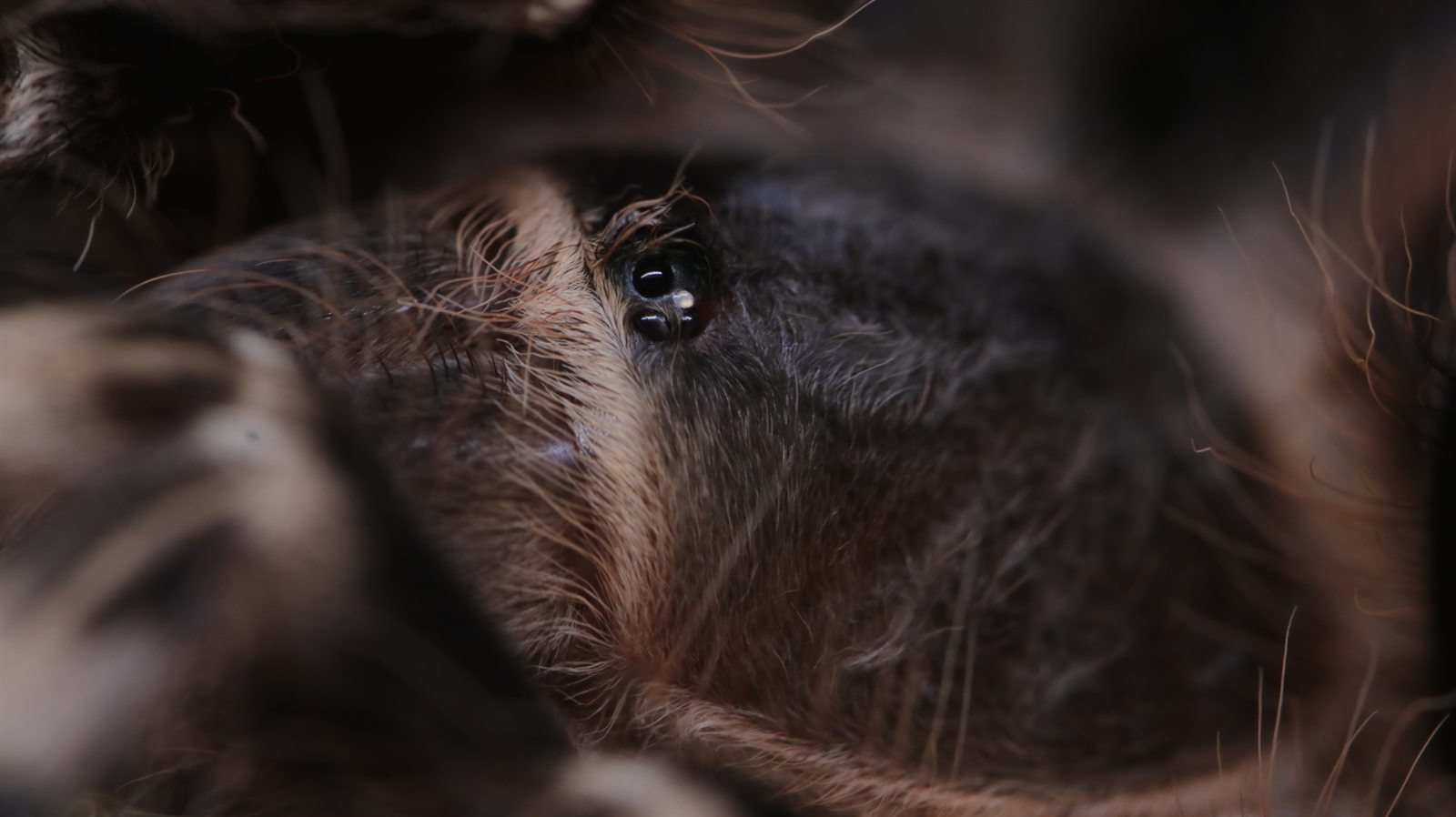
Accepted name
Acanthoscurria geniculata
Family
Theraphosidae
Documented range
Brazil
Natural history
Terrestrial · burrow-associated
Sex
Confirmed female
In the wild
Natural history.
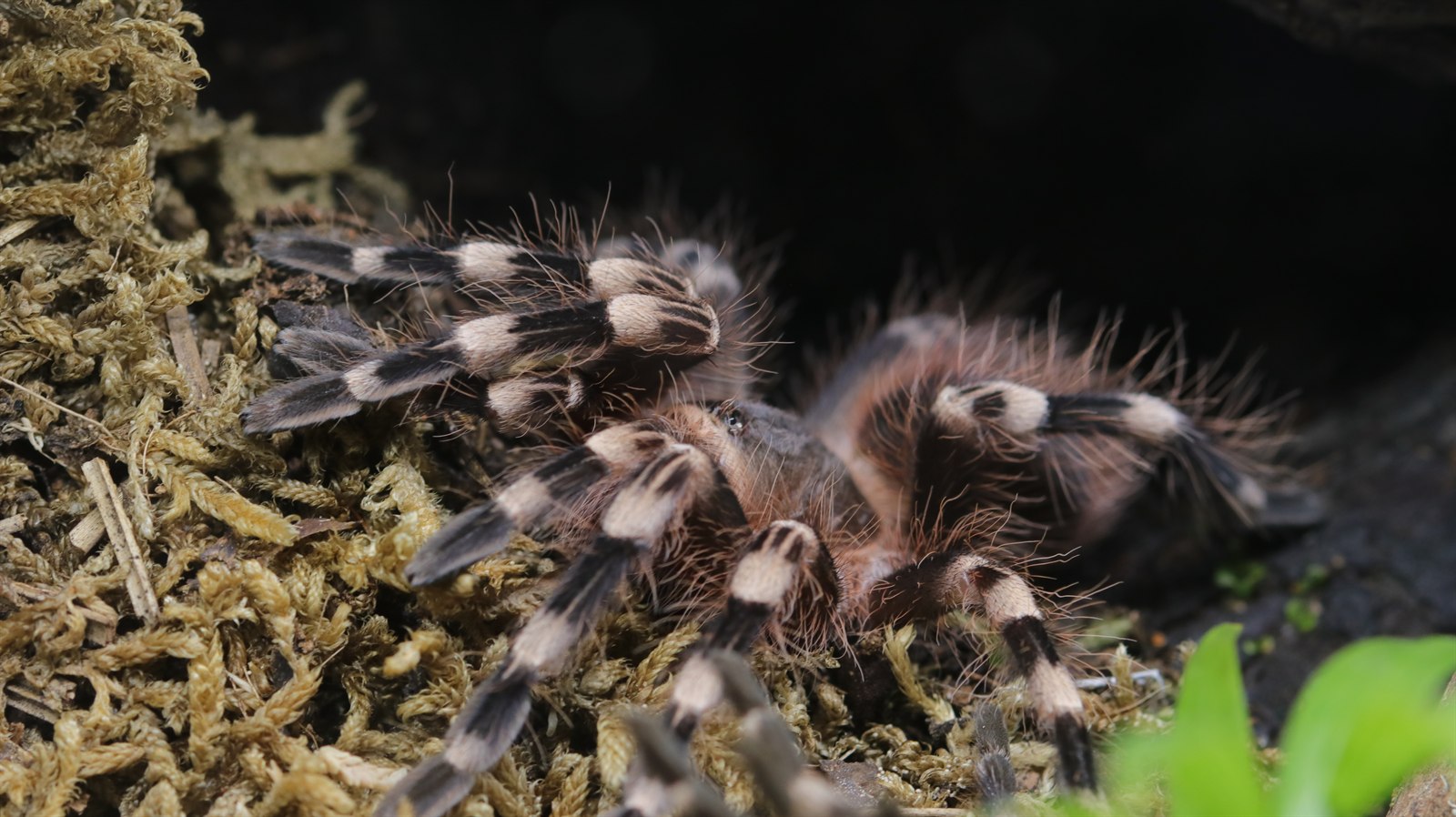
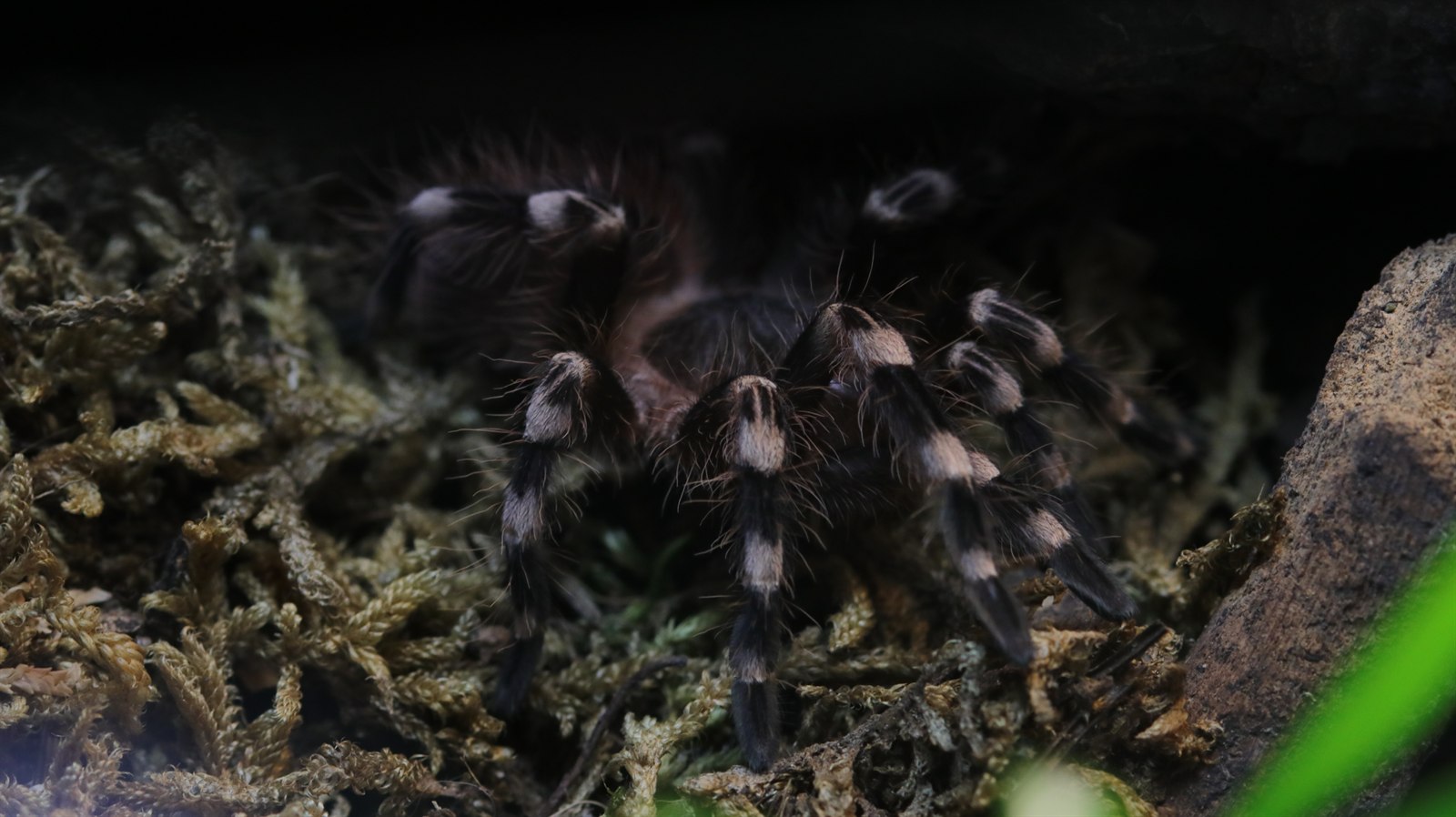
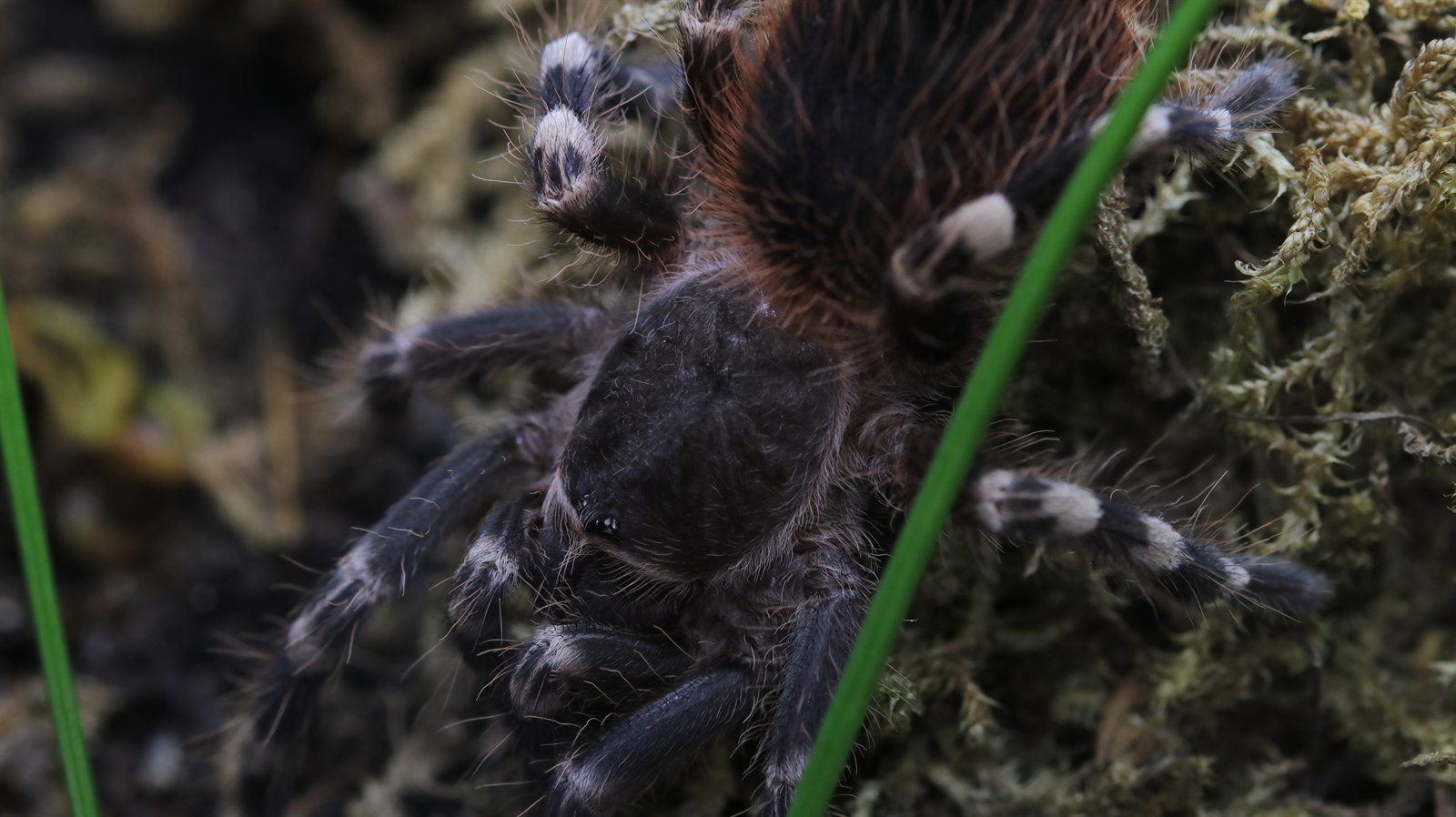
Bold pale bands break across the dark legs, while warm hairs surround the carapace. The contrasting pattern explains the familiar Brazilian white-knee name.
Alma has deep substrate, an accessible retreat, water, and room to move at ground level. Her personal feeding and time-in-care statistics are shown separately below.
Taxonomy and range
The World Spider Catalog recognises Acanthoscurria geniculata (C. L. Koch, 1841) as an accepted species in the family Theraphosidae and records its distribution as Brazil. A 2014 revision placed the former name Acanthoscurria transamazonica in synonymy with it.
Burrows, shelter, and activity
Published field context places the species mainly in the Amazon of northern Brazil. It is described as predominantly nocturnal, while females and juveniles use tubular burrows at ground level beneath rocks and fallen logs, within living trees, and in ravines.
Feeding ecology
Like other large terrestrial spiders, it is an opportunistic predator. One 2024 field note documented an adult female taking a juvenile common lancehead close to the entrance of a burrow. That unusual record broadens what is known about its wild diet; it is not a feeding recommendation for animals in captivity.
Life in the collection
Meet Alma.
Alma is the current Introvertebrates representative for this species. Her photographs show why the common name is so immediate: pale bands break across dark legs, while warm hairs around the carapace become especially vivid at close range.
From Instagram
Posts & reels.
From the channel
Related viewing.
Introvertebrates on YouTube
Why tarantulas make great pets
This is a broader Introvertebrates video about keeping tarantulas. The channel does not yet have an Alma-specific video, so this is presented as related viewing rather than footage of her.
Conservation context
Status, trade & uncertainty.
IUCN and CITES answer different questions. The cards below keep extinction-risk assessment, trade controls, evidence quality, and responsible keeping separate.
Not Evaluated
No species-level assessment was located in IUCN Red List version 2026-1. A missing assessment cannot be read as evidence that wild populations are secure.
Not CITES-listed
The species was not found in the CITES Appendices checked in September 2026. National wildlife, export, import, and animal-health rules can still apply.
Population trend unknown
The species is recorded from Brazil, but taxonomy and distribution records do not provide a reliable global population trend or quantify any collection pressure.
Popularity is not evidence
Prefer documented captive-bred stock and retain the seller, acquisition date, scientific name, and receipts. Captive availability says little about conditions in the wild.
Reviewed 14 September 2026 against IUCN Red List version 2026-1 and the live CITES checklist. “Not Evaluated” describes an assessment gap; it is not a low-risk category.
Personal observations
From the Codex.
Introvertebrates Codex
Alma’s care history
This section is designed for privacy-safe summaries from the Introvertebrates Codex: molt history, confirmed feeding outcomes, commonly accepted prey, measurements, and time in care. These are observations of one animal, not species-wide averages.
The profile is ready for a privacy-reviewed Codex export. Until that is supplied, no personal log data or invented statistics are shown.
Never published here: raw notes, record IDs, seller or breeder details, enclosure identifiers, local file paths, or exact private event dates.
Continue exploring
Related profiles.
Read further
Sources.
- World Spider Catalog Accepted name, family, distribution, and taxonomic references for Acanthoscurria geniculata. View the catalog record.
- Cunha, Brescovit & Costa-Campos (2024) Natural-history context and a documented predation event in the Brazilian Amazon. Read the open-access paper.
- Pechmann (2020) Laboratory husbandry context, development, size context, and defensive use of urticating hairs. Read the open-access paper.
- McAnena, Murphy & O’Connor (2013) Clinical case report describing eye injury associated with tarantula urticating hairs. View the PubMed record.