
A very large terrestrial tarantula from northern South America that uses ground shelter and excavated retreats. Its scale makes secure footing and deep substrate especially important.
Species profile · Siuzi
Theraphosa apophysis
Meet Siuzi
Siuzi is the Theraphosa apophysis currently in my care. Her updated portrait shows her moving through a naturalistic enclosure of cork and grass.
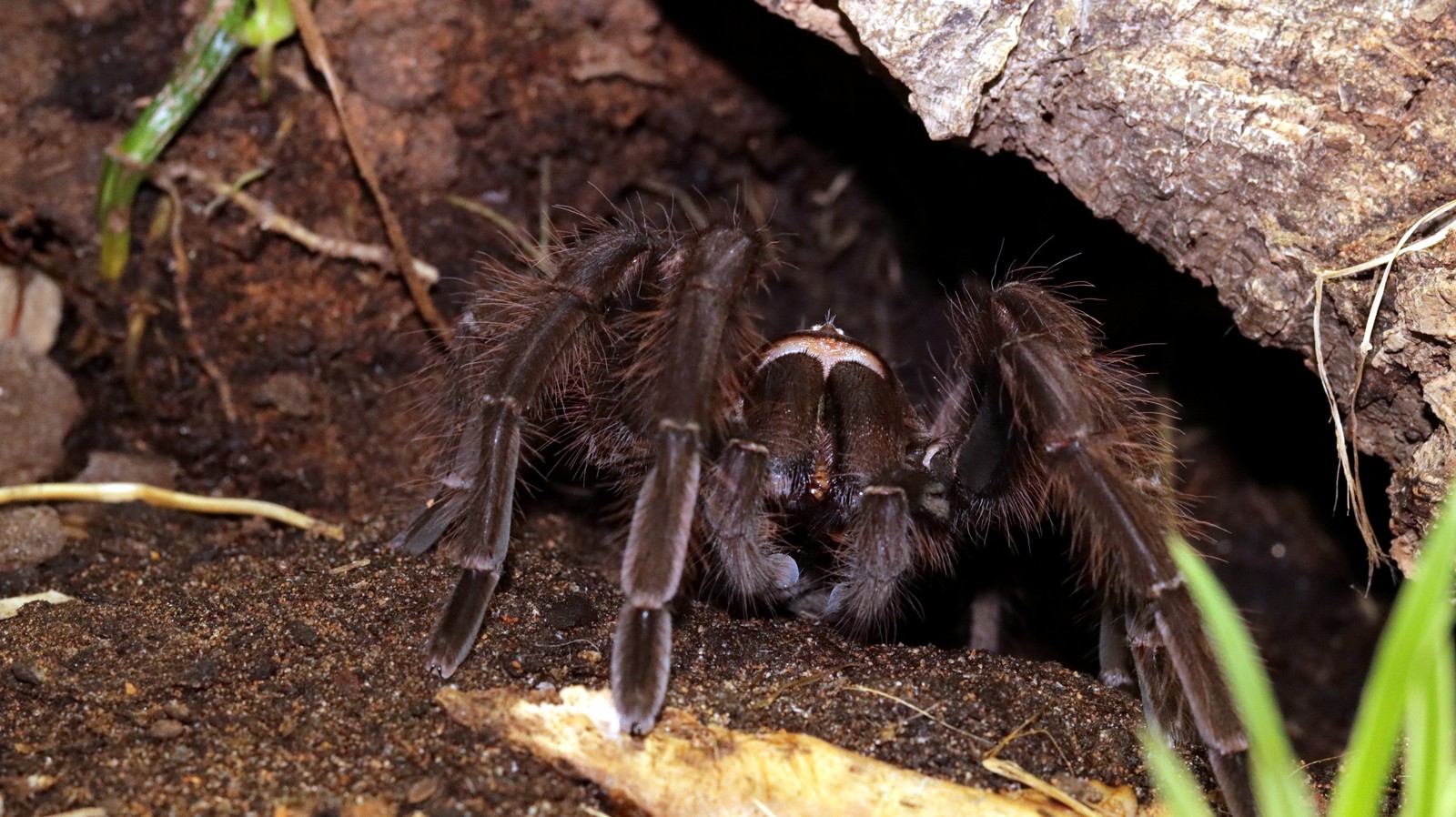
Scientific nameTheraphosa apophysis
FamilyTheraphosidae
Native rangeColombia, Venezuela and Brazil
TaxonomyAccepted species
SexConfirmed female
In the wild
Natural history.
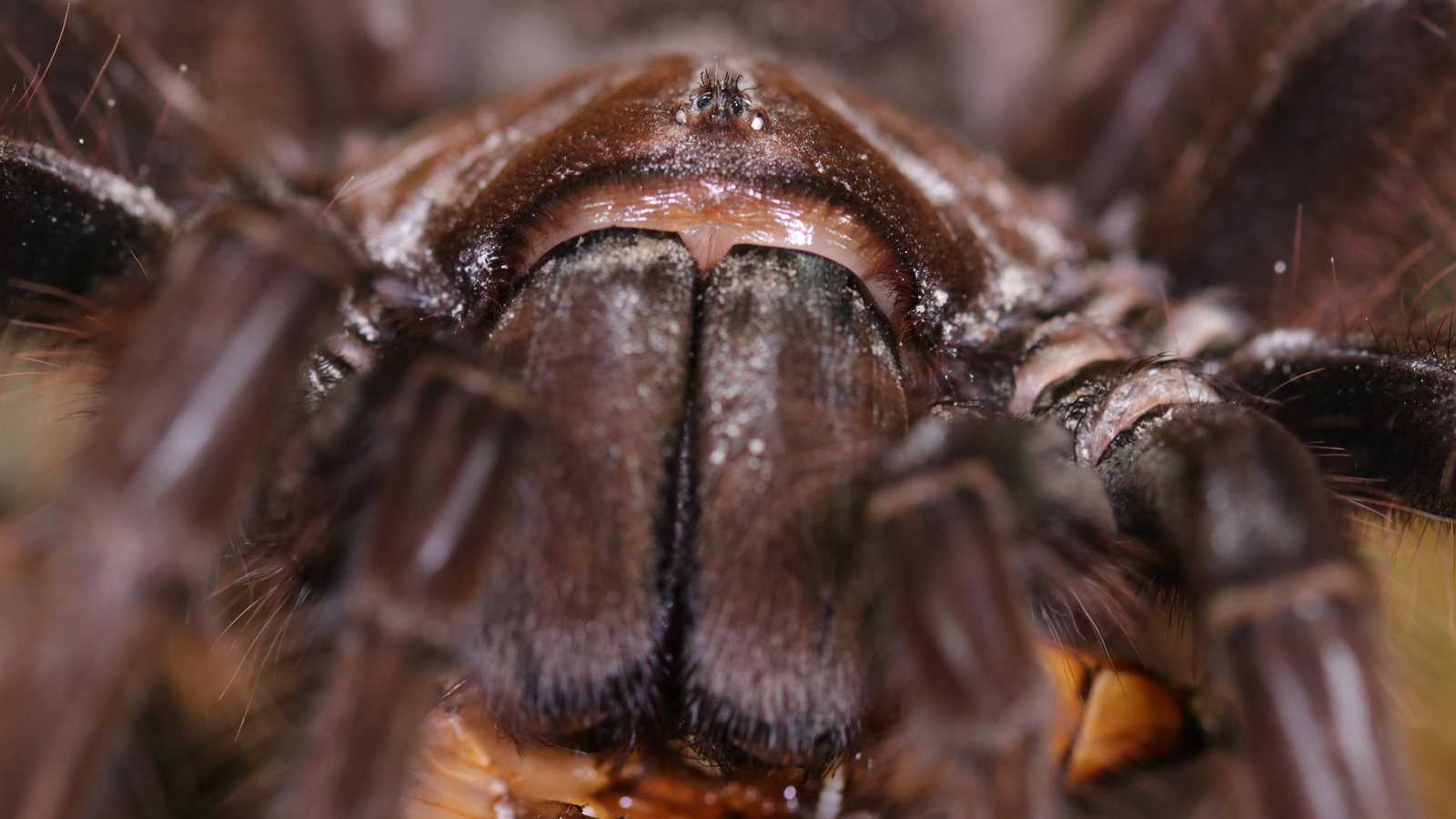
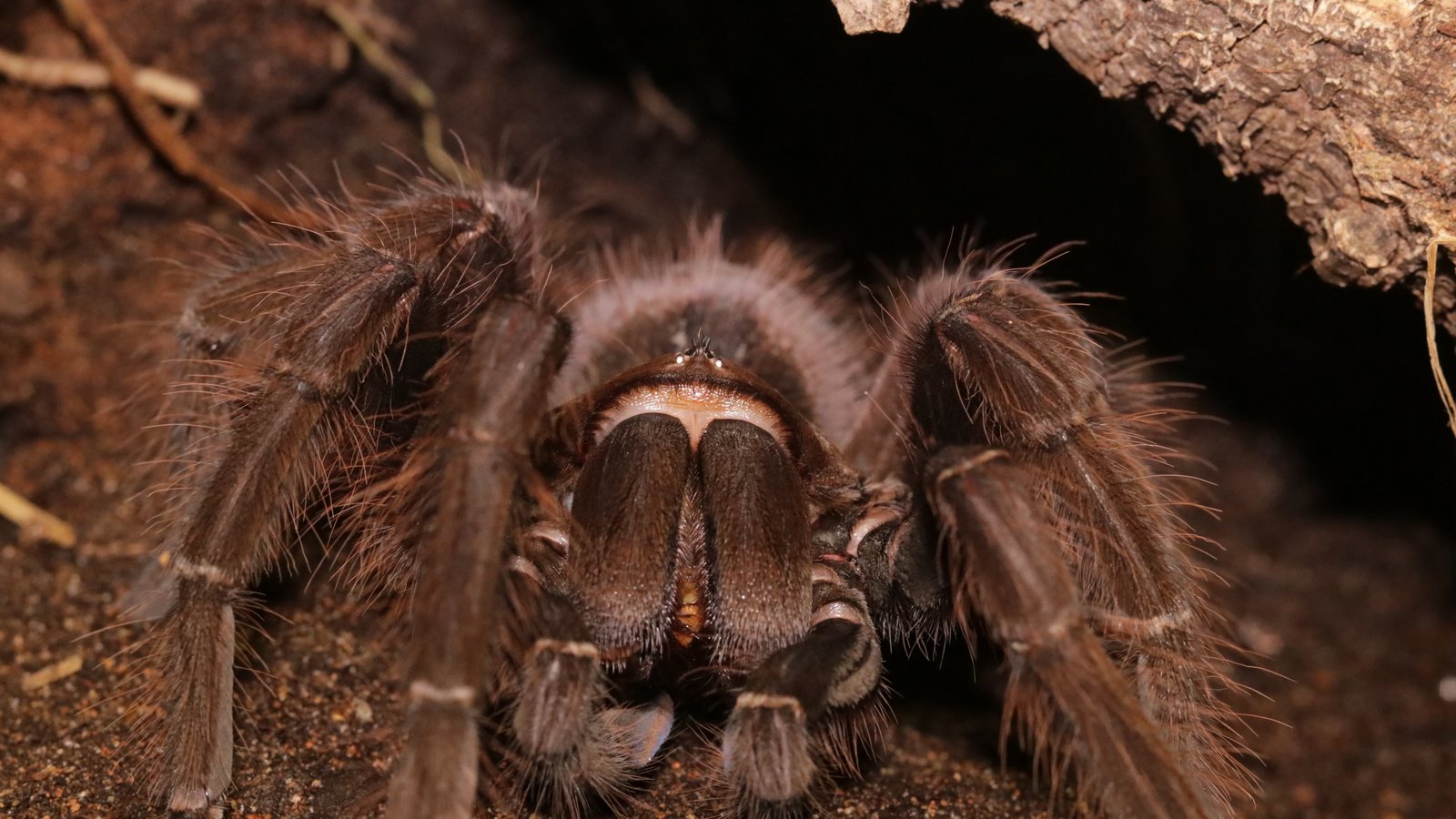
Young animals can show pinkish tones on the legs, while the adult form becomes darker and heavier. Size is impressive, but the close portraits reveal equally distinctive hairs and mouthparts.
Siuzi has a spacious terrestrial setup, deep substrate, a retreat, water, and close condition monitoring. Her care history includes a documented health case on the Introvertebrates channel.
Taxonomy and range
Theraphosa apophysis is an accepted giant theraphosid recorded from Colombia, Venezuela, and Brazil. It was described in 1991 under Pseudotheraphosa and later transferred to Theraphosa, which explains the older combination still found in some sources.
Burrows, shelter, and activity
Adult females are associated with fossorial retreats in lowland leaf litter. Recent field work documented an adult female at a ground burrow and later climbing roughly twelve metres into a tree, an important reminder that ‘terrestrial’ describes the usual centre of life rather than a physical inability to climb.
Feeding ecology
A large-bodied ambush predator can take a wide range of invertebrate prey, and occasional vertebrate predation has been recorded in giant tarantulas. Those unusual events are natural-history observations, not a captive feeding target; appropriately sized invertebrates remain the relevant collection record.
Defence, senses, and movement
Size is only one part of the defensive system. Theraphosa can retreat, stridulate, posture, and release strongly irritating urticating hairs; the last of these makes face and eye protection during enclosure work particularly important.
Conservation context
Status, trade & uncertainty.
IUCN evaluates extinction risk; CITES regulates international trade. They answer different questions, and missing data should remain visible.
Not Evaluated
No species-level assessment was located in IUCN Red List version 2026-1.
Not CITES-listed
The species was not found in the CITES Appendices checked in September 2026.
What the evidence supports
Its large body, long life and limited dispersal make reliable harvest and population data especially important, but a global trend has not been established.
Make provenance visible
Use traceable captive-bred provenance and preserve acquisition records. Size and captive longevity do not make an undocumented origin less important.
Reviewed 14 September 2026 against IUCN Red List version 2026-1 and the live CITES Checklist. “Not Evaluated” is not a low-risk category. National and local rules may be stricter.
Life in the collection
Meet Siuzi.
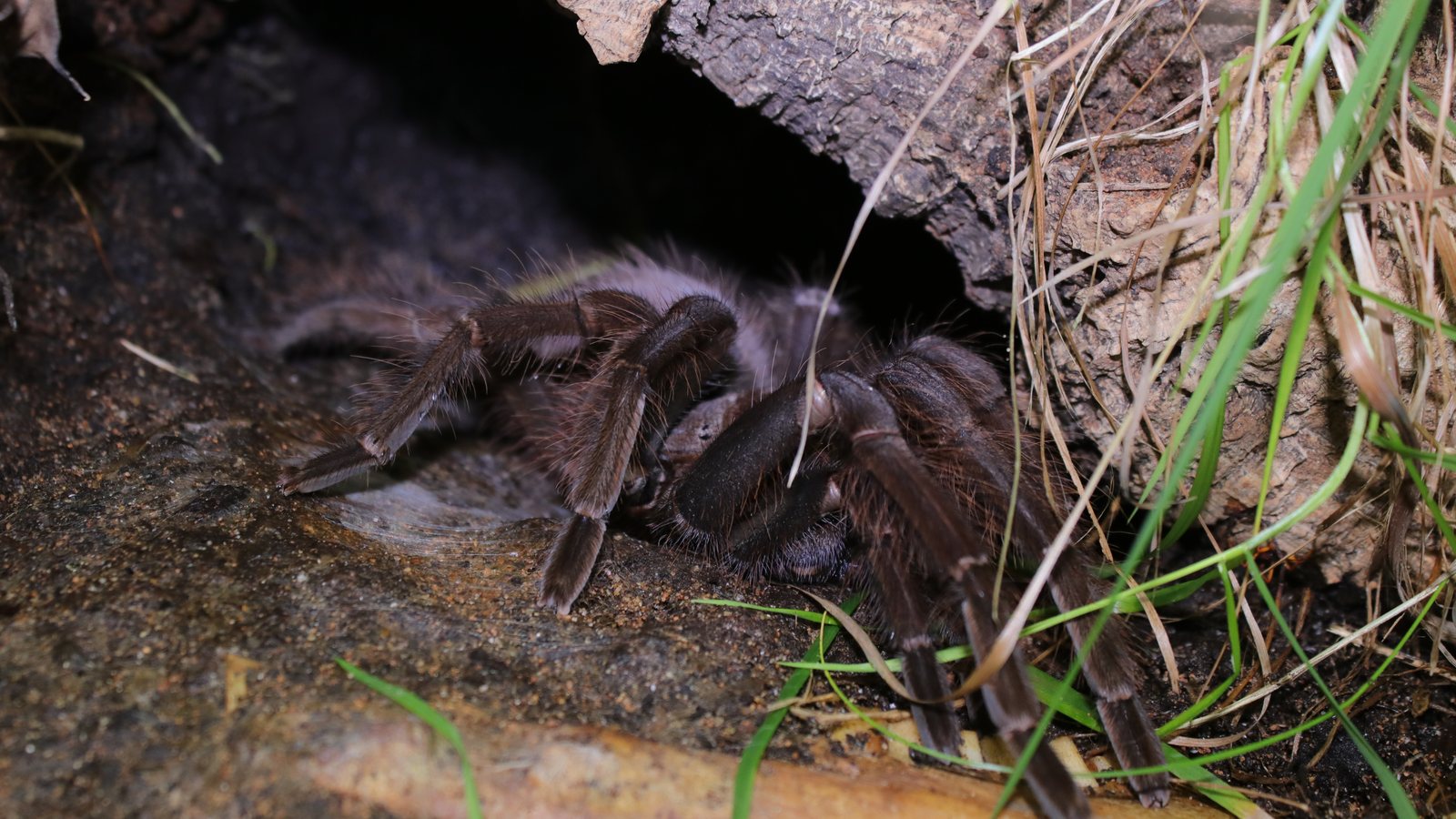
Siuzi’s feeding records, photographs and videos document her life in the collection, including the health case shared on the Introvertebrates channel.
From Instagram
Posts & reels.
From the channel
Related viewing.
Introvertebrates on YouTube
When mold grows on a tarantula: A case study with Siuzi
A detailed, individual case study documenting Siuzi and the response to an unusual health concern.
Personal observations
From the Codex.
Introvertebrates Codex
Siuzi · care history
Time in care, feeding records, moults and measurements. These are observations from the Introvertebrates collection, not species-wide averages.
Collection records are not available here yet.
Private notes and identifying details are kept off the website.
Continue exploring
Related profiles.
Read further
Sources.
- World Spider Catalog — Theraphosa apophysisView the source.
- Ecology and Evolution — natural orientation and climbing observations in tarantulasView the source.