
A South American curtain-web spider in Dipluridae, not a tarantula. It builds dense sheet and funnel-like silk that links a retreat to the surrounding hunting surface.
Species profile · Current resident
Linothele fallax
Curtain-web spider
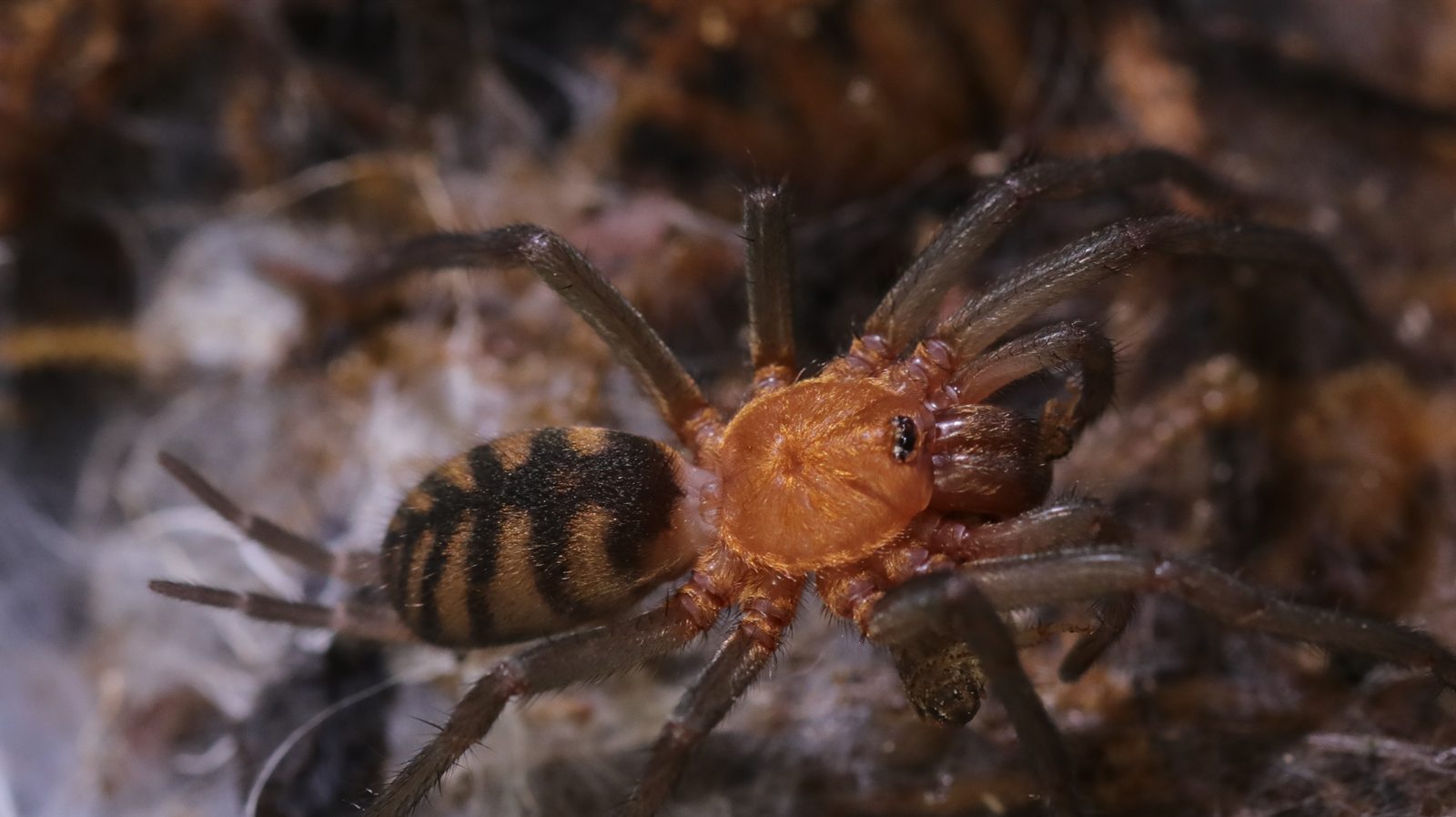
This Linothele fallax represents the other-spider side of the current collection. Its profile photograph shows the orange carapace and distinctly patterned abdomen.
Scientific nameLinothele fallax
FamilyDipluridae
Native rangeBolivia and Brazil
TaxonomyAccepted species
SexUnknown
In the wild
Natural history.
The orange carapace, patterned abdomen, and long spinnerets make the animal visually distinct. Its web architecture is an equally important part of the profile.
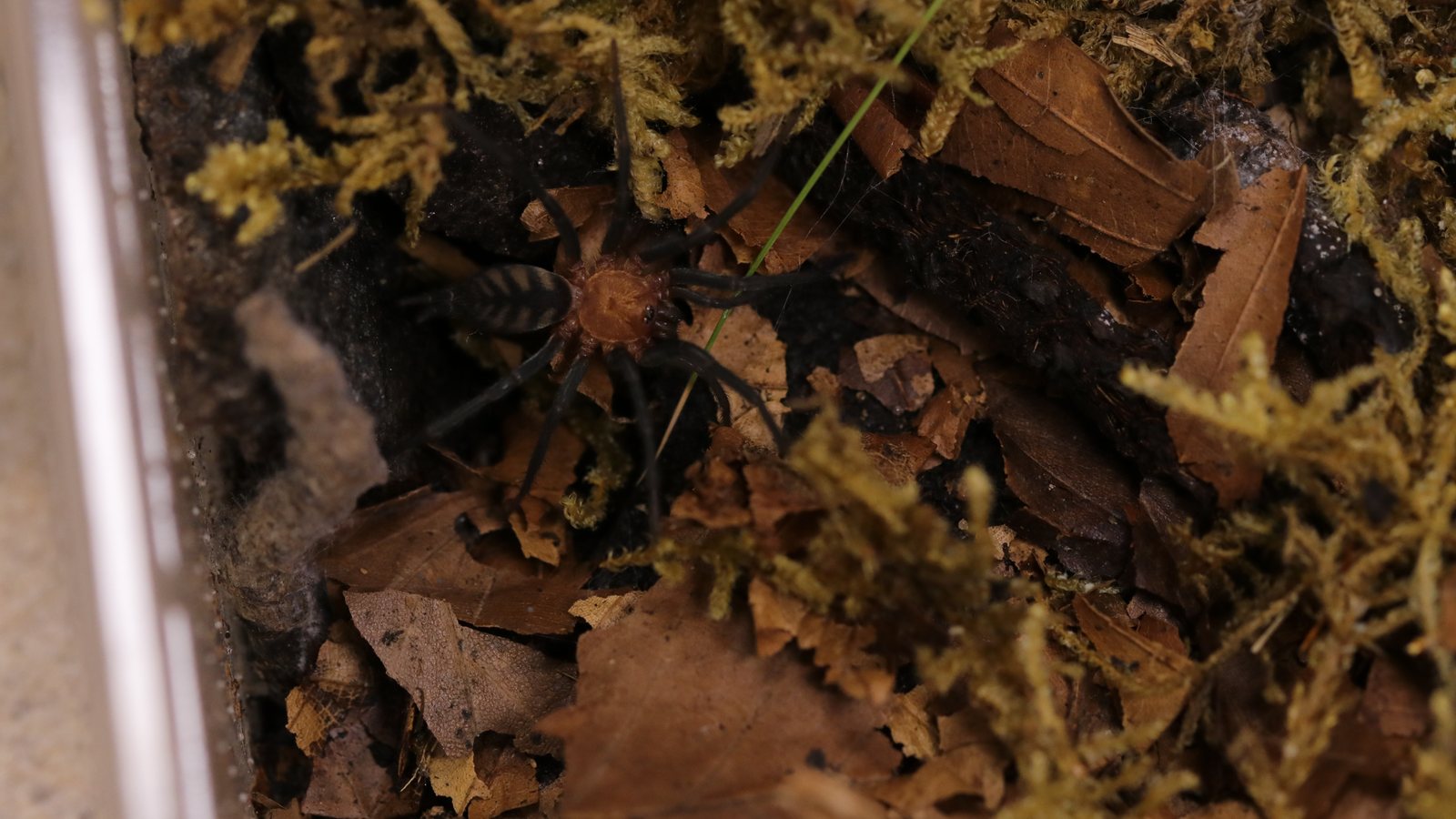
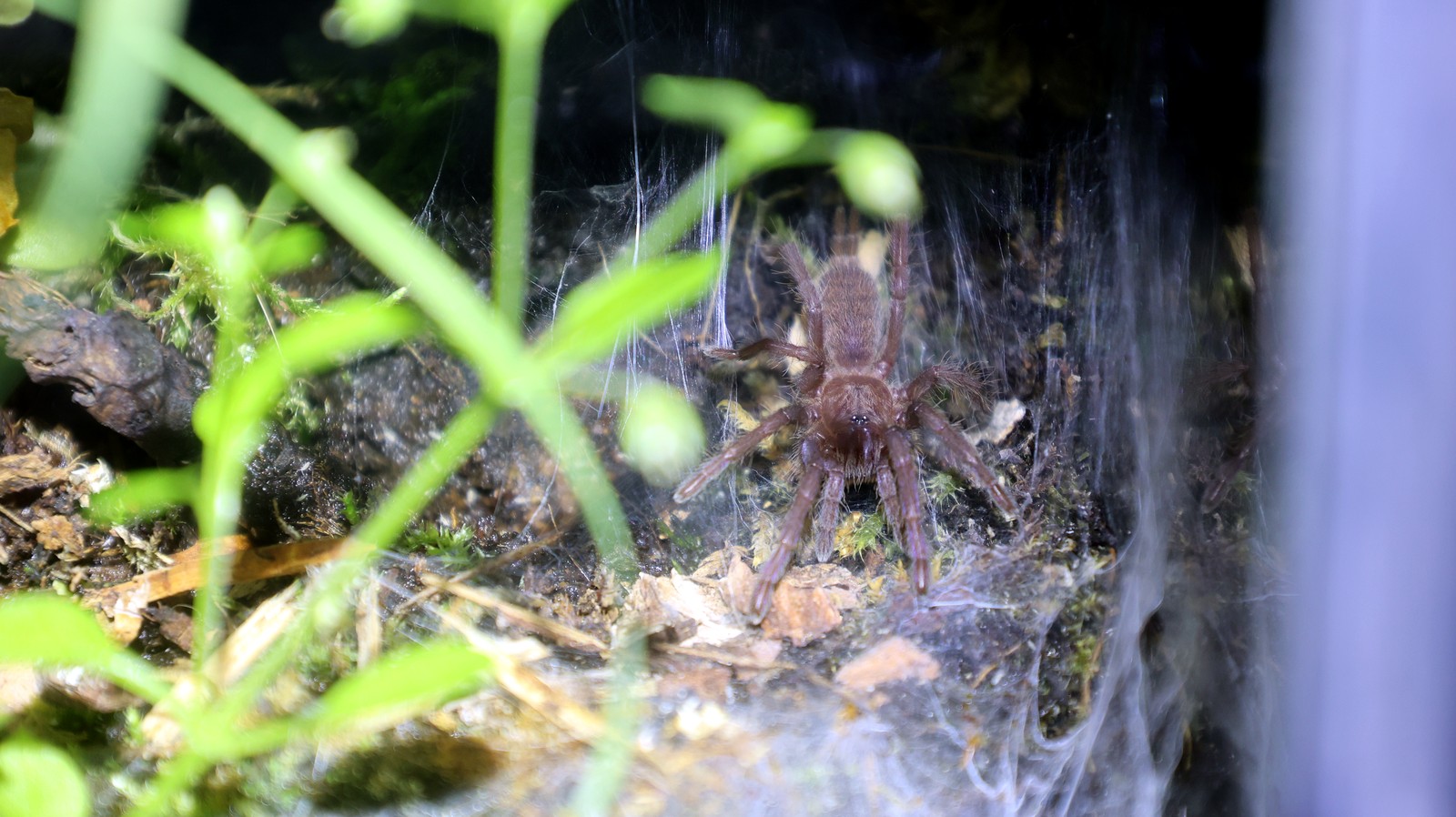
The enclosure provides a dark retreat and many points for silk attachment. Feeding is observed at the web rather than by exposing or handling the resident.
Taxonomy and range
Linothele fallax is a South American mygalomorph in Dipluridae rather than Theraphosidae. It was originally described in Diplura and later transferred to Linothele, a genus whose species occupy a remarkable range of ground, bank, rock-wall, and elevated forest microhabitats.
Burrows, shelter, and activity
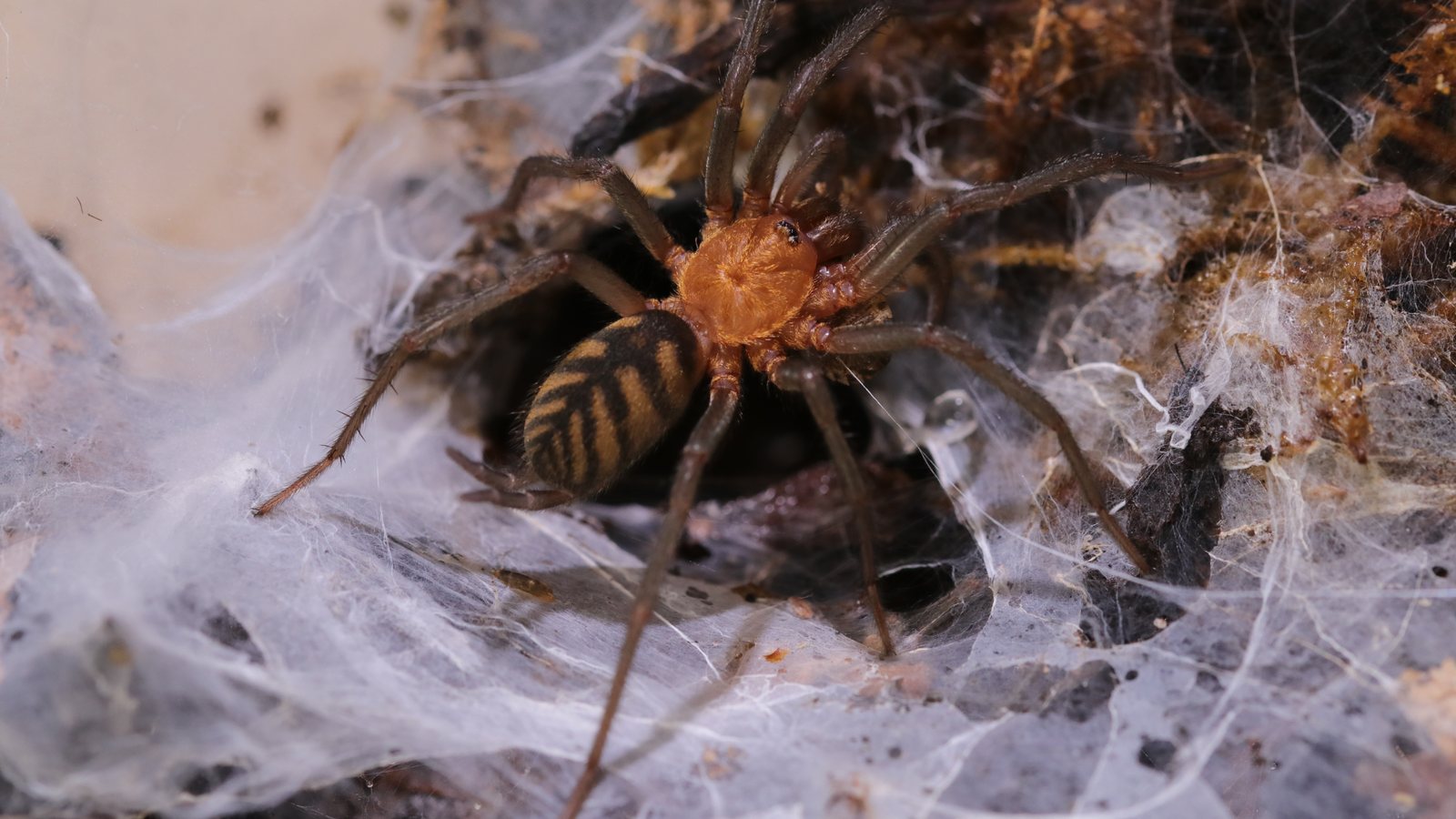
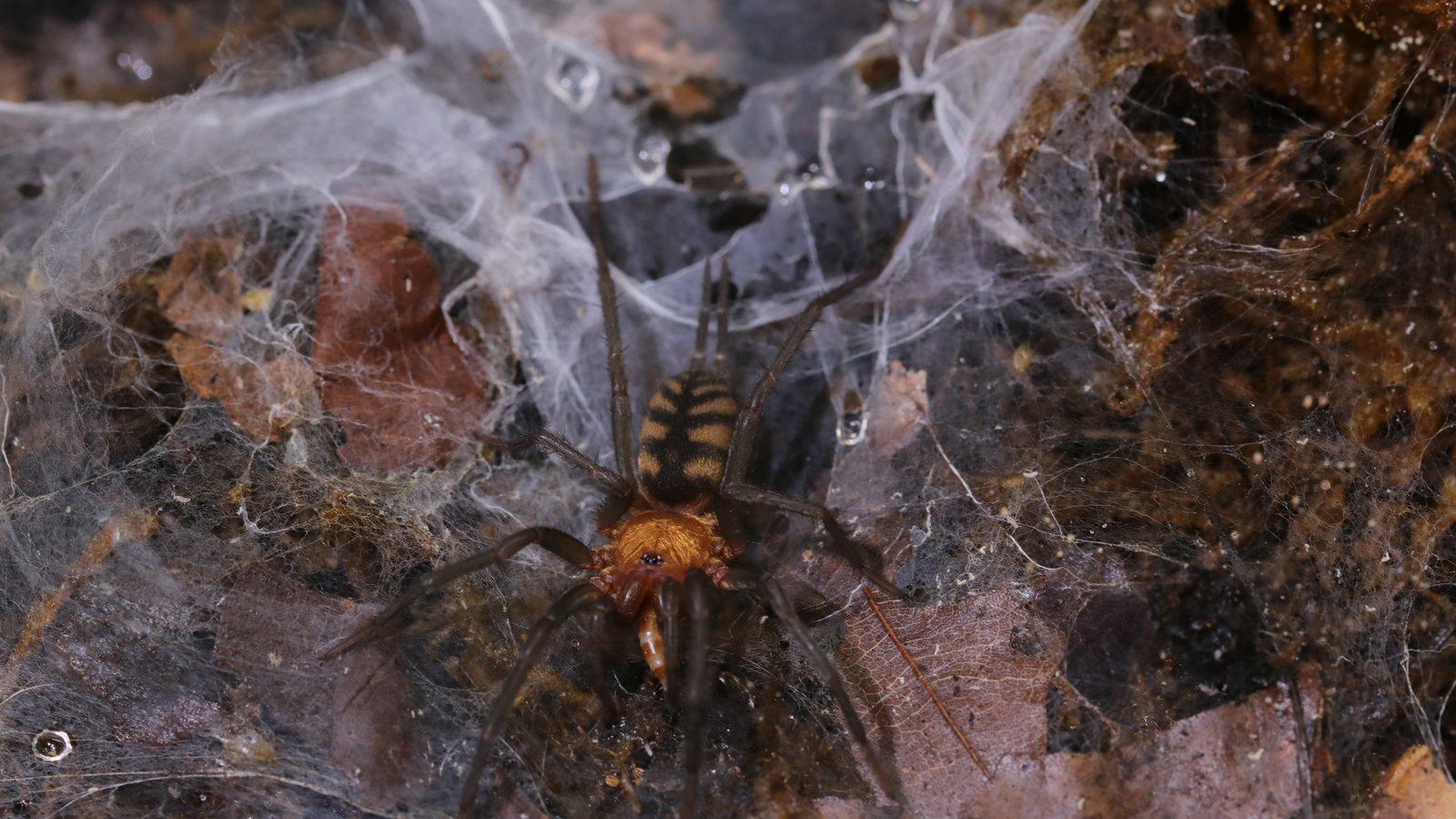
L. fallax has been recorded from natural crevices near ground level and from burrows. Long spinnerets lay dense silk into a curtain or sheet leading back to the refuge, turning a small hiding place into a much larger vibration-sensitive hunting surface.
Feeding ecology
The spider waits where signals from the curtain web converge, then rushes onto the sheet to capture arthropods. Food can be taken back to the silk-lined refuge. Research on its web material also shows why the silk itself deserves attention as a biological structure, not simply scenery.
Defence, senses, and movement
This is a fast mygalomorph without the urticating-hair defence of many New World tarantulas. Retreat, speed, and venom used for prey make a secure enclosure and hands-off observation especially important.
Conservation context
Status, trade & uncertainty.
IUCN evaluates extinction risk; CITES regulates international trade. They answer different questions, and missing data should remain visible.
Not Evaluated
No species-level assessment was located in IUCN Red List version 2026-1.
Not CITES-listed
The species was not found in the CITES Appendices checked in September 2026.
What the evidence supports
Species-specific field information is sparse. Taxonomy, web biology, and scattered locality records cannot yet provide a reliable global population trend.
Make provenance visible
Preserve the accepted name and seller history, and keep observations of this captive individual separate from claims about wild populations.
Reviewed 14 September 2026 against IUCN Red List version 2026-1 and the live CITES Checklist. “Not Evaluated” is not a low-risk category. National and local rules may be stricter.
Life in the collection
A living resident.
This Linothele fallax broadens the collection beyond tarantulas. Its curtain-web spider identity, patterned abdomen, feeding video, and care history give the profile a different biological and visual character from the theraphosid residents.
From Instagram
Posts & reels.
From the channel
Related viewing.
Introvertebrates on YouTube
Spider snapshot: Linothele fallax
A compact species snapshot of the tiger curtain-web spider.
Personal observations
From the Codex.
Introvertebrates Codex
Current resident · care history
Time in care, feeding records, moults and measurements. These are observations from the Introvertebrates collection, not species-wide averages.
Collection records are not available here yet.
Private notes and identifying details are kept off the website.
Continue exploring
Related profiles.
Read further
Sources.
- World Spider Catalog — genus LinotheleView the source.
- Taxonomy — habitat and natural history of LinotheleView the source.
- ACS Omega — material properties of the Linothele fallax webView the source.