
A ground-dwelling Brazilian tarantula. The current revision is the starting point for interpreting its morphology and distribution, especially where older sources used names differently.
Species profile · Current resident
Lasiodora klugi
Bahia scarlet tarantula
Lasiodora klugi brings a large Brazilian terrestrial tarantula to the Introvertebrates collection. Its profile follows the accepted taxonomy while keeping the current resident’s history separate from archive photography.
Scientific nameLasiodora klugi
FamilyTheraphosidae
Native rangeBrazil
TaxonomyAccepted species
SexNot confirmed
In the wild
Natural history.
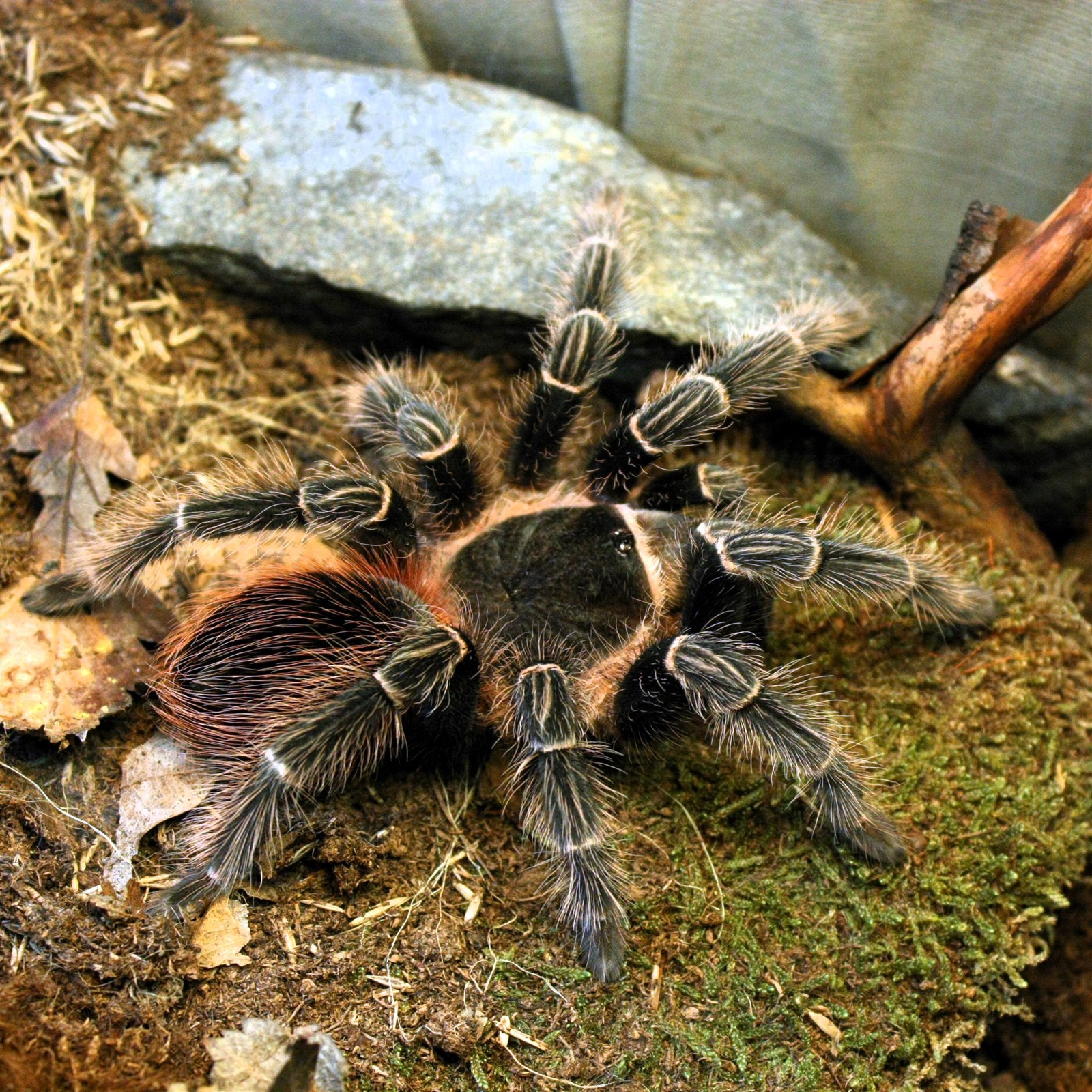
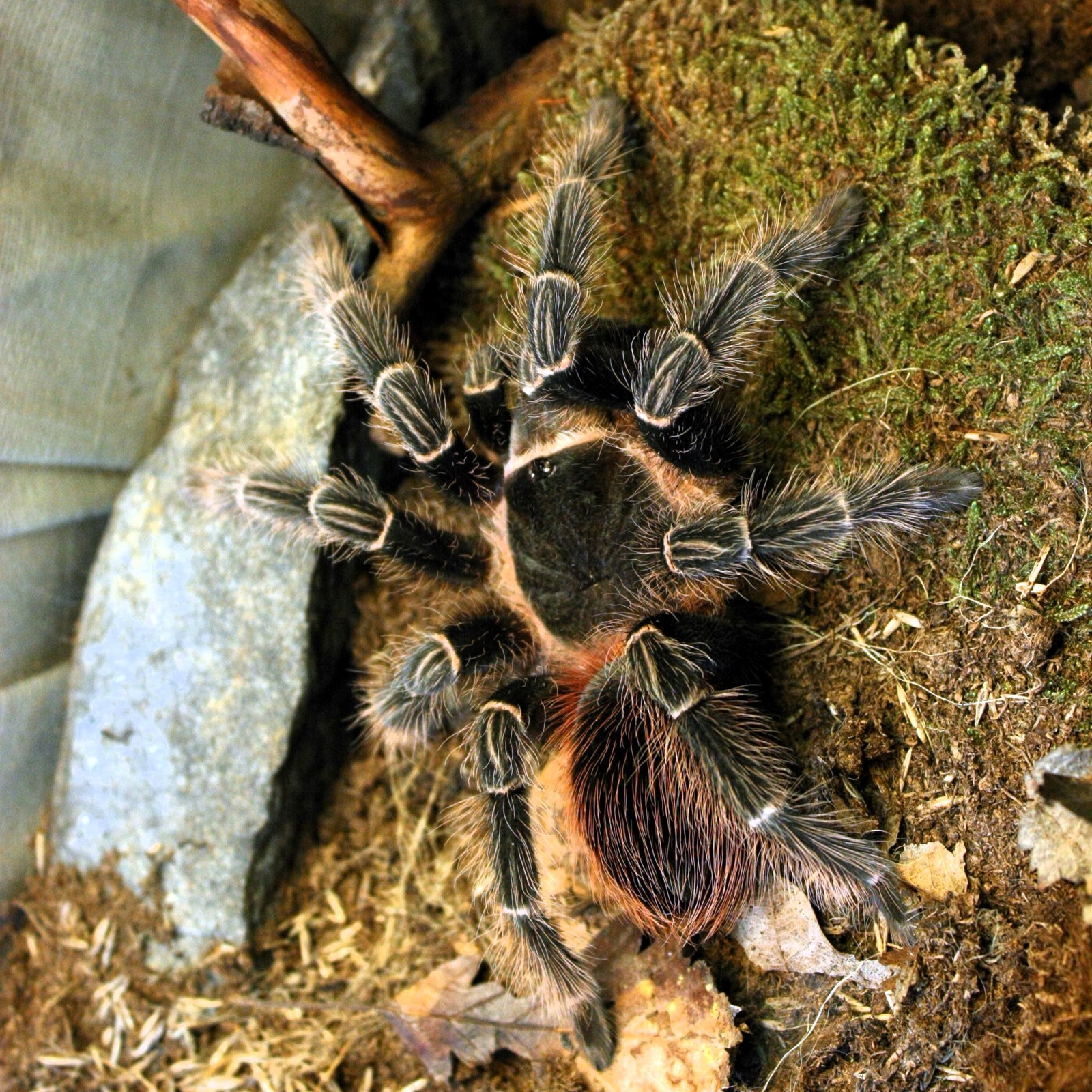
Dark legs and reddish abdominal hairs give the familiar scarlet contrast. Colour alone is insufficient to distinguish the species from all other Lasiodora.
This profile separates the current resident’s documented history from species-level research. The photograph is a labelled species archive image.
Taxonomy and range
Lasiodora klugi (C. L. Koch, 1841) is an accepted Brazilian species and the type species of Lasiodora. Bertani’s 2023 revision synonymised Lasiodora itabunae with L. klugi and reassessed historical identifications.
Burrows, shelter, and activity
For a large terrestrial tarantula, ground-level cover and usable substrate are more relevant than climbing height. The archive photograph shows a spider beside cover, but one image does not establish the current resident’s enclosure preferences.
Feeding ecology
Like other tarantulas, Lasiodora klugi is a predator. The resident’s feeding intervals, refusals and prey choices require direct observation; size alone does not establish appetite or a suitable feeding schedule.
Defence, senses, and movement
Lasiodora possesses urticating setae. These defensive hairs are part of the biology reviewed in the genus revision. Defensive responses vary with context and should not be reduced to a fixed temperament label.
Conservation context
Status, trade & uncertainty.
IUCN evaluates extinction risk; CITES regulates international trade. They answer different questions, and missing data should remain visible.
Assessment not verified
A species-level IUCN category has not been verified for this profile. Lack of a published category here is not evidence of low extinction risk.
Check current listings
Consult the current CITES Checklist and relevant national requirements before any transfer. No legal status is inferred from the presence of the species in captivity.
What the evidence supports
The taxonomic sources establish a name and distribution, not a global population trend. Captive availability cannot substitute for field population data.
Make provenance visible
Keep provenance and acquisition records, and distinguish captive observations from claims about wild abundance.
Taxonomy and linked literature reviewed 18 October 2026. A Red List category and international trade status are not asserted here without a verified assessment or listing.
Life in the collection
A living resident.
This is the Lasiodora klugi currently represented in the collection, without a published individual name. The archived photograph shows another individual of the same species. Sex and measurements remain unpublished.
Personal observations
From the Codex.
Introvertebrates Codex
Current resident · care history
Time in care, feeding records, moults and measurements. These are observations from the Introvertebrates collection, not species-wide averages.
No public care metrics have been published for this resident yet.
Private notes and identifying details are kept off the website.
Continue exploring
Related profiles.
Read further
Sources.
- World Spider Catalog — Lasiodora klugiView the source.
- Bertani (2023) — revision of LasiodoraView the source.