
A terrestrial tarantula from southern South America that uses ground-level shelter and may excavate around a retreat. Its heavy build suits a substrate-focused enclosure.
Species profile · Runa
Grammostola pulchripes
Meet Runa
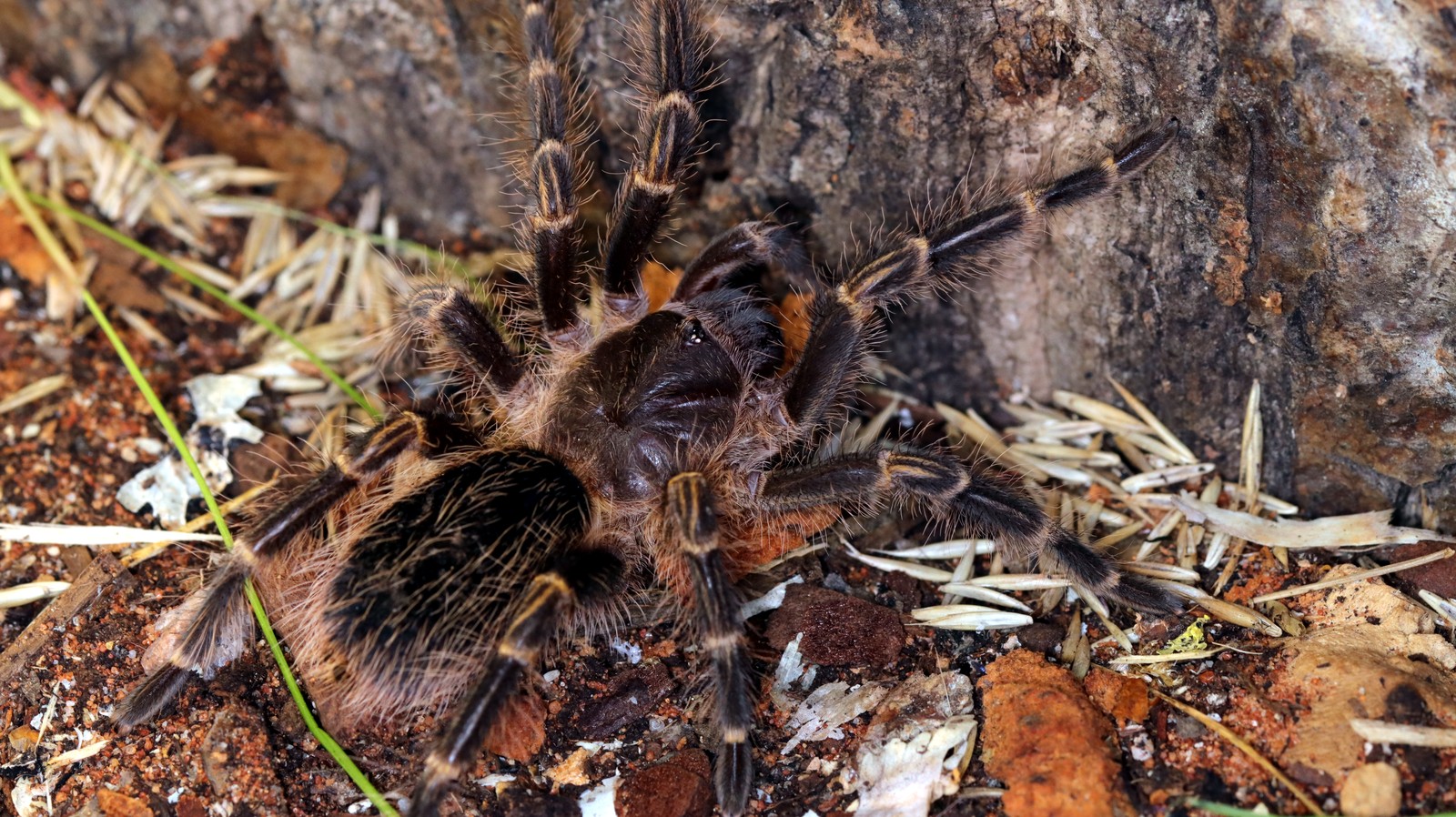
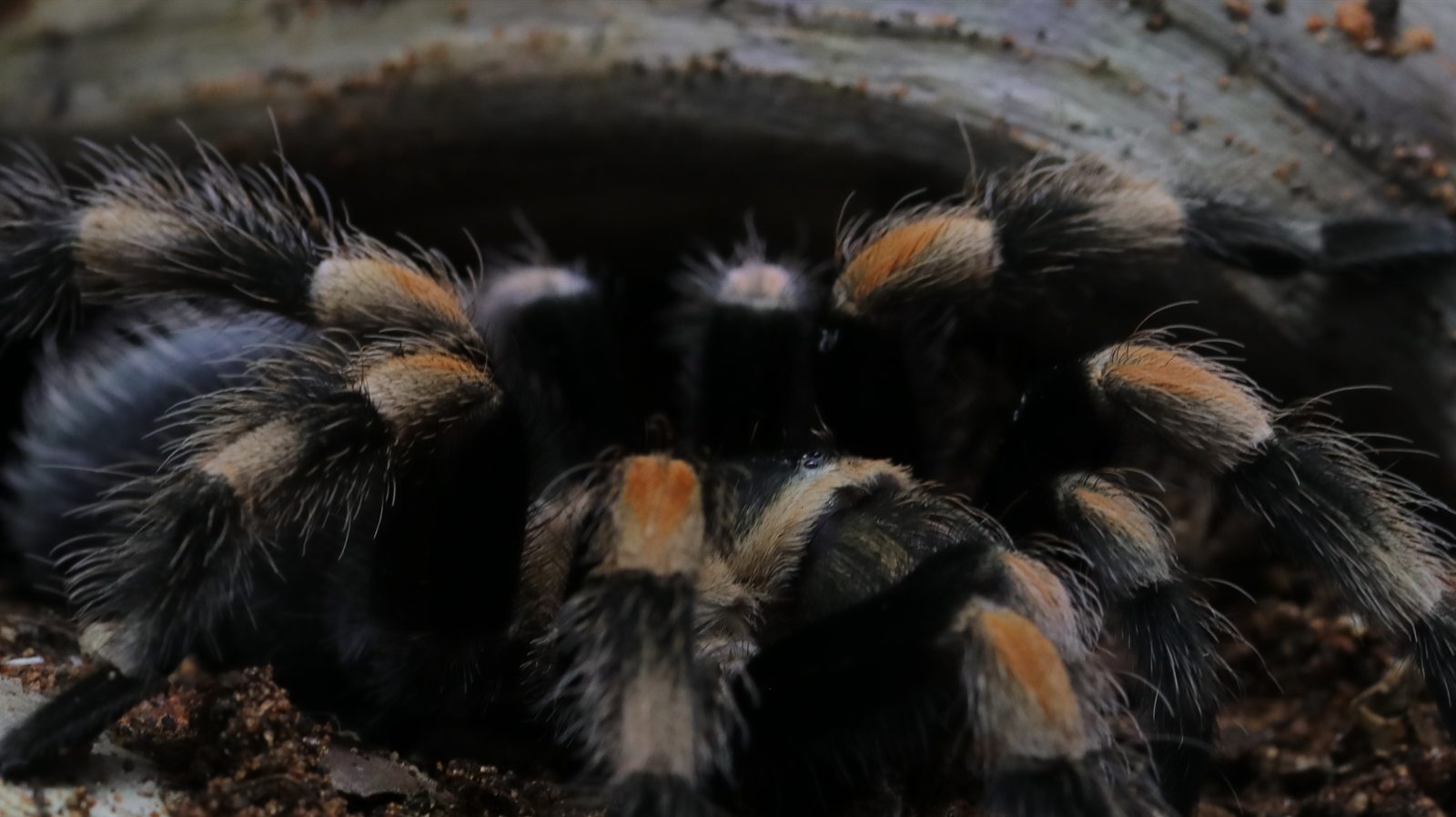
Runa is the Grammostola pulchripes currently in my care. Her portrait is centred on the strong golden knee bands and full-body silhouette.
Scientific nameGrammostola pulchripes
FamilyTheraphosidae
Native rangeBrazil, Paraguay and Argentina
TaxonomyAccepted species
SexConfirmed female
In the wild
Natural history.
Pale golden bands on the legs give the Chaco golden-knee its familiar common name. The markings remain readable from both overhead and lower viewing angles.
This confirmed female has deep substrate, a stable hide, and water. The profile distinguishes routine collection observations from broader published information.
Taxonomy and range
Grammostola pulchripes is an accepted South American theraphosid recorded from Brazil, Paraguay, and Argentina. Regional taxonomic work places Argentine records in comparatively humid landscapes including wet Chaco, eastern Espinal, and northern Yungas, a useful correction to overly simple ‘dry grassland’ summaries.
Burrows, shelter, and activity
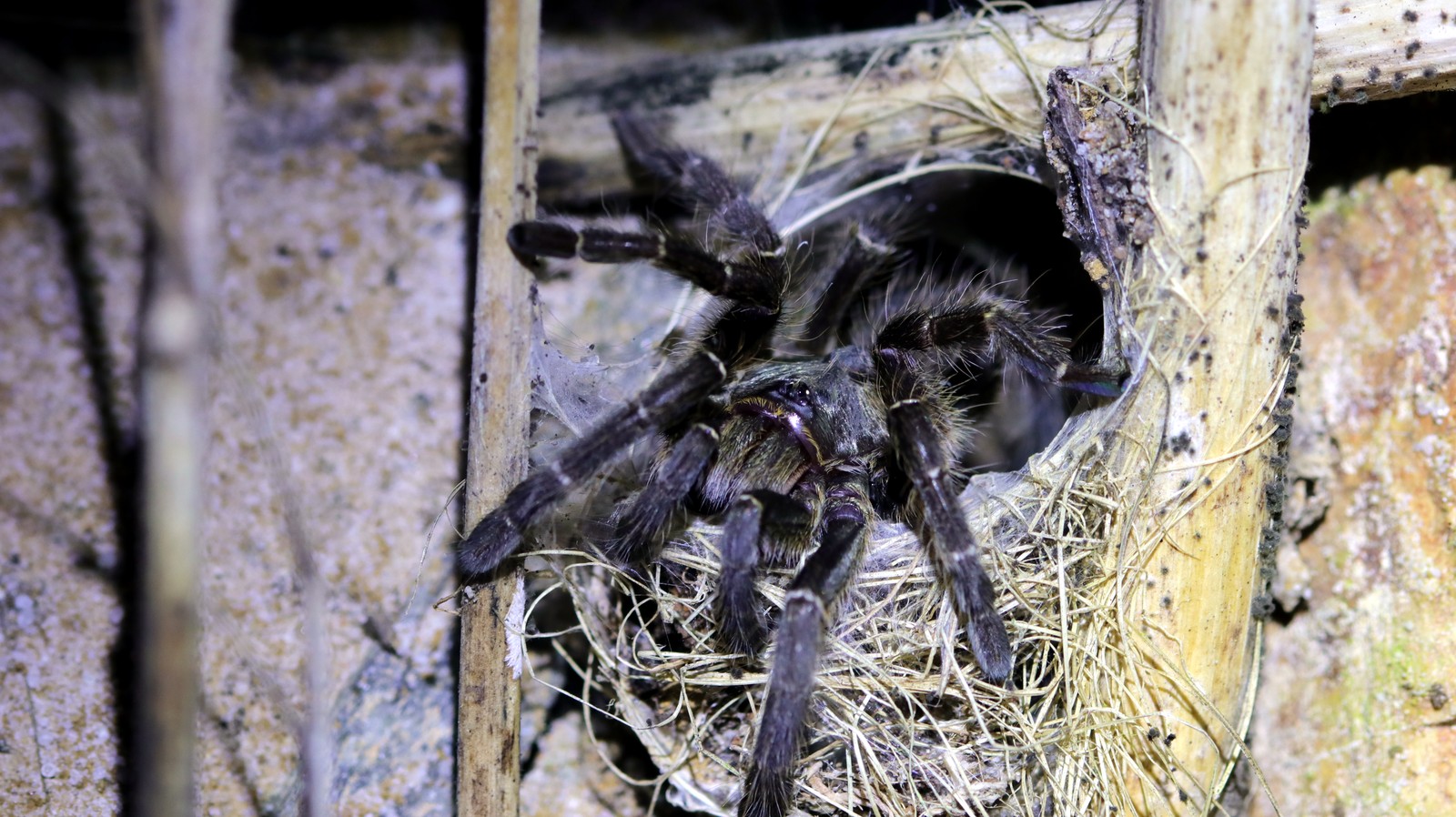
This heavy terrestrial spider uses ground-level cover and can excavate around a natural cavity or prepared retreat. The shelter moderates surface conditions and becomes the centre of a relatively small activity area, especially outside mating dispersal.
Feeding ecology
The basic strategy is opportunistic ambush of terrestrial arthropods. Long pauses between visible events are normal for a sit-and-wait predator, and captive appetite can change around premoult, season, temperature, and individual condition.
Defence, senses, and movement
Retreat and stillness are important defences, backed by urticating abdominal hairs when the animal is persistently disturbed. The familiar golden bands make the spider easy to recognise but say nothing about whether handling is safe or useful.
Conservation context
Status, trade & uncertainty.
IUCN evaluates extinction risk; CITES regulates international trade. They answer different questions, and missing data should remain visible.
Not Evaluated
No species-level assessment was located in IUCN Red List version 2026-1.
Not CITES-listed
CITES CoP20 added Grammostola rosea to Appendix II with delayed implementation; it did not list the entire genus or G. pulchripes.
What the evidence supports
The species is recorded across Brazil, Paraguay, and Argentina, but a broad mapped range does not reveal local habitat loss, collection levels, or population trend.
Make provenance visible
Keep the exact species name and provenance. Similar common names within Grammostola should not be used to transfer legal status from one species to another.
Reviewed 14 September 2026 against IUCN Red List version 2026-1 and the live CITES Checklist. “Not Evaluated” is not a low-risk category. National and local rules may be stricter.
Life in the collection
Meet Runa.
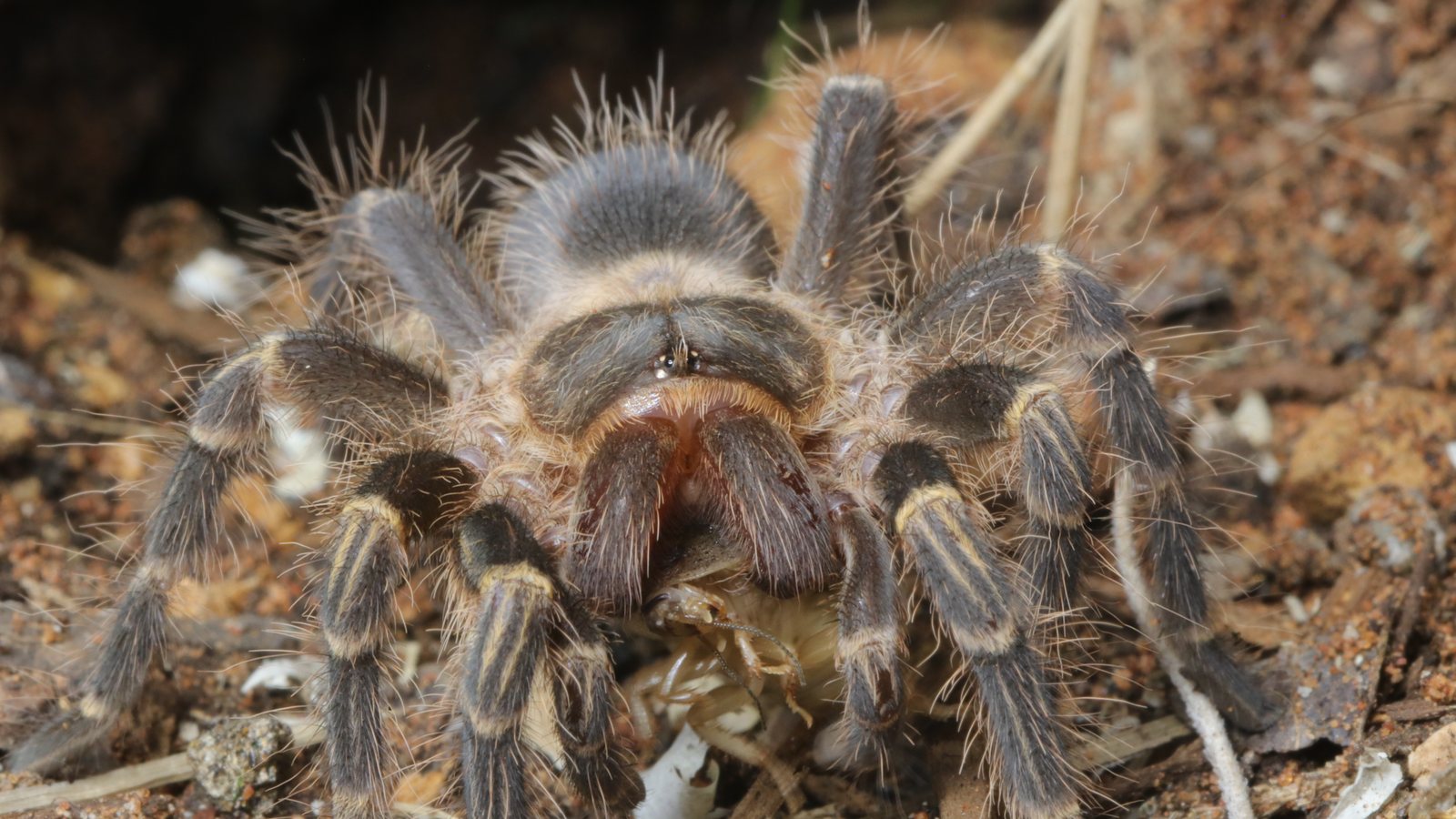
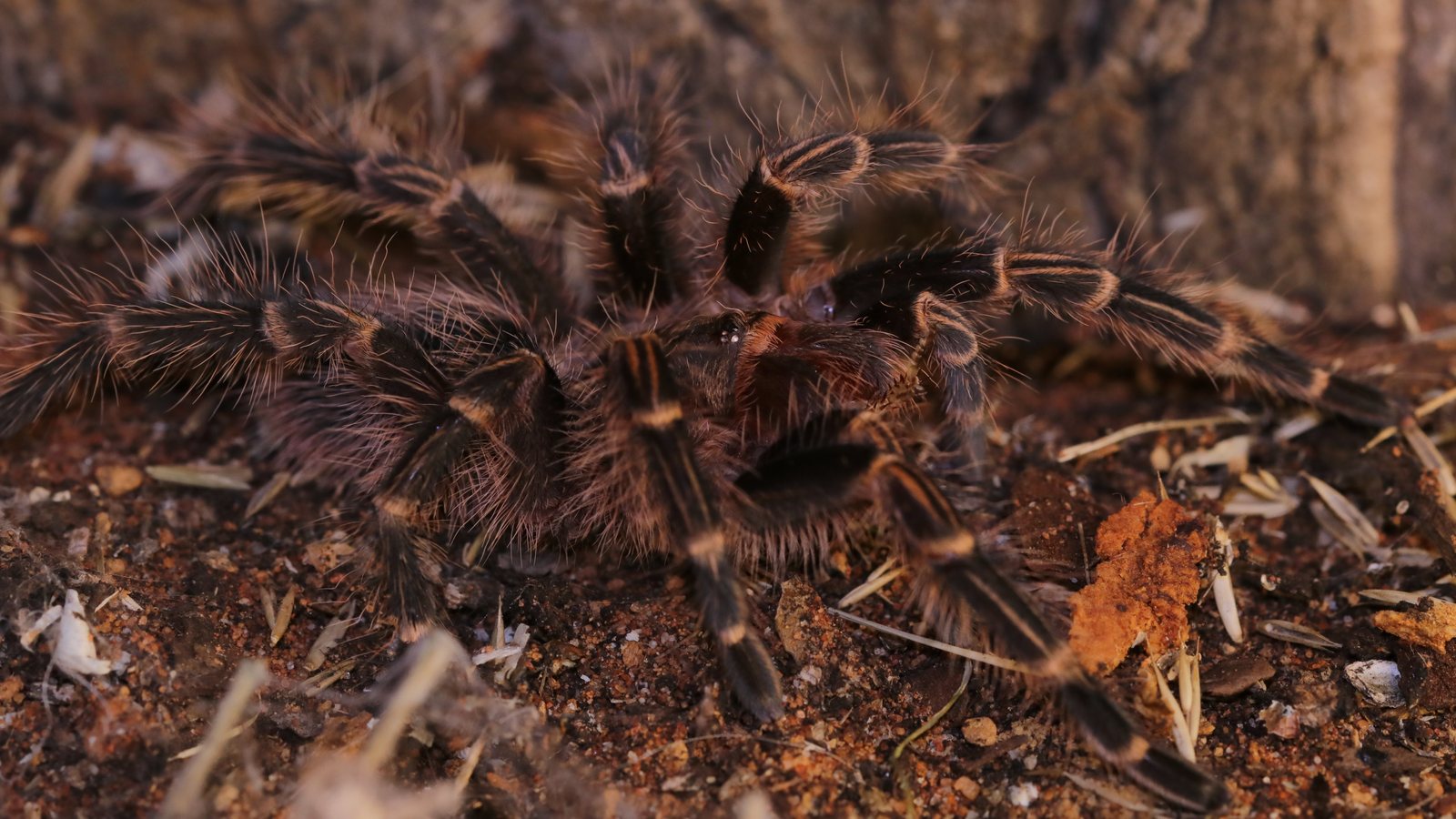
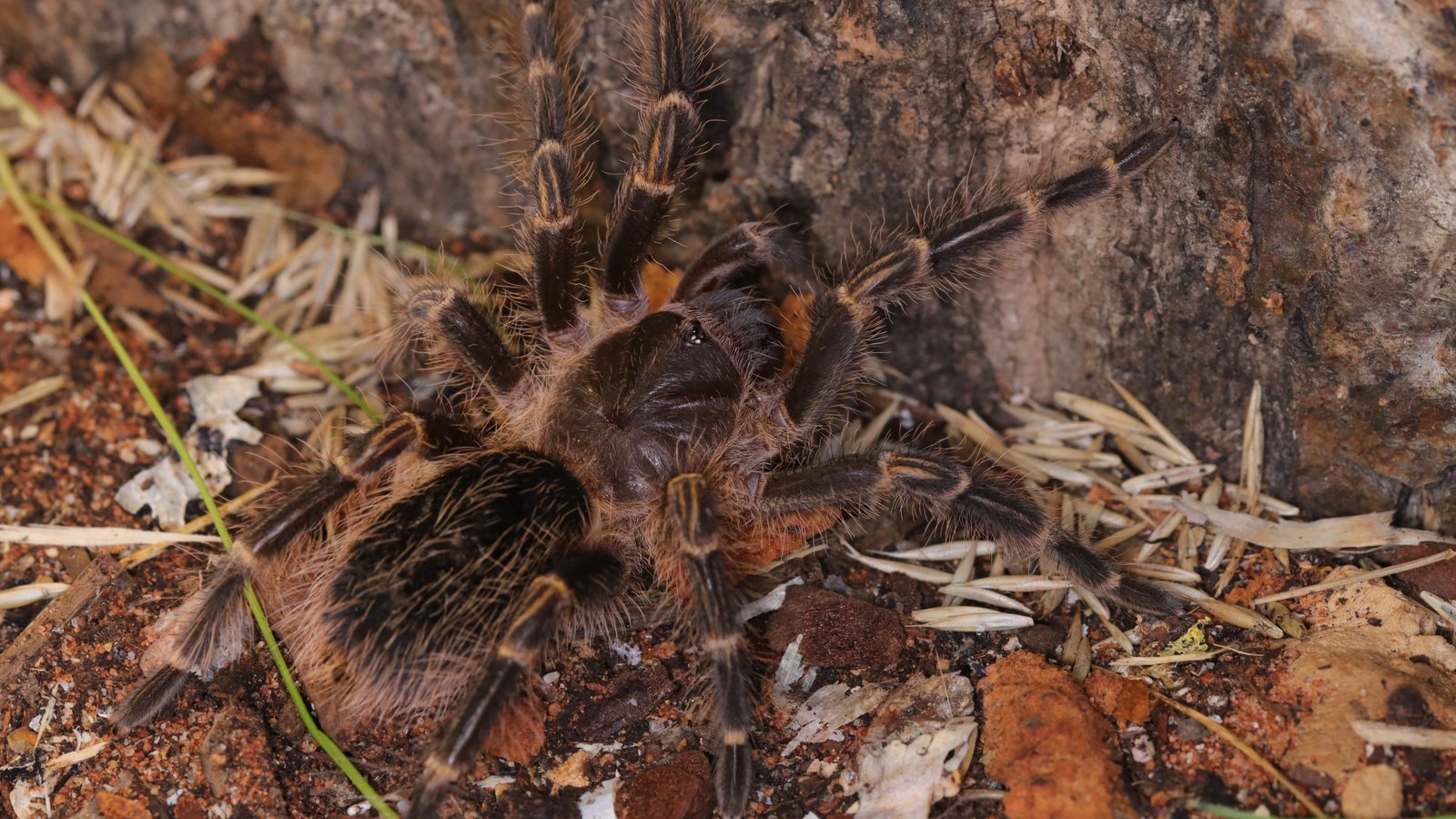
Runa represents Grammostola pulchripes in the current collection. Her recognisable golden leg bands make her easy to follow visually, while the Codex separates personal observations from general species information.
From Instagram
Posts & reels.
From the channel
Related viewing.
Introvertebrates on YouTube
Meet the Chaco golden-knee tarantula up close
A species-focused introduction to Grammostola pulchripes and its distinctive golden bands.
Personal observations
From the Codex.
Introvertebrates Codex
Runa · care history
Time in care, feeding records, moults and measurements. These are observations from the Introvertebrates collection, not species-wide averages.
Collection records are not available here yet.
Private notes and identifying details are kept off the website.
Continue exploring
Related profiles.
Read further
Sources.
- World Spider Catalog — Grammostola pulchripesView the source.
- Journal of Natural History — Grammostola distribution and habitats in ArgentinaView the source.