
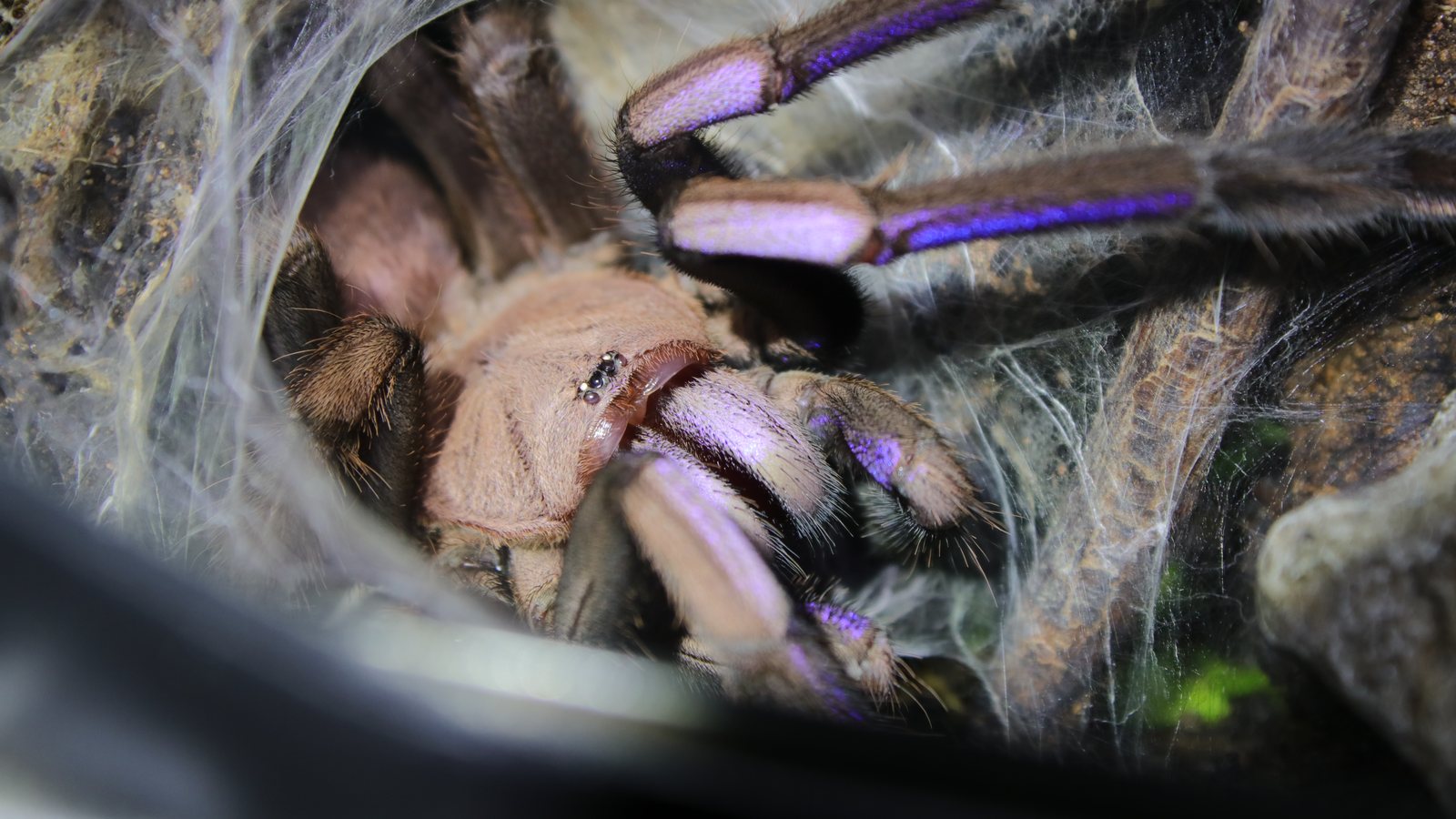
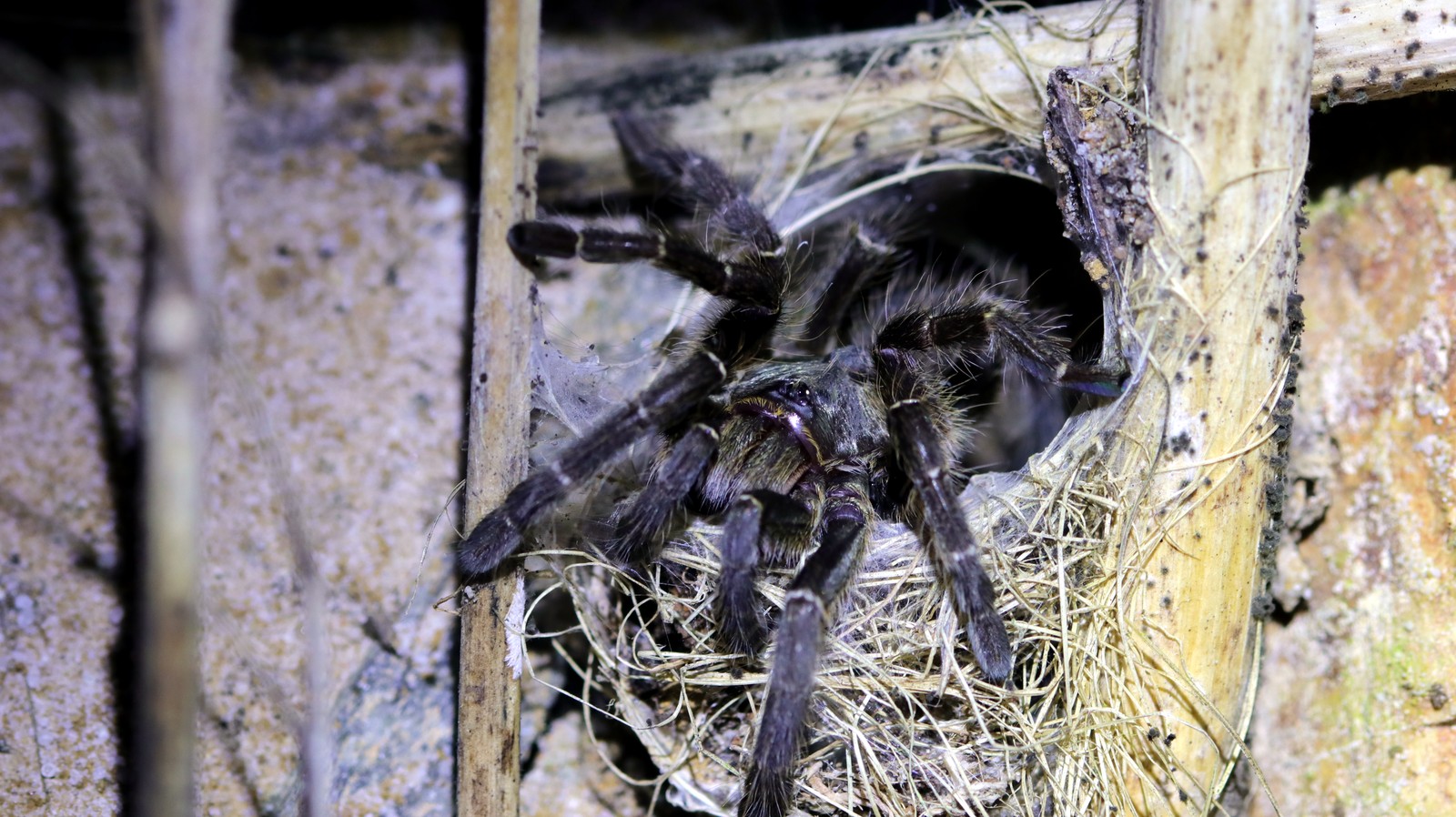
A recently described Thai tarantula associated with retreat-based life. Elvira is most often photographed at the boundary between darkness, silk, and the entrance to her shelter.
Species profile · Elvira
Chilobrachys natanicharum
Meet Elvira
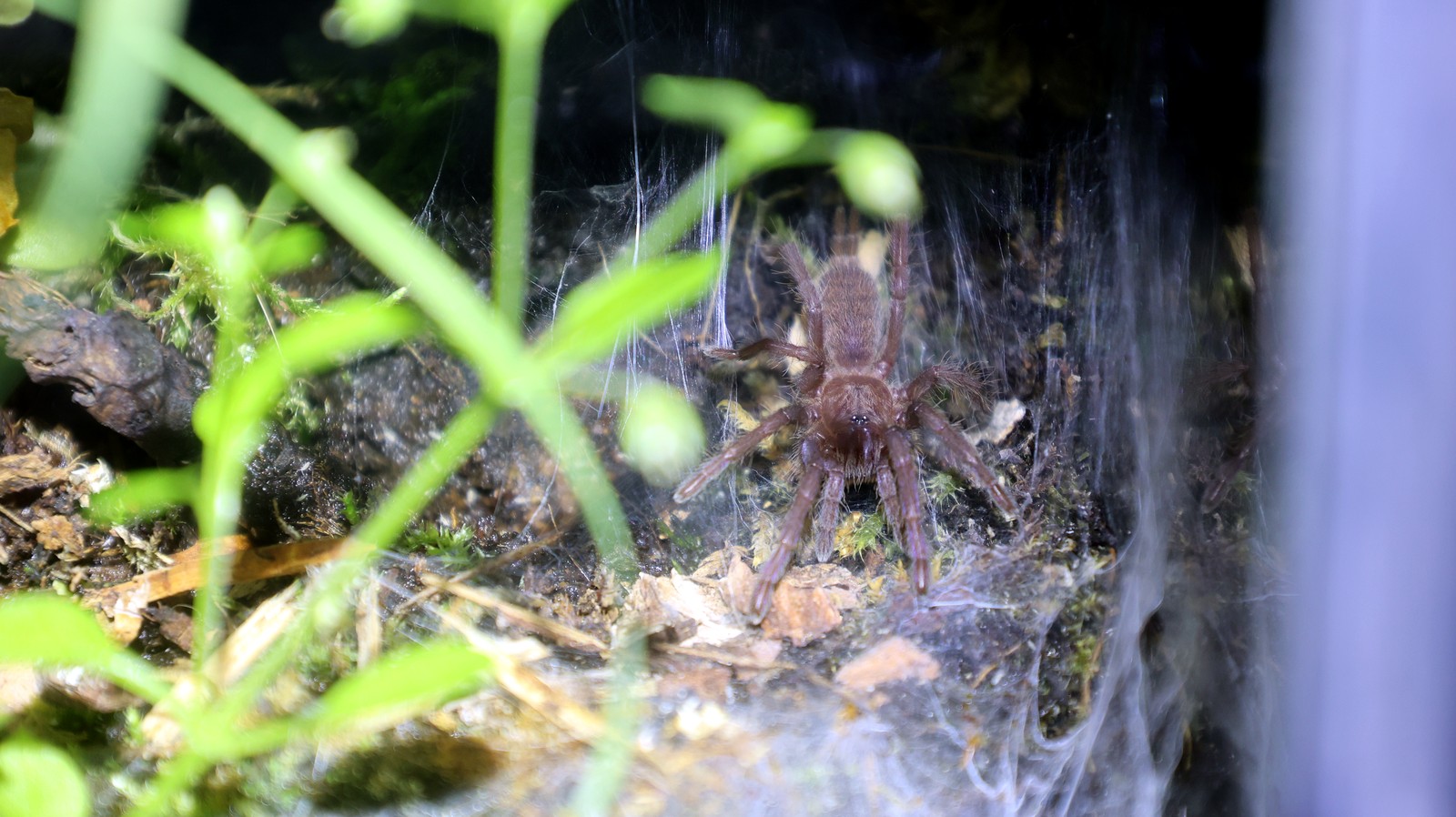
Elvira is the Chilobrachys natanicharum currently in my care. Her profile portrait uses the darkness of the retreat to isolate the eyes and carapace.
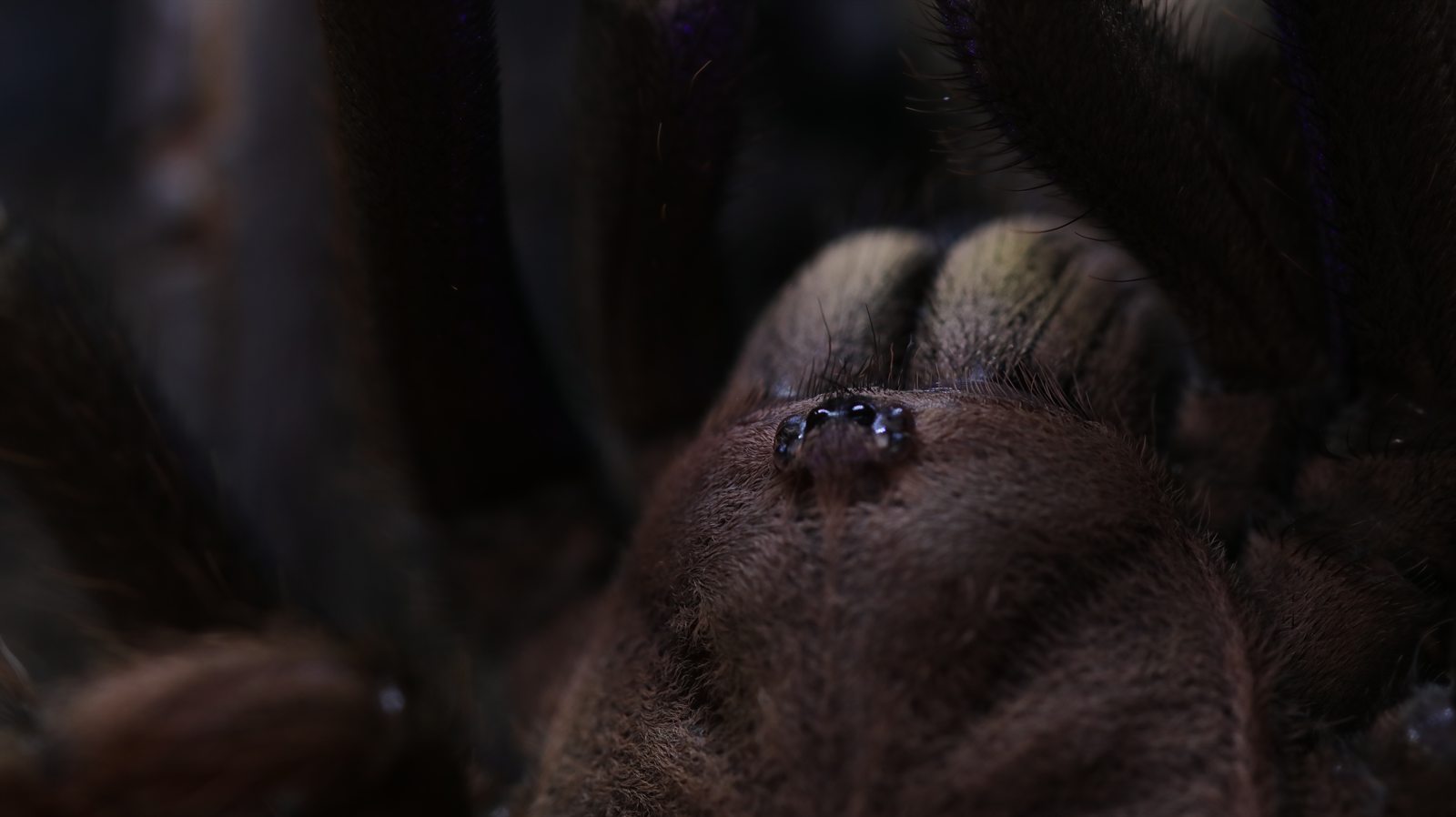
Scientific nameChilobrachys natanicharum
FamilyTheraphosidae
Native rangeThailand
TaxonomyDescribed in 2023
SexConfirmed female
In the wild
Natural history.
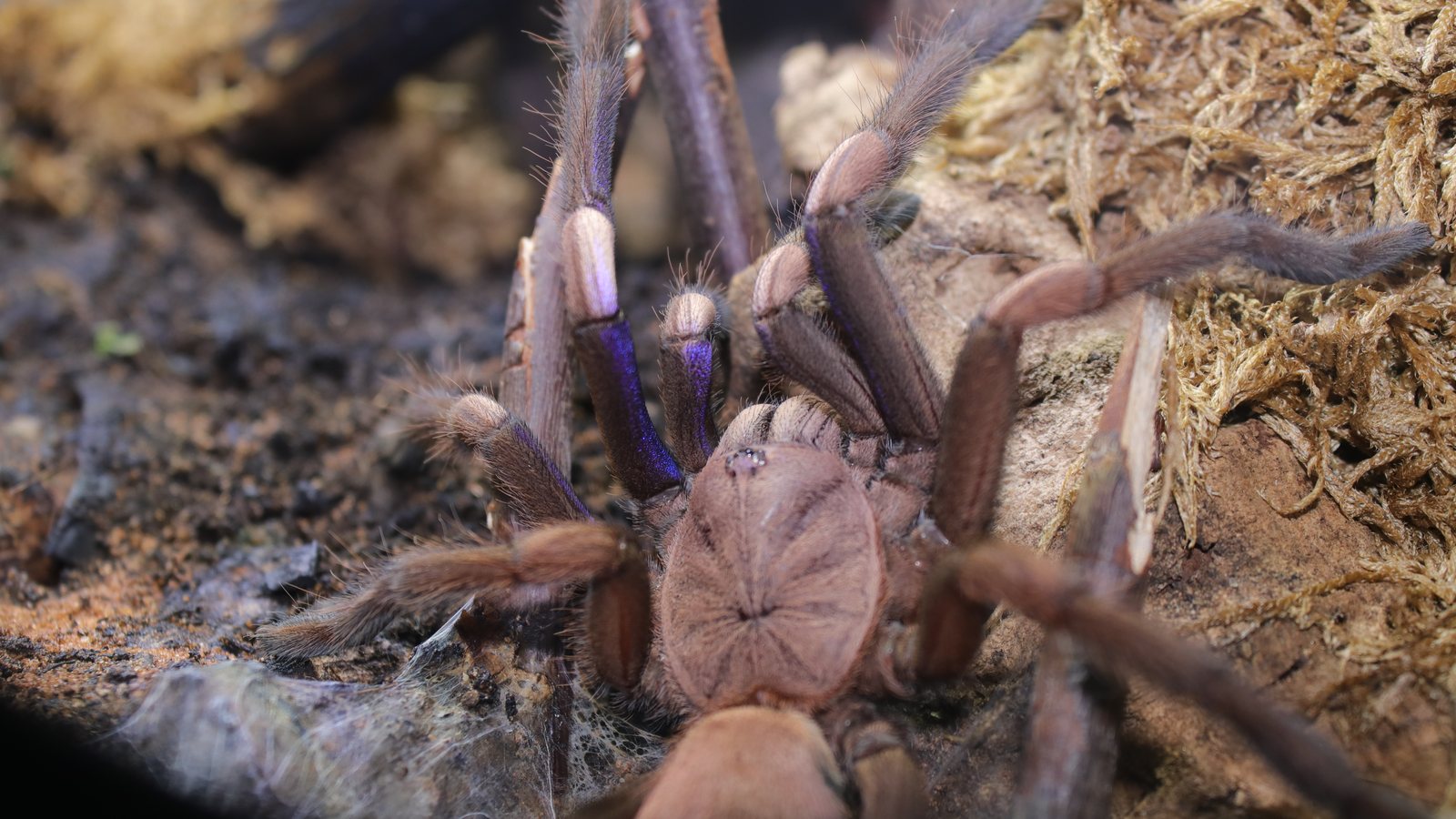
The saturated electric-blue colour is structural: microscopic features affect how light is reflected. Colour is striking, but formal identification still depends on the published description.
Elvira has a deep, secure retreat with web anchor points. Her personal molt and feeding history is drawn from the Codex rather than inferred from the species name.
Taxonomy and range
Chilobrachys natanicharum was formally described from Thailand in 2023 after being known in the trade as an electric-blue form. The original ZooKeys paper provides the diagnosis, locality data, and taxonomic baseline that the hobby name previously lacked.
Burrows, shelter, and activity
The type series came from mangrove habitat and the authors also discuss Chilobrachys using terrestrial burrows and cavities in trees. Elvira's life at the boundary between a dark retreat, silk, and the entrance is consistent with a spider built around concealment rather than constant display.
Feeding ecology
Published species-specific diet records are still sparse. The most defensible account is a retreat-based ambush predator taking arthropods that enter its vibration field; Elvira's own strikes and feeding outcomes remain individual Codex observations.
Defence, senses, and movement
The celebrated blue is structural colour produced by microscopic surface architecture rather than a simple blue pigment. Defence is a separate story: this Asian species lacks urticating hairs and can rely on cover, speed, and a defensive posture when escape is limited.
Conservation context
Status, trade & uncertainty.
IUCN evaluates extinction risk; CITES regulates international trade. They answer different questions, and missing data should remain visible.
Not Evaluated
The species was described only in 2023 and no species-level assessment was located in IUCN Red List version 2026-1.
Not CITES-listed
The species was not found in the CITES Appendices checked in September 2026. It was already present in the pet trade before formal description.
What the evidence supports
The type material links the species to Thai mangrove habitat, but its wider distribution, abundance, and population trend are still poorly resolved.
Make provenance visible
A captive-bred claim should be supported by a traceable breeder chain. Keep the scientific name, acquisition date, seller, and any locality information together.
Reviewed 14 September 2026 against IUCN Red List version 2026-1 and the live CITES Checklist. “Not Evaluated” is not a low-risk category. National and local rules may be stricter.
Life in the collection
Meet Elvira.
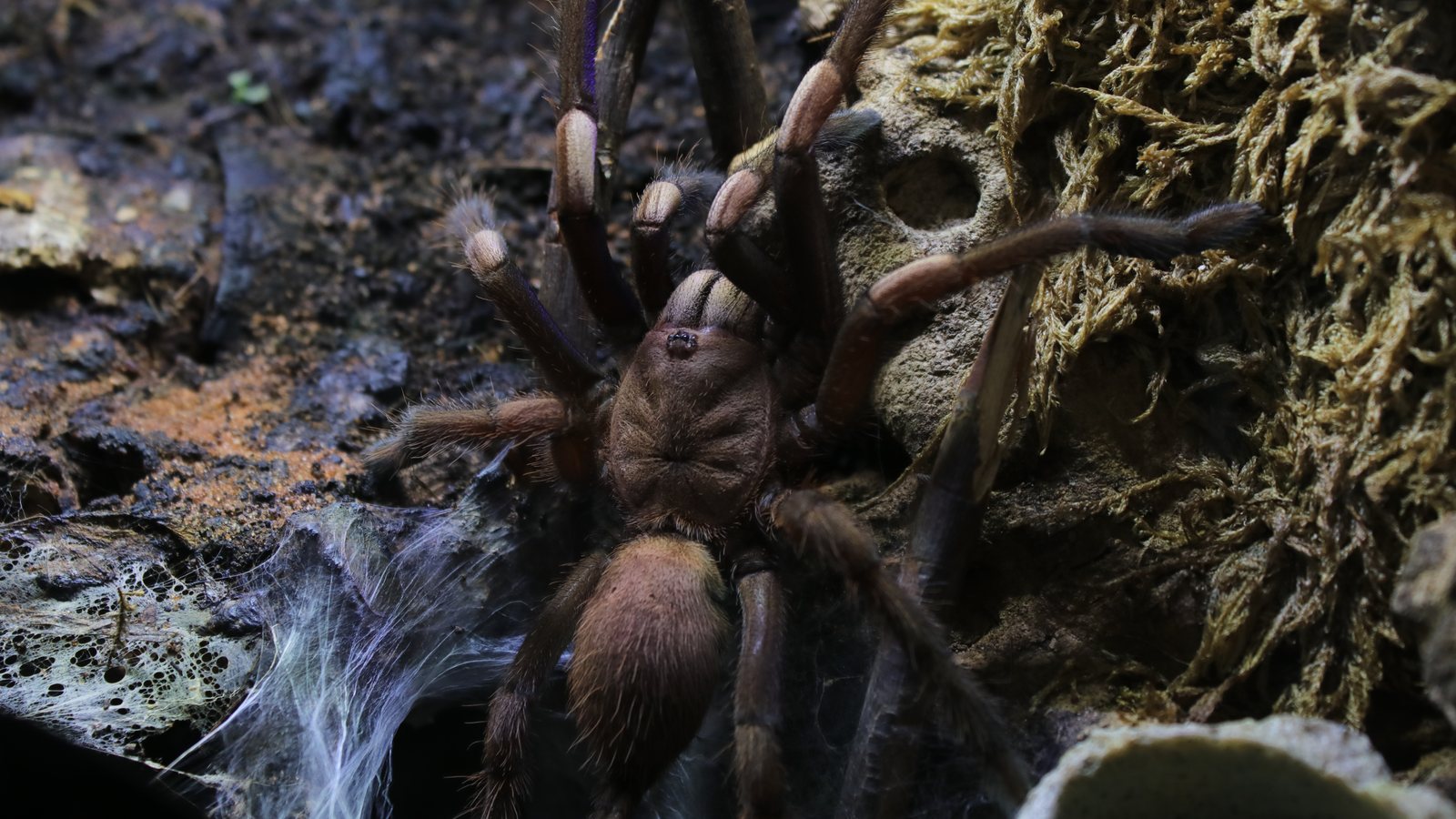
Elvira is the individual behind this profile. Her collection record connects the recently described electric-blue species with a named resident whose feeding, moults, and development can be followed over time.
From Instagram
Posts & reels.
From the channel
Related viewing.
Introvertebrates on YouTube
Chilobrachys natanicharum: The most beautiful tarantula
A species-focused look at the electric-blue tarantula represented in the collection by Elvira.
Personal observations
From the Codex.
Introvertebrates Codex
Elvira · care history
Time in care, feeding records, moults and measurements. These are observations from the Introvertebrates collection, not species-wide averages.
Collection records are not available here yet.
Private notes and identifying details are kept off the website.
Continue exploring
Related profiles.
Read further
Sources.
- ZooKeys — original description of Chilobrachys natanicharumView the source.