
An arboreal Southeast Asian tarantula associated with elevated retreats in trees. A vertical profile, cover, and access routes matter more than open floor area alone.
Species profile · Orion
Omothymus violaceopes
Meet Orion
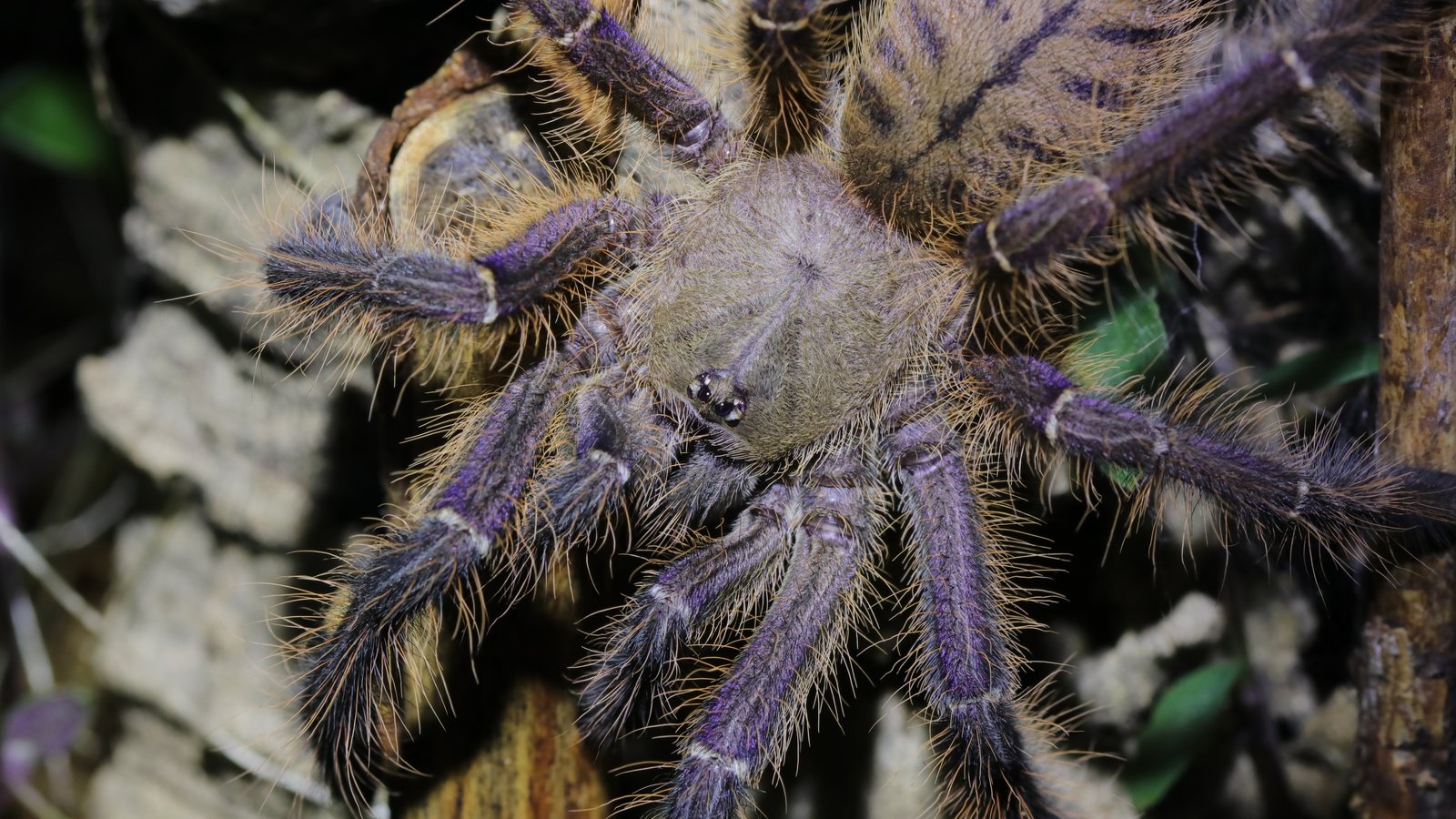
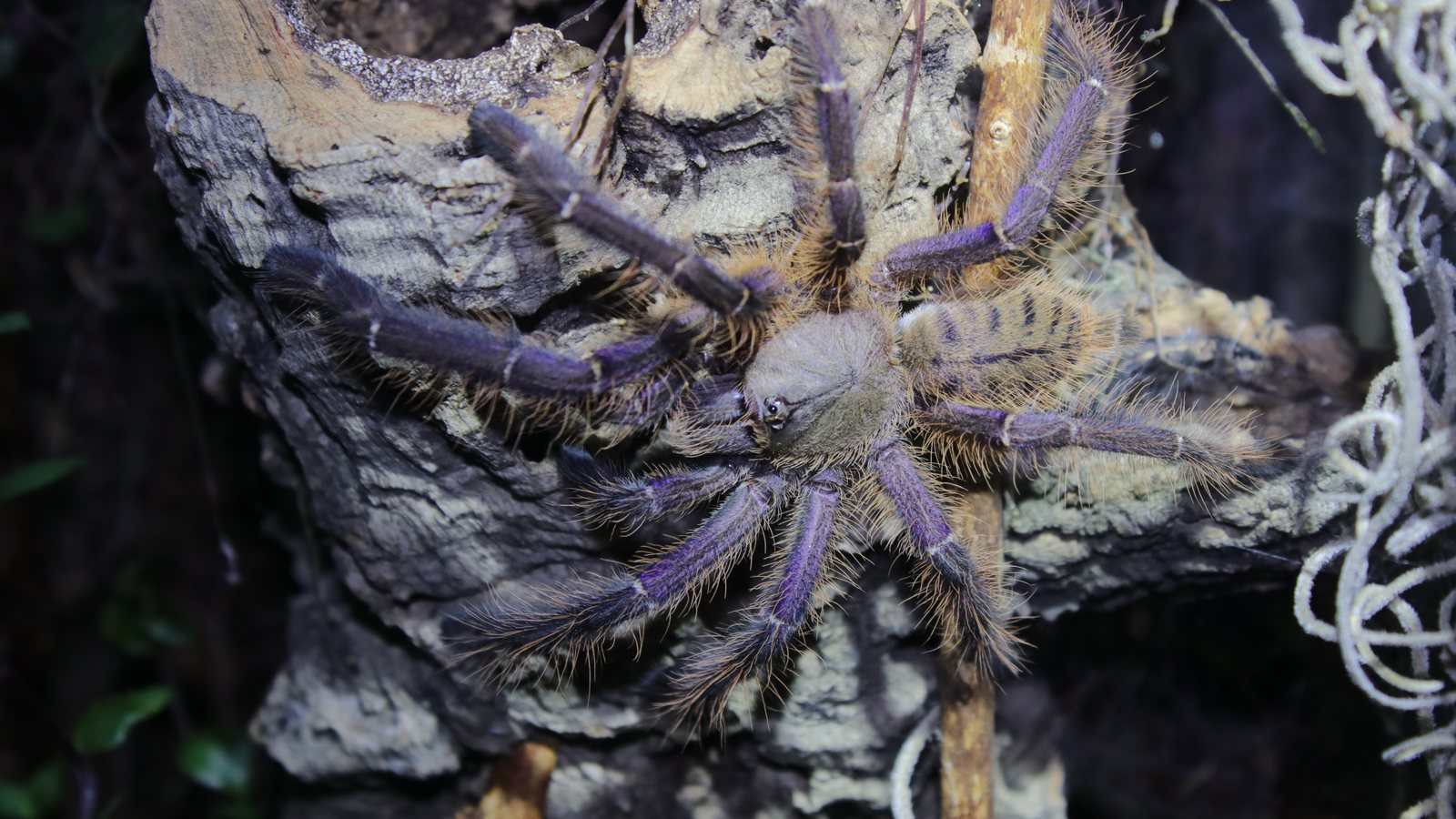
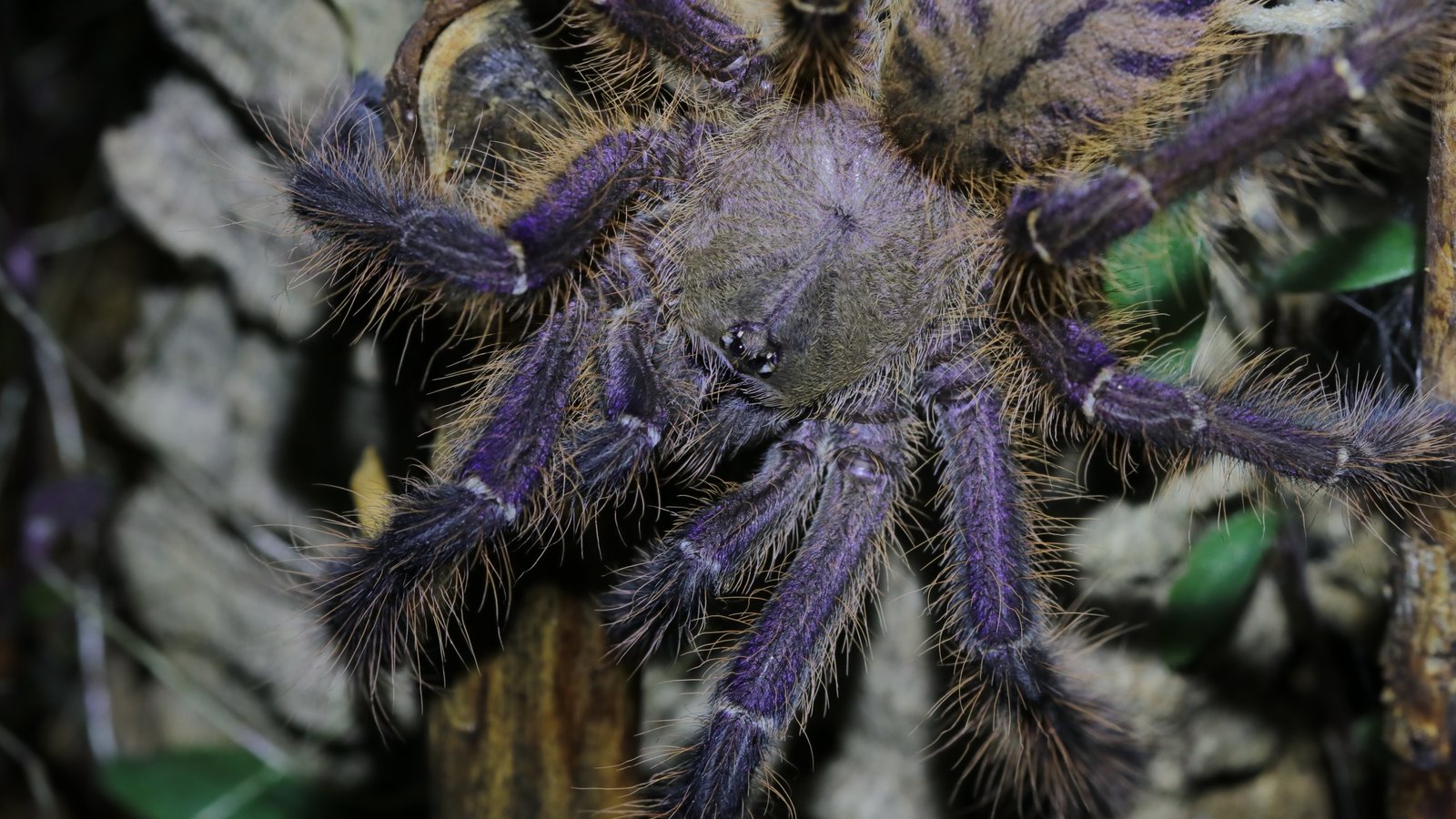
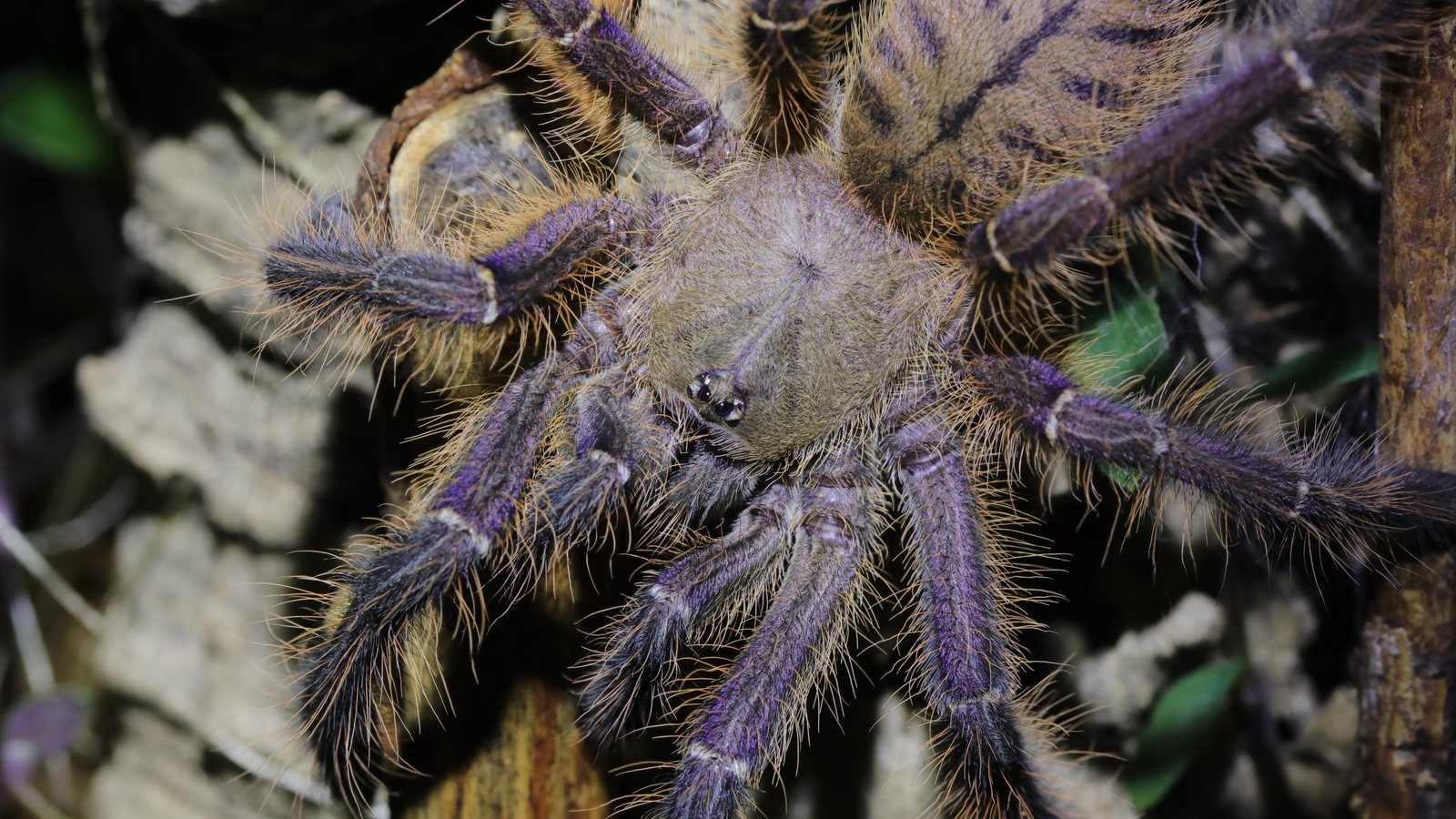
Orion is the confirmed male Omothymus violaceopes in the collection. His photographs show his violet colour at the time they were taken; mature males become much browner and more slender than females and juveniles.
Scientific nameOmothymus violaceopes
FamilyTheraphosidae
Native rangePeninsular Malaysia and Singapore
TaxonomyAccepted species
SexConfirmed male
In the wild
Natural history.
Colour changes dramatically with sex and maturity. Females and juveniles are violet-blue; mature males become brown and more slender, so a mature male can look like a very different spider.
This confirmed male is provided with vertical cork and a concealed elevated retreat. Observations are made from outside the enclosure with disturbance kept low.
Taxonomy and range
Omothymus violaceopes is the accepted name for the Singapore blue tarantula, recorded from Singapore and Malaysia. Older hobby and scientific sources may place it in Lampropelma, so using the current combination avoids quietly mixing names.
Burrows, shelter, and activity
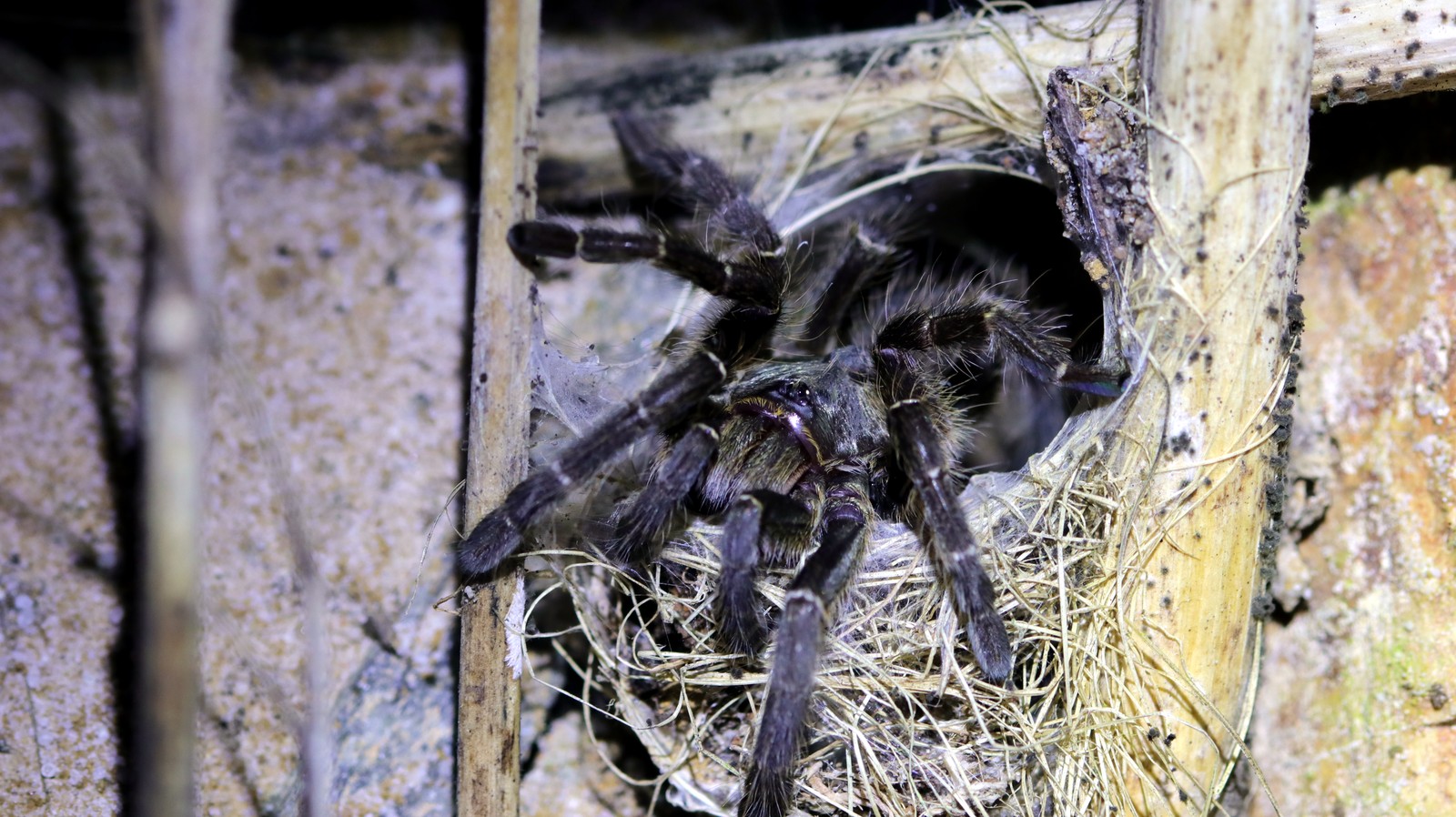
A recent Singapore record describes a large arboreal theraphosid inhabiting holes in tree trunks in mangroves and secondary forest. Well-developed adhesive foot pads support movement on vertical surfaces, while the cavity provides a dark, humid refuge.
Feeding ecology
The likely hunting position is at or near the tree-hole entrance, where the spider can seize climbing and flying arthropods that come within reach. Direct species-level diet data are limited, so the page does not turn body size into claims about routinely taking vertebrates.
Defence, senses, and movement
Adult females and juveniles can be violet-blue, while mature males become more brown and roam in search of females. The species lacks urticating hairs; rapid climbing, retreat into a cavity, and defensive posturing make escape prevention more important than display access.
Conservation context
Status, trade & uncertainty.
IUCN evaluates extinction risk; CITES regulates international trade. They answer different questions, and missing data should remain visible.
Global status unassessed
No global species-level assessment was located in IUCN Red List version 2026-1. Singapore’s 2024 national Red Data Book classifies the species as Endangered locally.
Not CITES-listed
The species was not found in the CITES Appendices checked in September 2026.
What the evidence supports
Singapore sources identify loss of mature forest trees and suitable cavities, land conversion, and poaching for the pet trade as threats to the national population.
Make provenance visible
Insist on traceable captive-bred provenance. A high price or captive rarity is not evidence that wild collection was harmless.
Reviewed 14 September 2026 against IUCN Red List version 2026-1 and the live CITES Checklist. “Not Evaluated” is not a low-risk category. National and local rules may be stricter.
Life in the collection
Meet Orion.
Orion represents Omothymus violaceopes in the current collection. His profile connects the species’ accepted modern name with an individual record that can grow through verified observations, photographs, and video.
From Instagram
Posts & reels.
From the channel
Related viewing.
Introvertebrates on YouTube
Meet Omothymus violaceopes: The stunning blue tarantula
A species-focused introduction to the Singapore blue tarantula.
Personal observations
From the Codex.
Introvertebrates Codex
Orion · care history
Time in care, feeding records, moults and measurements. These are observations from the Introvertebrates collection, not species-wide averages.
Collection records are not available here yet.
Private notes and identifying details are kept off the website.
Continue exploring
Related profiles.
Read further
Sources.
- World Spider Catalog — genus OmothymusView the source.
- Nature in Singapore — Singapore blue tarantula habitat recordView the source.
- SpiderNet — mature-male colour and species accountView the source.