
A terrestrial Mexican tarantula associated with seasonal dry forest. Shelter can be excavated or adapted beneath rocks, roots, and other cover.
Species archive · Previously kept
Brachypelma auratum
Mexican flame-knee tarantula
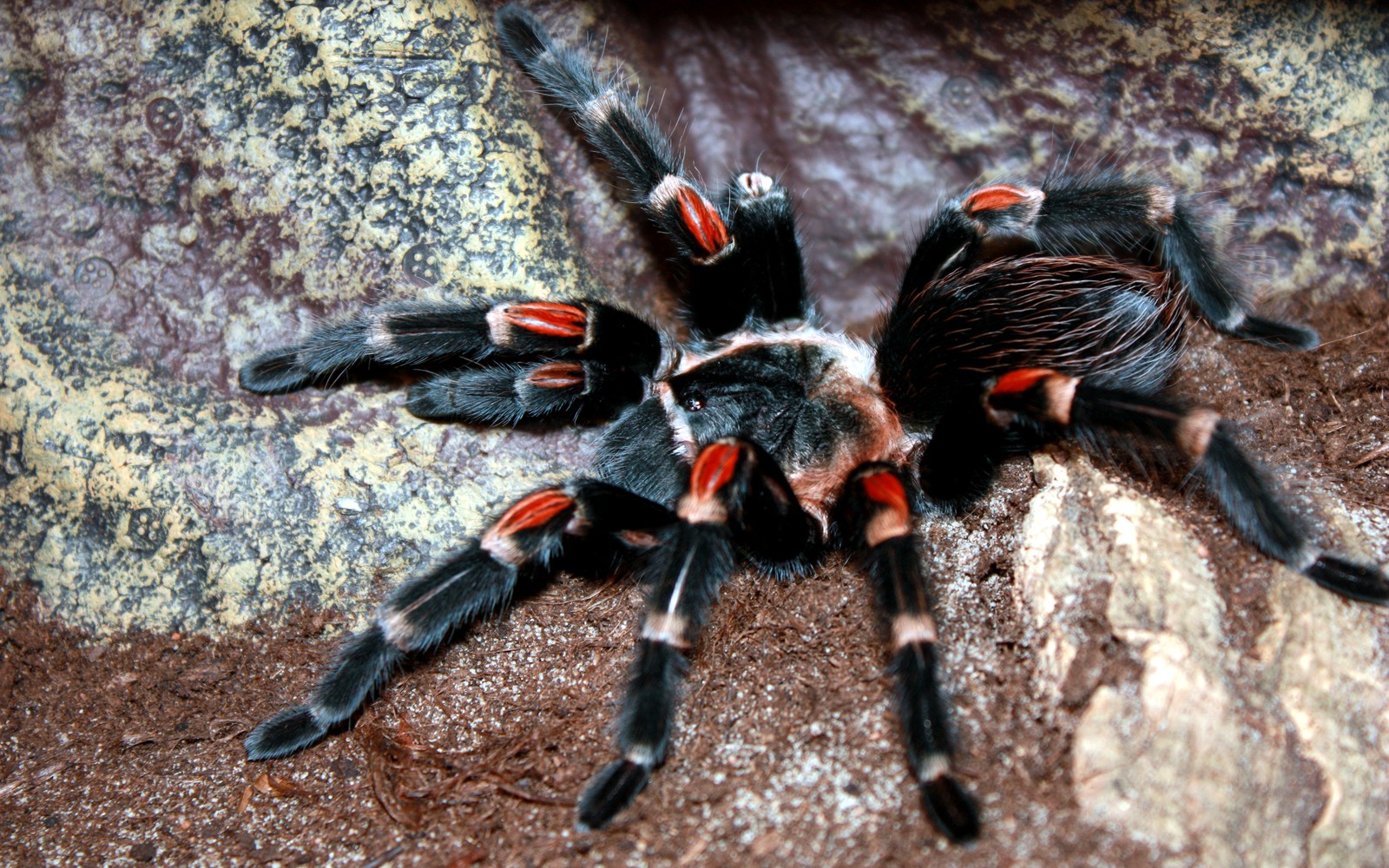
A dark Mexican terrestrial tarantula set apart by the vivid flame-shaped markings on its knees. This profile preserves one of my former animals through original photography and research-led context.
Not currently in the Introvertebrates collection
Accepted nameBrachypelma auratum
FamilyTheraphosidae
Native rangeMexico
LifestyleTerrestrial · fossorial
Collection statusPreviously kept
In the wild
Natural history.
Red-orange flames rise from the patellae against a dark body. The pattern is more sharply localised than the broader orange bands of some relatives.
The photograph is mine and the animal was once in my care. It is not a current resident and no current Codex statistics are attached to this profile.
Taxonomy and range
The World Spider Catalog recognises Brachypelma auratum Schmidt, 1992 as an accepted species from Mexico. Conservation guidance places it in the Balsas River Basin, a biologically distinctive region of western and central Mexico.
Burrows, shelter, and activity
Field and conservation accounts describe a ground-dwelling, burrow-associated spider in Balsas dry forest. It can modify natural cavities beneath rocks and tree roots or excavate a retreat, emerging primarily when conditions and prey activity are favourable.
Feeding ecology
Like other large terrestrial theraphosids, it is an opportunistic ambush predator. Vibration and close-range sensory information help it respond to small animals moving near the retreat rather than relying on long visual pursuit.
Conservation and trade
The species is covered by CITES Appendix II controls on international trade. An official identification guide also reports a 2018 Near Threatened assessment, reflecting its restricted range and pressure from habitat change and collection.
Conservation context
Status, trade & uncertainty.
IUCN and CITES answer different questions. The cards below keep extinction-risk assessment, trade controls, evidence quality, and responsible keeping separate.
Near Threatened · 2018
The Commission for Environmental Cooperation’s 2019 identification guide reports that IUCN assessed Brachypelma auratum as Near Threatened in 2018. The assessment year remains part of the claim; check the live Red List for updates.
CITES Appendix II
The listing applies to the genus Brachypelma. International trade is controlled, and the exact scientific name, lawful origin, and required documentation matter.
Restricted range, real pressure
Published profiles place the species in Mexico’s Balsas River Basin and describe pressure from habitat change, fragmentation, and collection. Missing a formal IUCN assessment does not erase those concerns.
Preserve provenance
Retain breeder or seller details, receipts, the name used at acquisition, and any permit history. Prefer documented captive-bred stock and never treat captive availability as proof of wild security.
Check IUCN
Check CITES
CEC identification guide
Published conservation profile
Conservation overview
Reviewed 14 September 2026 against IUCN Red List version 2026-1 and the live CITES checklist. “Not Evaluated” describes an assessment gap; it is not a low-risk category.
Continue exploring
Related profiles.
Read further
Sources.
- World Spider Catalog — Brachypelma auratum Accepted taxonomy and distribution.
- Hamilton et al. — Conservation profile Range, habitat, shelter, and conservation context.
- CITES — identification guide Trade status, range map, and identification notes.